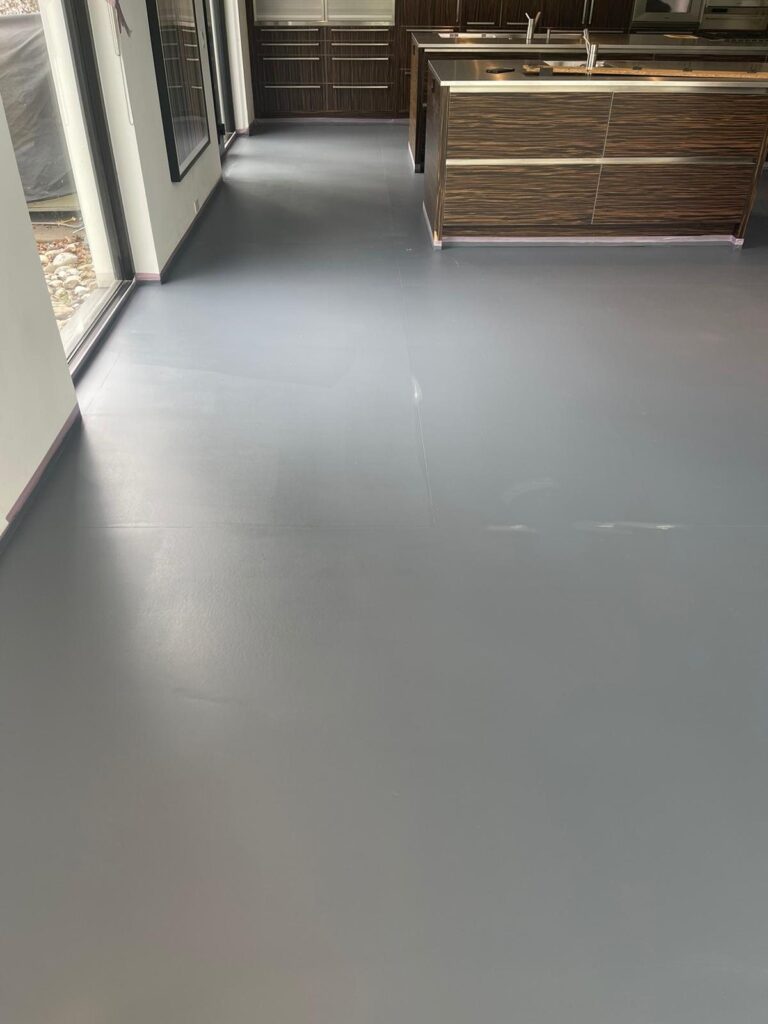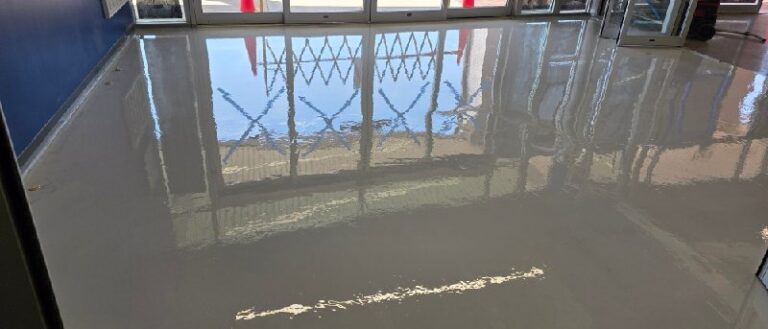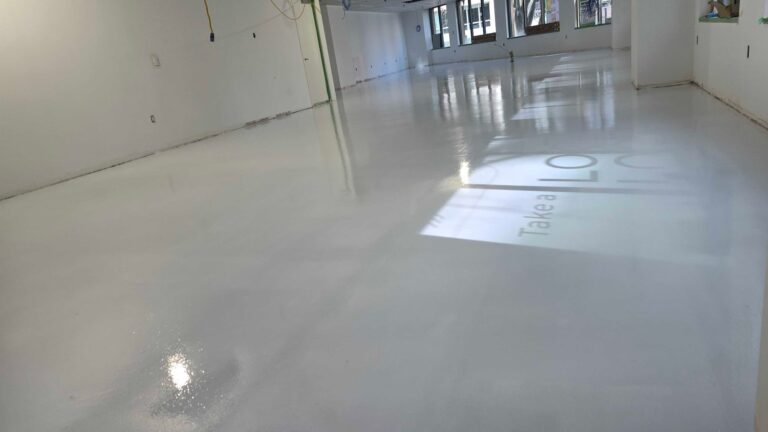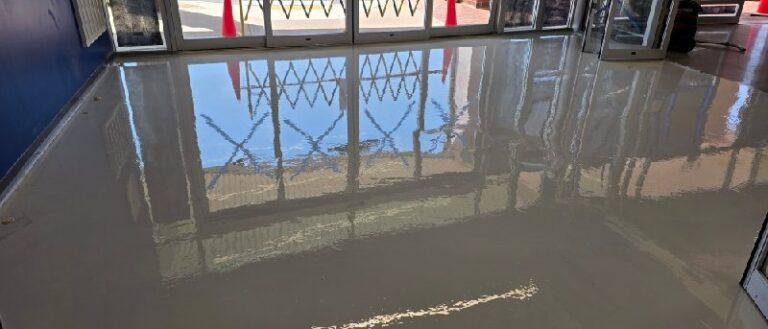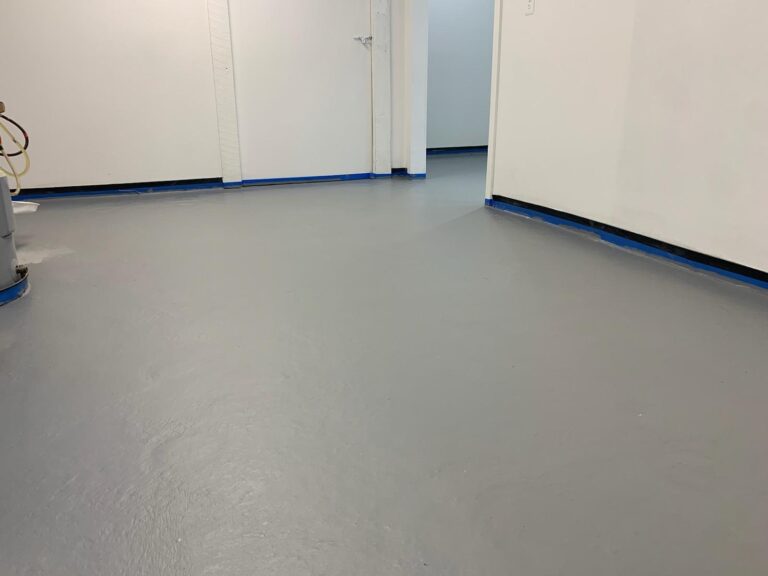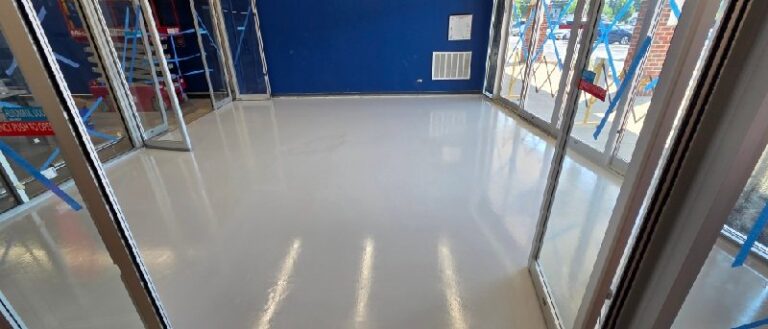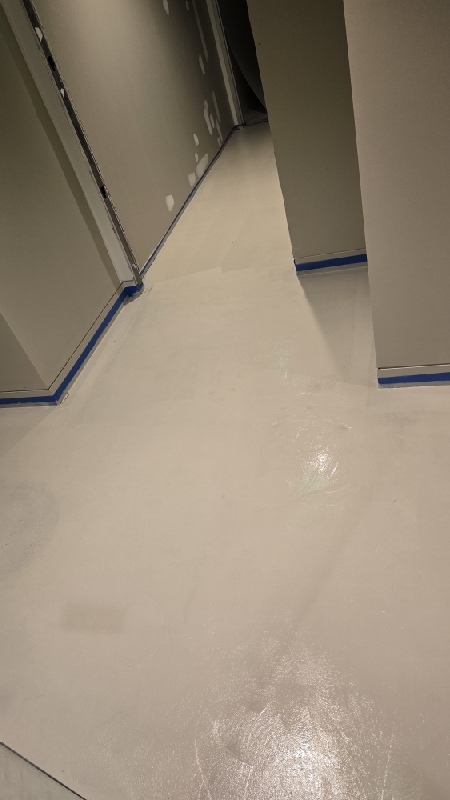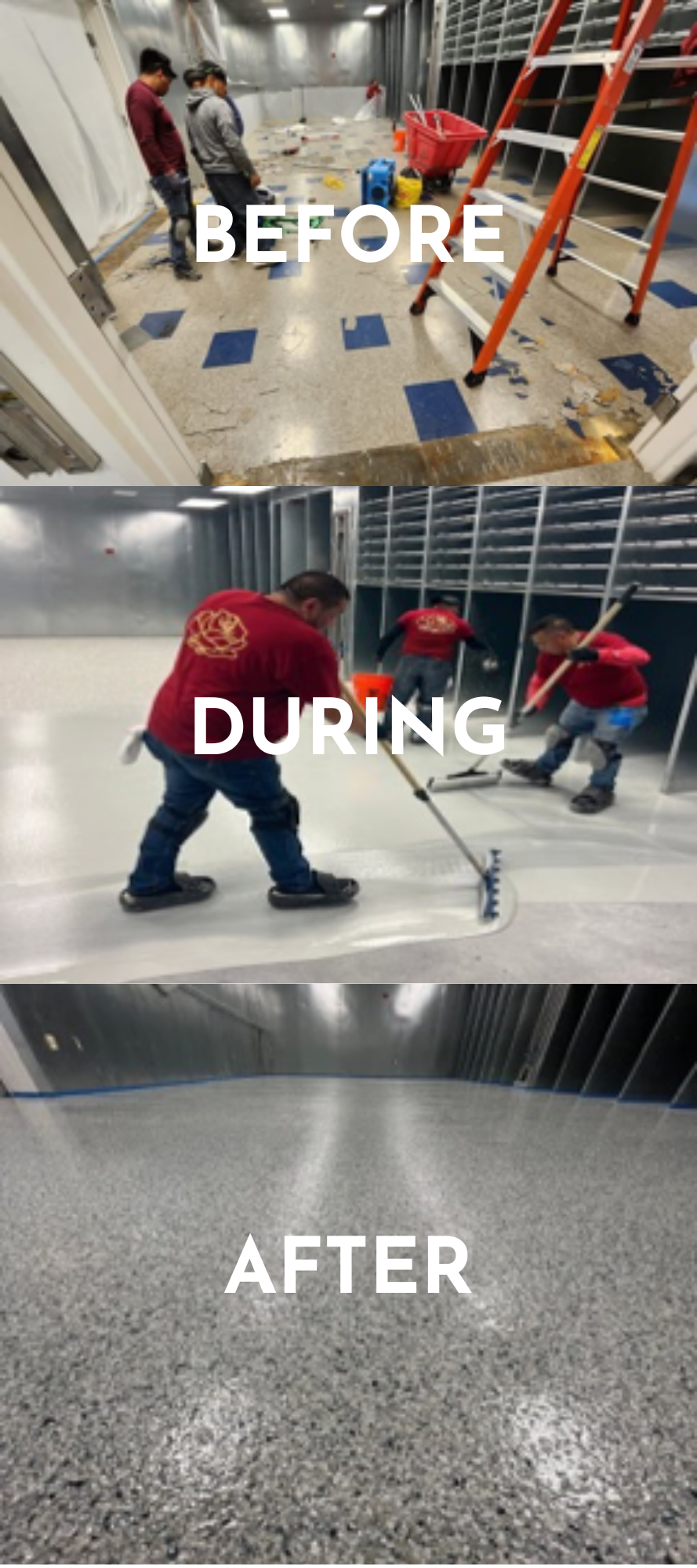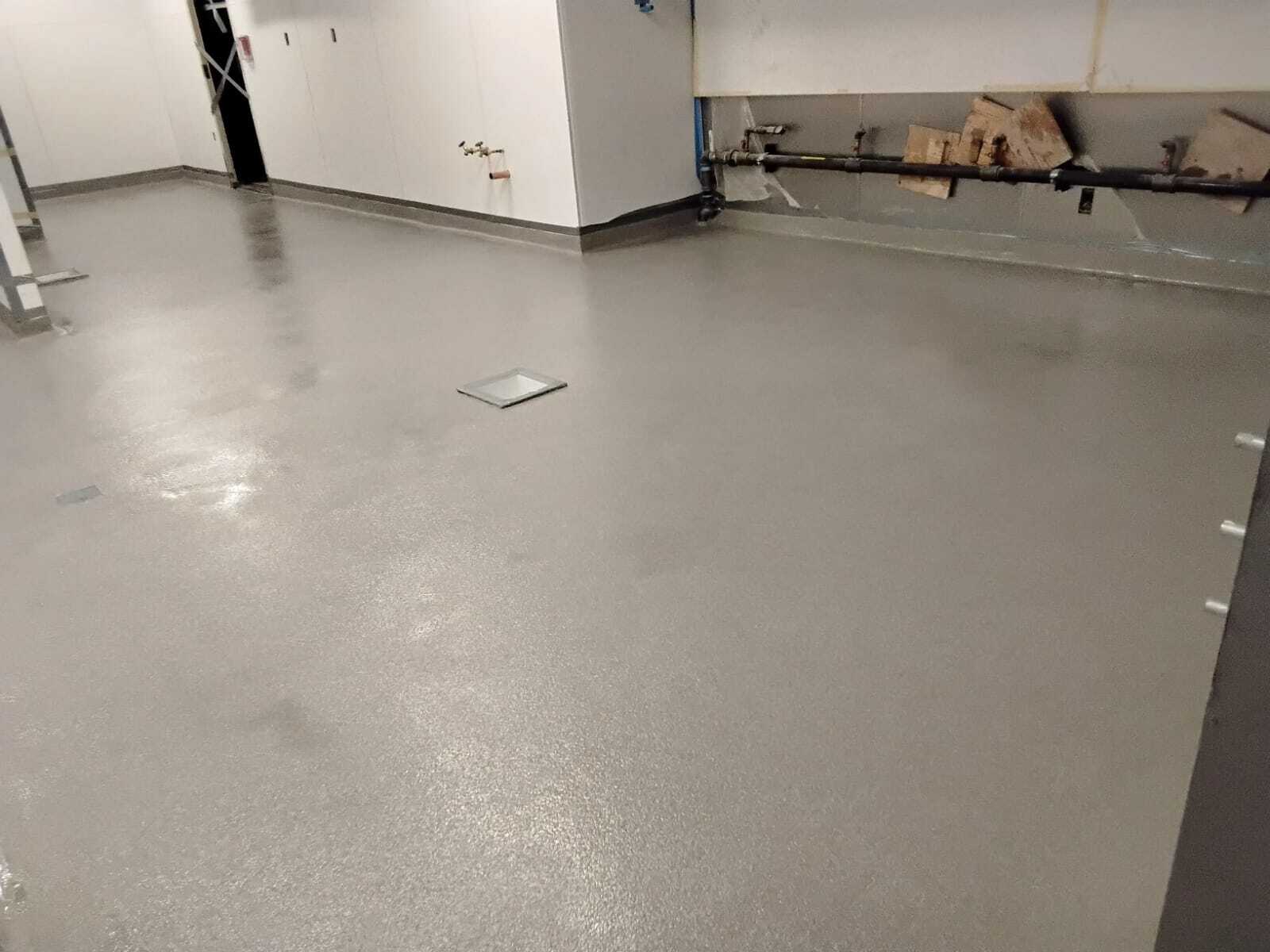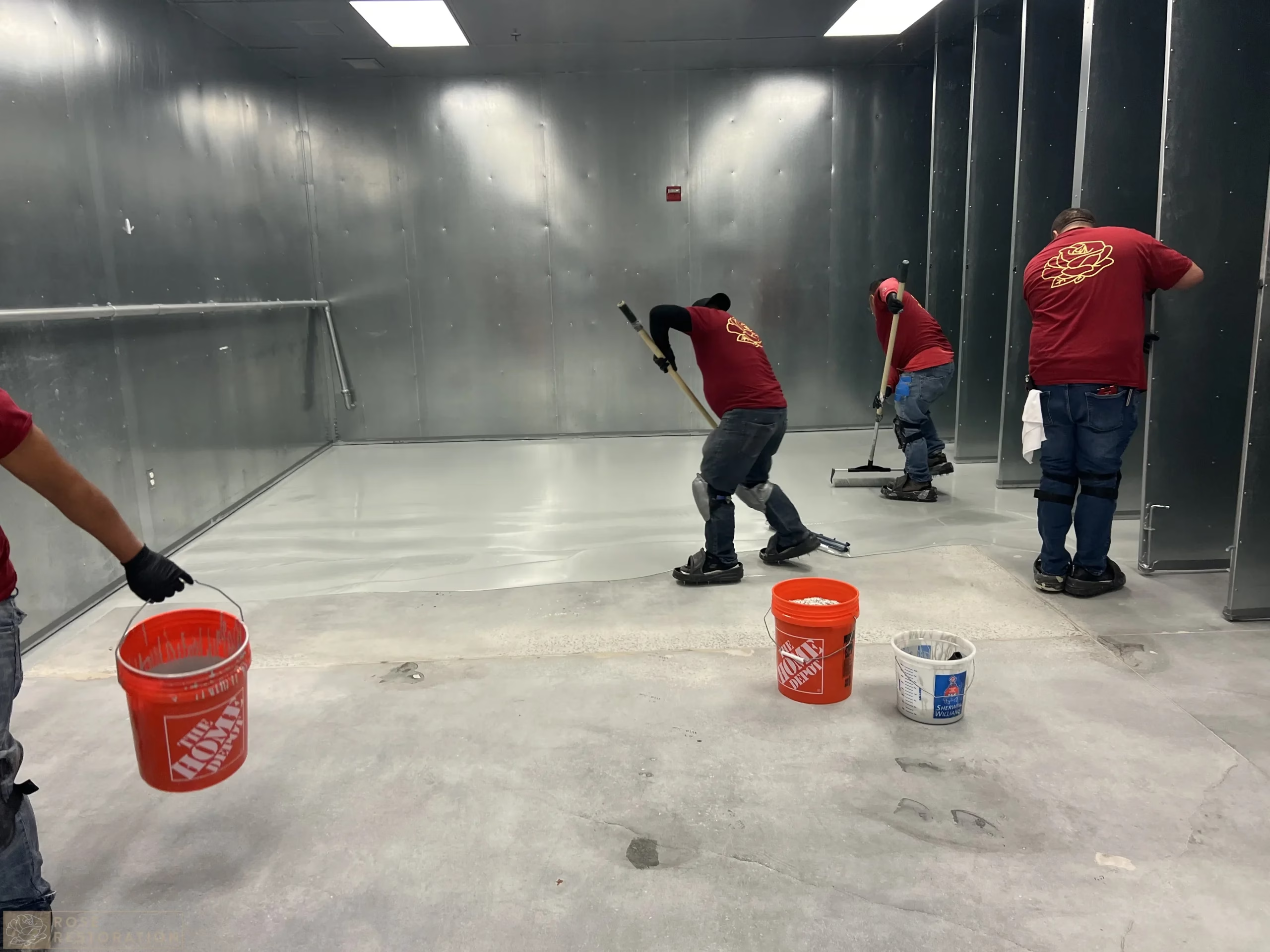
Rose Restoration installs epoxy floor coatings in Washington DC — solid epoxy, decorative flake, metallic epoxy, and quartz-broadcast systems for garages, commercial spaces, industrial facilities, and residential applications across DC, Maryland, and Northern Virginia. With 47 years of substrate and surface prep experience, Rose handles full diamond-grinding prep, moisture testing, crack repair, and multi-coat installation. Systems include epoxy, polyaspartic, urethane cement, and MMA.
Trusted by DC-area garages, corporate HQs, and commercial kitchens
Rose Restoration has delivered epoxy floor coatings and related services for:
- Resinous flooring overview — Full resinous services
- Epoxy floor cost guide — Pricing detail
- Polyaspartic garage floors — Residential garages
- Amazon WAS17 — Corporate HQ resinous
- Four Seasons Hotel DC — Hotel kitchens
- Urethane cement vs epoxy — System comparison
Epoxy Floor Coatings in Washington DC — Quick Answers
Who installs epoxy floor coatings in Washington DC?
Rose Restoration installs epoxy floor coatings across Washington DC, Maryland, and Northern Virginia — for residential garages, commercial and industrial facilities, warehouses, retail, and food-service spaces. Systems include solid epoxy, decorative flake, metallic epoxy, quartz broadcast, polyaspartic, urethane cement, and MMA. 47 years of surface prep experience with full diamond grinding, moisture testing, and multi-coat installation. Request a quote.
How much do epoxy floor coatings cost in Washington DC?
Epoxy and resinous floor coatings in the DC metro typically run: basic solid epoxy $4–$8/sq ft, decorative flake epoxy $6–$12/sq ft, metallic epoxy $10–$18/sq ft, quartz broadcast $8–$14/sq ft, polyaspartic $8–$14/sq ft, urethane cement $10–$20/sq ft, MMA $12–$25/sq ft. Surface prep (diamond grinding, moisture mitigation, crack repair) is typically included; severe substrate issues add cost.
What is the difference between epoxy, polyaspartic, and urethane cement?
Epoxy is the most common and cost-effective resinous system — strong, wide color/flake options. Polyaspartic cures same-day and is UV-stable, ideal for garages and quick-turnaround projects. Urethane cement is thermal-shock and chemical-resistant, used in commercial kitchens, breweries, dairies, and food processing. MMA cures in under an hour and works in freezers. Premium garage systems often layer epoxy base + polyaspartic topcoat.
How long does an epoxy floor coating last?
A properly-prepped and professionally-installed epoxy floor lasts 15–20+ years in residential garages and 10–15 years in heavy commercial use. Poor surface prep (inadequate grinding, missed moisture testing) is the single biggest reason floors fail early. Rose Restoration includes full diamond-grind surface prep, moisture testing, and crack repair on every project.
Can Rose Restoration install epoxy floors in commercial kitchens and food service?
Yes. For commercial kitchens, breweries, dairies, and food-processing facilities, Rose Restoration specifies urethane cement systems — thermal-shock resistant, chemical-resistant, and slip-resistant under wet conditions. These systems meet health-code and FDA-compatible requirements and handle the constant temperature swings and sanitation chemistry of commercial food operations better than standard epoxy.
Epoxy Floor Coatings in Virginia, Maryland & DC
Epoxy flooring is one of the most durable and versatile coating systems available for concrete surfaces. When properly installed on a well-prepared substrate, an epoxy floor provides exceptional chemical resistance, impact resistance, and abrasion resistance while delivering a seamless, easy-to-clean surface. Rose Restoration has installed epoxy floor systems across Virginia, Maryland, and Washington, DC for over 40 years, serving commercial facilities, industrial plants, residential garages, and institutional buildings with a team of 30+ trained technicians.
The performance of an epoxy floor depends almost entirely on two factors: proper substrate preparation and the selection of the right epoxy system for your specific environment. Our approach addresses both of these factors before any material is ever applied to your floor.
Types of Epoxy Floor Systems
Not all epoxy floors are the same. Different formulations and application methods are designed for different environments, performance requirements, and aesthetic goals. Understanding the options helps you select the right system for your facility.
Self-Leveling Epoxy
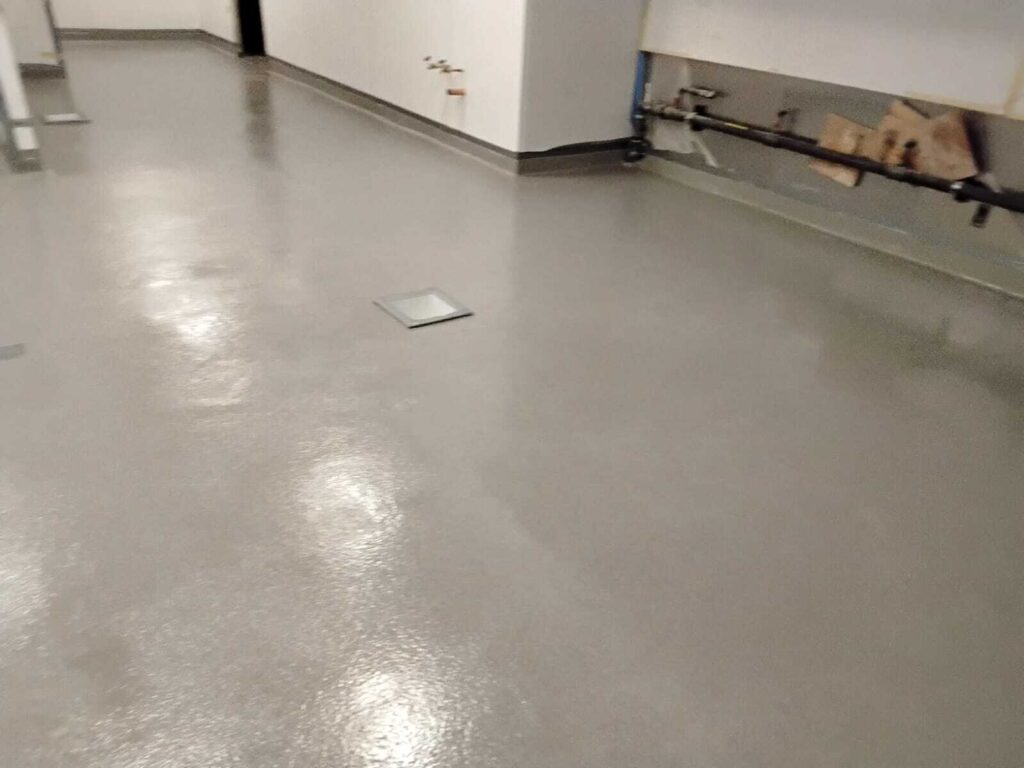
Self-leveling epoxy is applied as a liquid that flows out to create a smooth, seamless, and level surface. It is the most common epoxy system for commercial and industrial spaces that need a flat, easy-to-clean floor. Self-leveling systems are typically applied at 1/8 inch or greater thickness and are available in a wide range of colors. They are ideal for warehouses, showrooms, commercial kitchens, healthcare facilities, and any space where a monolithic, joint-free surface is required.
Epoxy Mortar Systems
Epoxy mortar combines epoxy resin with graded sand or quartz aggregate to create the most durable and impact-resistant epoxy flooring available. Mortar systems can be applied at significant thickness, making them suitable for repairing damaged or uneven concrete before a topcoat is applied. They are the system of choice for heavy industrial environments, manufacturing plants, mechanical rooms, and loading docks where floors must withstand extreme abuse.
Decorative Flake (Chip) Epoxy
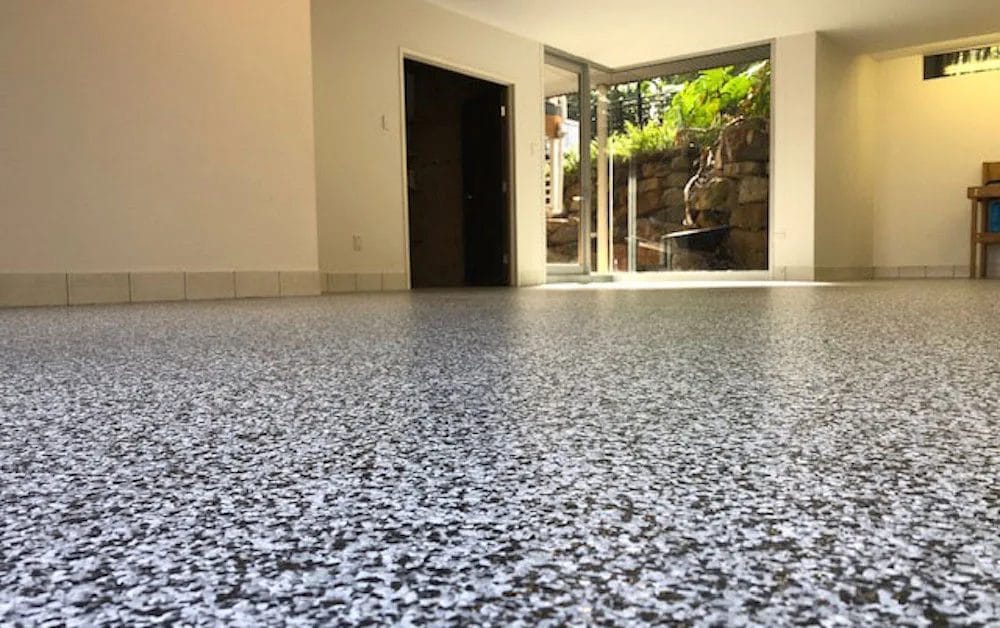
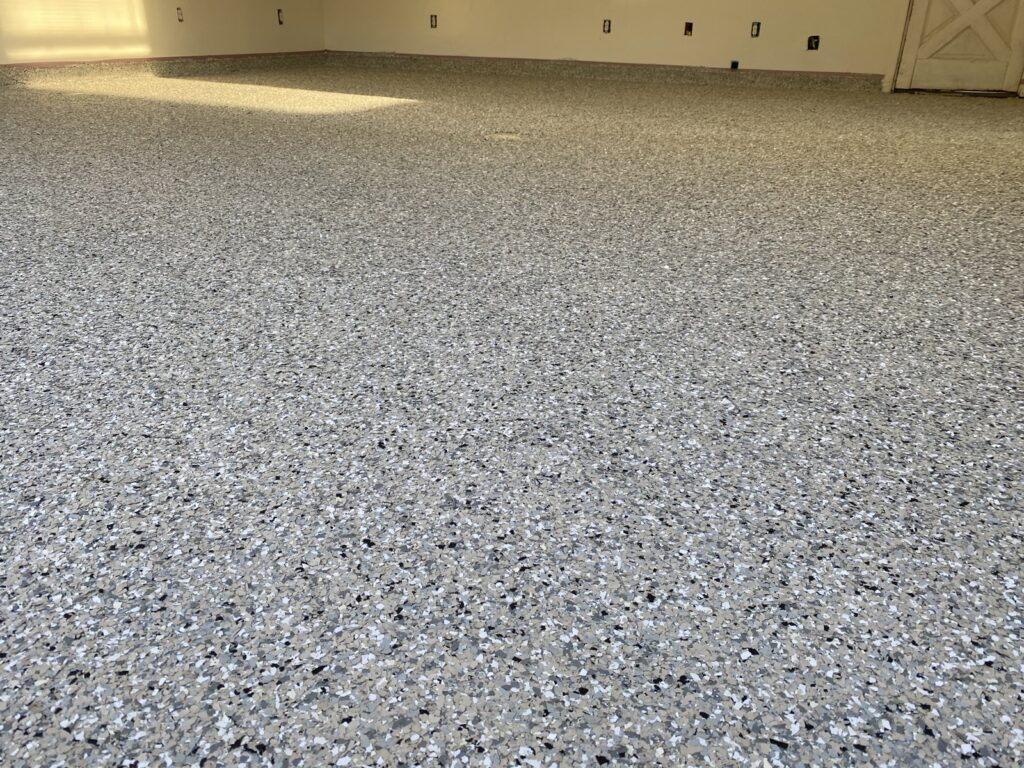
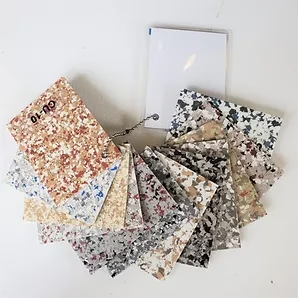
Flake epoxy systems involve broadcasting colored vinyl flakes into a wet epoxy base coat, then sealing with a clear topcoat. The result is an attractive, multi-colored surface that hides imperfections and provides excellent texture for slip resistance. Flake systems are popular in residential and commercial garages, locker rooms, veterinary clinics, retail spaces, and anywhere a decorative yet durable finish is desired. Flake blends are available in dozens of color combinations to match your design preferences.
Metallic Epoxy
Metallic epoxy uses specialized metallic pigments suspended in a clear or tinted epoxy to create dramatic, three-dimensional visual effects that resemble flowing water, marble, or molten metal. Each installation is unique because the pigments shift and settle during application, creating one-of-a-kind patterns. Metallic epoxy is a premium option suited for showrooms, retail spaces, restaurants, lobbies, and high-end residential interiors where visual impact is a priority.
High-Build Epoxy Coatings
High-build epoxy coatings are applied at greater thickness than standard coatings, typically 10 to 20 mils per coat compared to 3 to 5 mils for thin-film products. High-build systems provide better protection, longer life, and greater resistance to wear and chemicals. They bridge minor surface imperfections and create a more substantial, professional-looking floor. We recommend high-build epoxy for any commercial or industrial application where longevity and performance are priorities.
Floor Preparation: The Foundation of a Lasting Epoxy Floor
More epoxy floors fail due to inadequate surface preparation than any other cause. The concrete must be clean, sound, properly profiled, and free of moisture problems before epoxy can bond effectively.
Surface Profiling
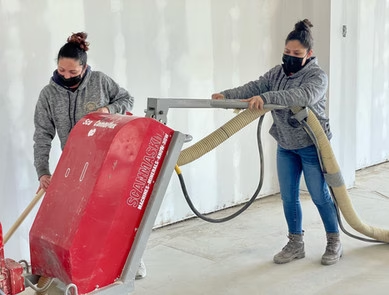
Epoxy requires a mechanical bond to the concrete substrate. We use diamond grinding, shot blasting, or scarification to achieve the concrete surface profile (CSP) recommended by the epoxy manufacturer, typically CSP 2 to 4 depending on the system. This process removes laitance, curing compounds, existing coatings, and surface contamination while creating the microscopic texture that allows the epoxy to grip the concrete.
Moisture Testing
Moisture vapor transmission through concrete is one of the leading causes of epoxy floor failure. Before any epoxy installation, we perform moisture testing to determine whether the slab has acceptable moisture levels. Common testing methods include calcium chloride testing (ASTM F1869) and relative humidity testing using in-situ probes (ASTM F2170). If moisture levels exceed the epoxy manufacturer’s tolerance, we recommend moisture mitigation systems to address the issue before coating. Skipping this step is a gamble that frequently results in delamination, blistering, and costly re-work.
Crack and Joint Repair
Cracks, spalls, and deteriorated joints must be repaired before the epoxy system is applied. We fill cracks with flexible or rigid fillers depending on whether the crack is active or dormant, and we rebuild damaged joint edges to ensure the finished surface is flat and seamless. Control joints can be honored (maintained through the epoxy) or filled, depending on the project requirements.
Why Epoxy Floors Fail
When an epoxy floor peels, bubbles, or wears through prematurely, the cause can almost always be traced to one or more of these common issues:
- Insufficient surface preparation: The concrete was not properly ground or profiled, preventing the epoxy from achieving a mechanical bond.
- Moisture problems: Vapor transmission through the slab pushes the coating off the surface, causing blistering and delamination.
- Contaminated substrate: Oil, grease, curing compounds, or previous sealers were not completely removed before coating.
- Incorrect product selection: The epoxy system was not rated for the specific demands of the environment, such as chemical exposure, thermal cycling, or heavy traffic.
- Improper mixing or application: Epoxy is a two-component material with precise mix ratios and application windows. Deviating from manufacturer specifications leads to soft spots, uneven cure, and premature failure.
- Inadequate topcoat: Using epoxy as a topcoat in UV-exposed areas leads to yellowing and chalking. A UV-stable topcoat is required for any epoxy floor exposed to sunlight.
Rose Restoration’s process is specifically designed to prevent every one of these failure modes. We invest the time in preparation and product selection that shortcuts-focused installers skip.
Topcoat Options
The topcoat applied over an epoxy floor system determines its UV stability, chemical resistance, scratch resistance, and sheen. Choosing the right topcoat is as important as choosing the right epoxy base.
Polyurethane Topcoats
Polyurethane topcoats provide excellent UV stability, preventing the yellowing and chalking that untopcoated epoxy develops when exposed to sunlight. They also offer superior abrasion resistance and maintain their gloss longer than bare epoxy. Polyurethane is the standard topcoat recommendation for most commercial and residential epoxy floors.
Polyaspartic Topcoats
Polyaspartic topcoats are a fast-curing alternative to polyurethane that offer similar UV stability and chemical resistance with the added benefit of rapid return to service. A polyaspartic topcoat can often be walked on within hours and handle full traffic within 24 hours, making it ideal for projects with tight timelines. Polyaspartic also performs well in cold temperatures, extending the installation season for projects in unheated spaces.
Commercial and Industrial Epoxy Applications
Commercial and industrial environments place the highest demands on epoxy floor systems. Rose Restoration has experience installing epoxy floors in a wide range of demanding commercial settings.
- Warehouses and distribution centers: Self-leveling and high-build epoxy systems that resist forklift traffic, pallet jack abuse, and heavy point loads.
- Manufacturing plants: Epoxy mortar systems that withstand impacts, chemical spills, and thermal shock in production areas.
- Commercial kitchens and restaurants: Seamless, antimicrobial-compatible epoxy with anti-slip texture that meets health code requirements for food service areas.
- Showrooms and retail: Metallic and decorative flake epoxy systems that combine durability with visual appeal for customer-facing spaces.
- Healthcare and laboratories: Chemical-resistant, seamless epoxy that supports sterile environments and resists harsh cleaning agents.
- Parking garages: Traffic-rated epoxy systems with anti-slip aggregate and line striping for vehicular areas.
Residential Epoxy Applications
Homeowners throughout Virginia, Maryland, and DC choose epoxy flooring for its durability, ease of maintenance, and visual transformation of utilitarian spaces.
Garage Floors
The garage is the most popular residential epoxy application. An epoxy flake garage floor transforms a stained, dusty concrete slab into a showroom-quality surface that resists hot tire pickup, road salt, oil drips, and everyday wear. We apply full garage floor systems including base coat, decorative flake broadcast, and protective topcoat.
Basements
Epoxy provides a moisture-resistant, finished surface for basements used as recreation rooms, home gyms, workshops, and storage areas. We address any moisture issues before coating and can incorporate decorative elements to match the intended use of the space.
Laundry Rooms and Utility Areas
These high-moisture areas benefit from seamless, water-resistant epoxy that is impervious to detergent, bleach, and standing water.
Maintenance and Expected Lifespan
Daily and Routine Maintenance
- Sweep or dust mop regularly to remove abrasive debris.
- Damp mop with a mild, neutral pH cleaner. Avoid harsh solvents and abrasive cleaners.
- Clean up chemical spills promptly, even though epoxy is chemically resistant, prolonged exposure to aggressive chemicals can affect the topcoat.
- Use walk-off mats at entrances to reduce grit tracking.
- Avoid dragging sharp or heavy objects directly across the surface. Use furniture pads and equipment mats where appropriate.
Expected Lifespan
A professionally installed epoxy floor system with proper preparation and topcoat typically lasts 10 to 20 years or more in commercial environments, and even longer in residential settings with lighter traffic. The topcoat will show wear first and can be recoated without removing and replacing the entire system, extending the floor’s useful life significantly. Thin-film or poorly prepared epoxy installations may last only 2 to 5 years, which is why preparation and product selection matter so much.
Frequently Asked Questions About Epoxy Floors
How long does epoxy floor installation take?
A typical residential garage (400 to 600 square feet) takes 2 to 3 days including surface preparation, base coat, flake broadcast, and topcoat with cure times between coats. Commercial projects vary based on size and system complexity, but most spaces are completed within 3 to 5 days. Polyaspartic topcoats can shorten the timeline significantly when a fast return to service is needed.
Can epoxy be applied over existing coatings or paint?
In most cases, existing coatings must be removed before epoxy is applied. Epoxy bonds to concrete, not to other coatings, and applying it over paint, sealer, or a deteriorating coating will result in failure. Our surface preparation process removes existing materials and exposes clean concrete for proper adhesion.
Is epoxy flooring slippery?
Smooth epoxy in a gloss finish can be slippery when wet. We offer multiple anti-slip solutions including aggregate additives mixed into the topcoat, decorative flake broadcast (which provides inherent texture), and aluminum oxide grit for high-traction applications. For any area exposed to water or requiring slip resistance, we will recommend an appropriate anti-slip treatment.
What is the difference between epoxy and resinous flooring?
Epoxy is one type of resinous flooring. The broader resinous flooring category also includes polyurethane, polyaspartic, methyl methacrylate (MMA), and other polymer-based coating and topping systems. Many professional floor systems combine multiple resinous materials. For example, an epoxy base coat with a polyaspartic topcoat uses two different resinous materials for optimal performance.
How do I know if my concrete is ready for epoxy?
We perform a comprehensive substrate assessment before every project, including moisture testing, hardness testing, and evaluation of existing surface conditions. A simple water droplet test can give you a preliminary indication: if water beads on the surface rather than absorbing, the concrete likely has a sealer or curing compound that must be removed. However, professional evaluation is the only reliable way to confirm the substrate is suitable for epoxy. Contact us for a free on-site assessment.
Get Started with Your Epoxy Floor Project
Rose Restoration’s 47 years of experience in surface preparation and coating application means your epoxy floor will be installed correctly the first time. We work with property owners, facility managers, and general contractors throughout Virginia, Maryland, and Washington, DC to deliver high-performance resinous flooring systems that meet the demands of your specific environment.
Contact Rose Restoration today or call 703-327-7676 to schedule a free consultation and estimate for your epoxy floor project.