
Reference Guide
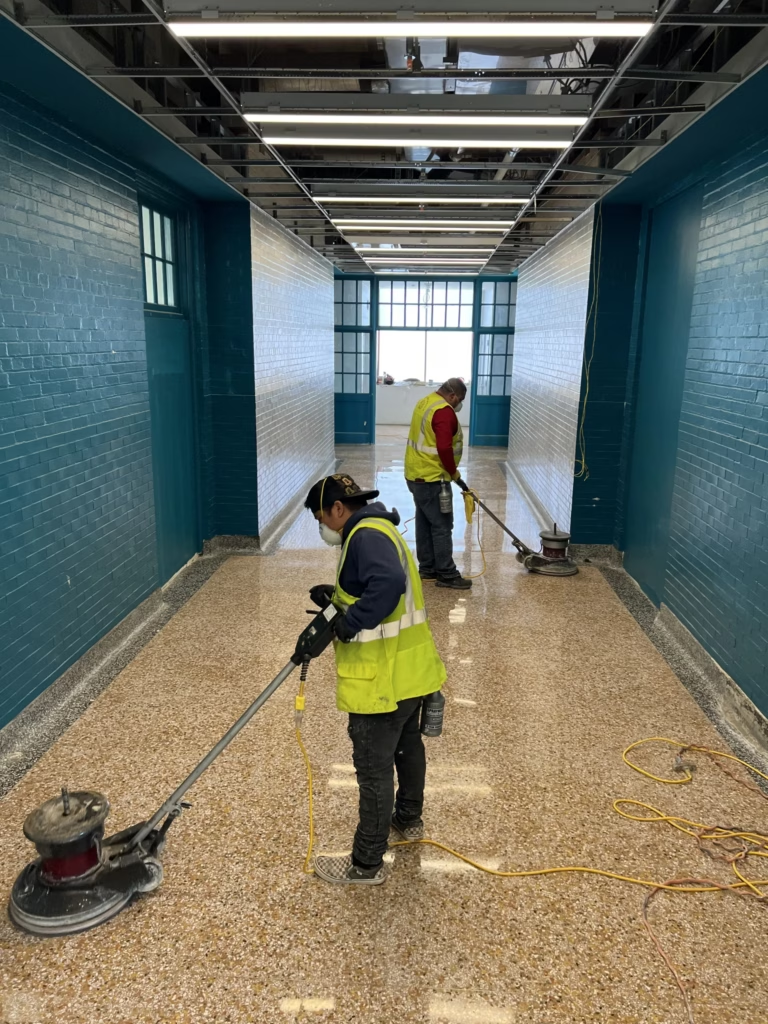
For the underlying terrazzo restoration process:
 By Tom Kuhn, CEO, Rose Restoration
Rose Restoration has restored marble, terrazzo, concrete, and natural stone across DC, MD, and VA since 1978.
If you manage facilities for a school district, you already know what terrazzo is, even if you have never thought much about it. It is the flooring under the scuff marks in every hallway, the surface your custodial staff mops every night, the material that has been absorbing punishment from thousands of students for decades. And at some point, someone in your district is going to propose ripping it all out and replacing it with VCT or epoxy.
Before you approve that purchase order, you need to understand what you actually have and what it would cost — in real dollars — to restore it versus replace it. Because in most cases, the math overwhelmingly favors restoration. And the building science does too.
Why Terrazzo Is in So Many Schools
Terrazzo became the standard flooring material for American schools from the 1920s through the 1970s for one reason: it outlasts everything else. A properly installed terrazzo floor has an expected lifespan of 75 to 100 years or more. Compare that to VCT (vinyl composition tile) at 10 to 15 years, commercial carpet at 7 to 10 years, or even high-quality ceramic tile at 25 to 40 years.
The engineers and architects who specified terrazzo for schools were not making a design statement. They were making an economic calculation. Terrazzo is poured in place, creating a monolithic surface with no seams, no grout lines, and no individual tiles to crack or pop loose. It is composed of marble or granite chips set in a cement or epoxy matrix, then ground and polished to a smooth finish. The result is a floor that can handle foot traffic from hundreds of students daily for generations.
The fact that your school’s terrazzo floor looks tired after 40 or 50 years does not mean it has failed. It means it needs maintenance that it probably has not received.
The True Cost: Restoration vs. Replacement
This is where most facility directors are surprised. Let me lay out the numbers plainly.
Replacement Costs
Removing existing terrazzo typically costs $4 to $6 per square foot just for demolition and disposal. If the terrazzo was installed before the late 1970s, there is a strong possibility of asbestos in the setting bed or the terrazzo itself, which adds abatement costs of $5 to $15 per square foot. New flooring installation — whether VCT, epoxy, or new terrazzo — adds another $5 to $30 per square foot depending on the material. Total replacement cost for a typical school corridor: $13 to $51 per square foot.
Restoration Costs
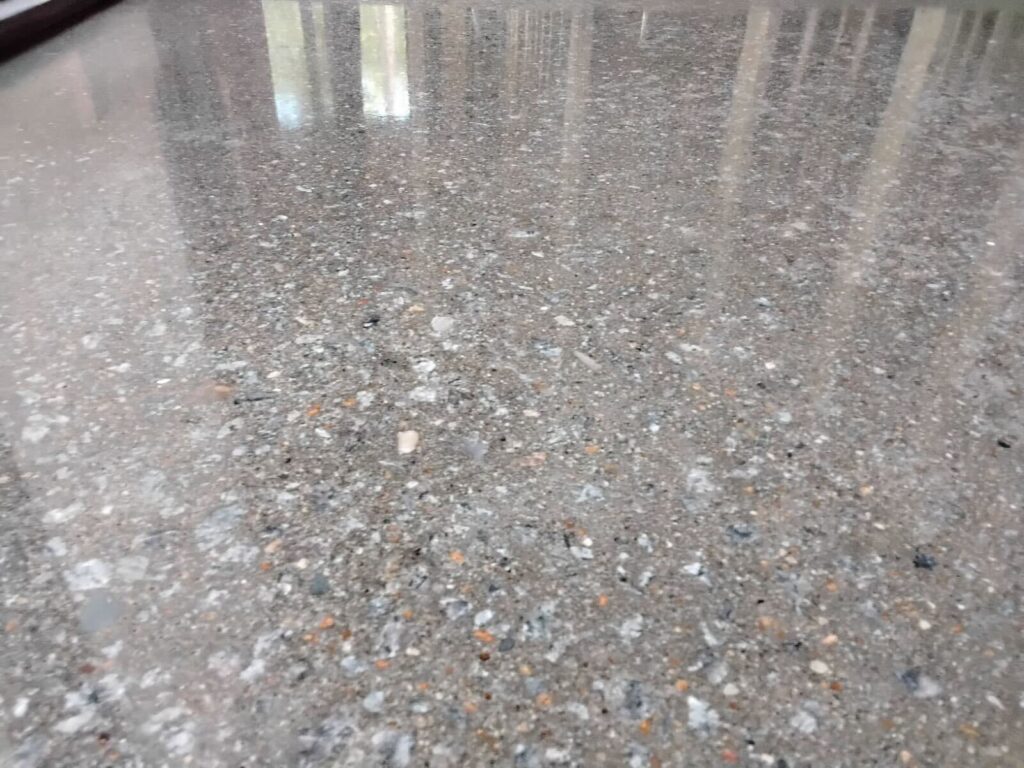
Terrazzo restoration — grinding, repairing cracks, filling voids, honing, and polishing — typically runs $6 to $18 per square foot. For a school with 20,000 square feet of terrazzo corridors, that is $120,000 to $360,000 for restoration versus $260,000 to over $1 million for replacement. And the restored terrazzo will last another 40 to 50 years with proper maintenance, while VCT will need replacement in 10 to 15 years.
Lifecycle Cost Analysis
Over a 50-year period, a restored terrazzo floor with annual maintenance will cost roughly one-third of what repeated VCT installations will cost for the same space. This is not speculation. This is basic math that any facility director can verify with their own numbers.
Disruption: The Hidden Cost Schools Cannot Afford
Replacing terrazzo in an occupied school is a major construction project. It involves demolition (noise, dust, vibration), potential asbestos abatement (requiring containment and air monitoring), new floor installation, and curing time. In a school building, this type of work typically requires closing entire wings or buildings for weeks.
Terrazzo restoration is dramatically less disruptive. Our crews work in sections, typically completing corridor segments overnight or over weekends. There is no demolition, no hazardous material disturbance, and the floor can be walked on within hours of polishing. For education facilities, this difference in disruption is often as important as the cost difference.
Summer Scheduling: Making It Work for Schools
The ideal time for terrazzo restoration in schools is during summer break. With 8 to 10 weeks of uninterrupted access, we can restore significant square footage without affecting a single day of instruction.
Planning should begin in late winter or early spring. A thorough assessment of the terrazzo condition determines the scope of work, identifies areas that need crack repair or section replacement, and establishes a realistic schedule. We work with facility directors to prioritize areas — typically starting with main corridors and commons areas that see the heaviest traffic — and phase the work to match the available summer window.
For districts with year-round programs, we develop phased plans that work around occupied areas, completing sections during breaks, weekends, and overnight shifts.
Common Terrazzo Problems in Schools (and How We Fix Them)
Cracks
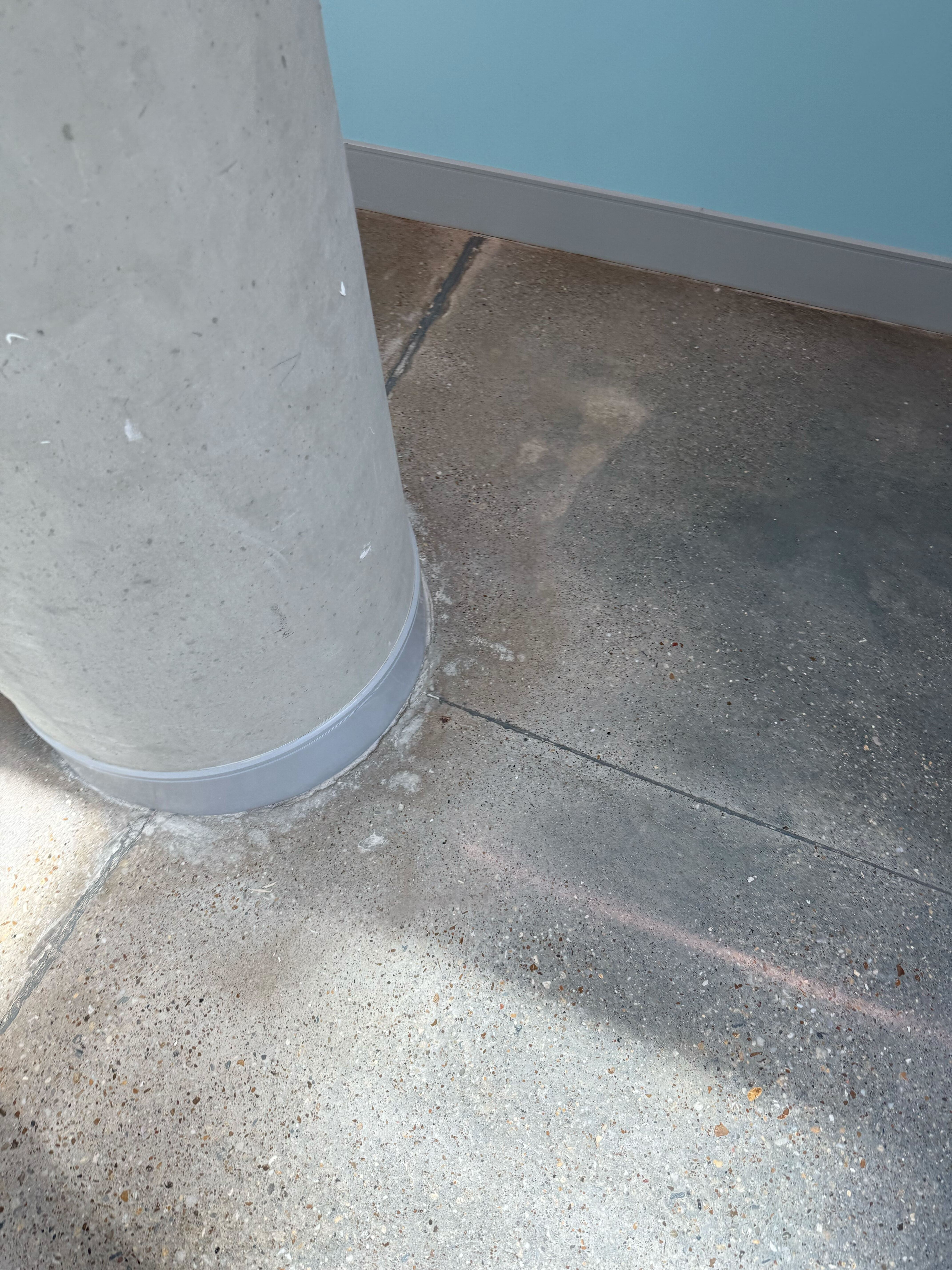
Cracking is the most common issue in school terrazzo and is usually caused by building settlement, concrete slab movement, or missing control joints. We route out cracks, fill them with color-matched epoxy, and regrind the area to blend the repair. When done properly, repairs are virtually invisible.
Dull, Worn Finish
Years of foot traffic and improper cleaning products strip the polish from terrazzo. Restoration involves diamond grinding to remove the damaged surface layer, followed by progressive honing and polishing to restore the original luster. This process removes only a fraction of a millimeter of material — terrazzo floors can be restored many times over their lifespan.
Staining
Cementitious terrazzo is porous and can absorb stains over time, especially in cafeteria areas. Deep cleaning, poulticing, and re-sealing address most staining. In severe cases, localized re-grinding removes the stained surface.
Missing Sections
Where terrazzo has been removed for plumbing repairs or other modifications, new terrazzo can be poured to match the original. We source matching aggregates and work with the school’s records (when available) to replicate the original mix.
The Case for Ongoing Maintenance Programs
Restoration brings terrazzo back to excellent condition. A maintenance program keeps it there. We design maintenance plans specifically for school environments that account for the type and volume of traffic, cleaning products used by custodial staff, and the school’s operational schedule.
A typical school terrazzo maintenance program includes:
- Annual or biannual machine scrubbing and re-sealing
- Periodic re-honing of high-traffic areas (every 3 to 5 years)
- Custodial training on appropriate daily cleaning products and methods
- Annual condition assessments to catch developing issues early
The cost of a maintenance program is a fraction of the cost of restoration, and it extends the interval between full restorations from every 10 to 15 years to every 20 to 25 years or longer.
A Note on Asbestos
If your school’s terrazzo was installed before 1980, it may contain asbestos in the terrazzo material itself or in the setting bed beneath it. This does not mean it needs to be removed. Intact terrazzo containing asbestos is not a health hazard — the fibers are locked in the matrix. Restoration work on asbestos-containing terrazzo requires specific protocols and certified workers, but it is routinely performed and is far less costly and disruptive than abatement and replacement.
We always recommend testing before beginning any work on pre-1980 terrazzo. If asbestos is present, we follow all applicable regulations and use wet grinding methods that prevent fiber release.
Your Terrazzo Is an Asset, Not a Liability
The terrazzo in your school buildings represents a significant investment that was made decades ago — an investment that is still paying dividends in the form of a durable, long-lasting floor. Ripping it out and replacing it with an inferior material that will need replacement again in 10 to 15 years is not a solution. It is a waste of limited education dollars.
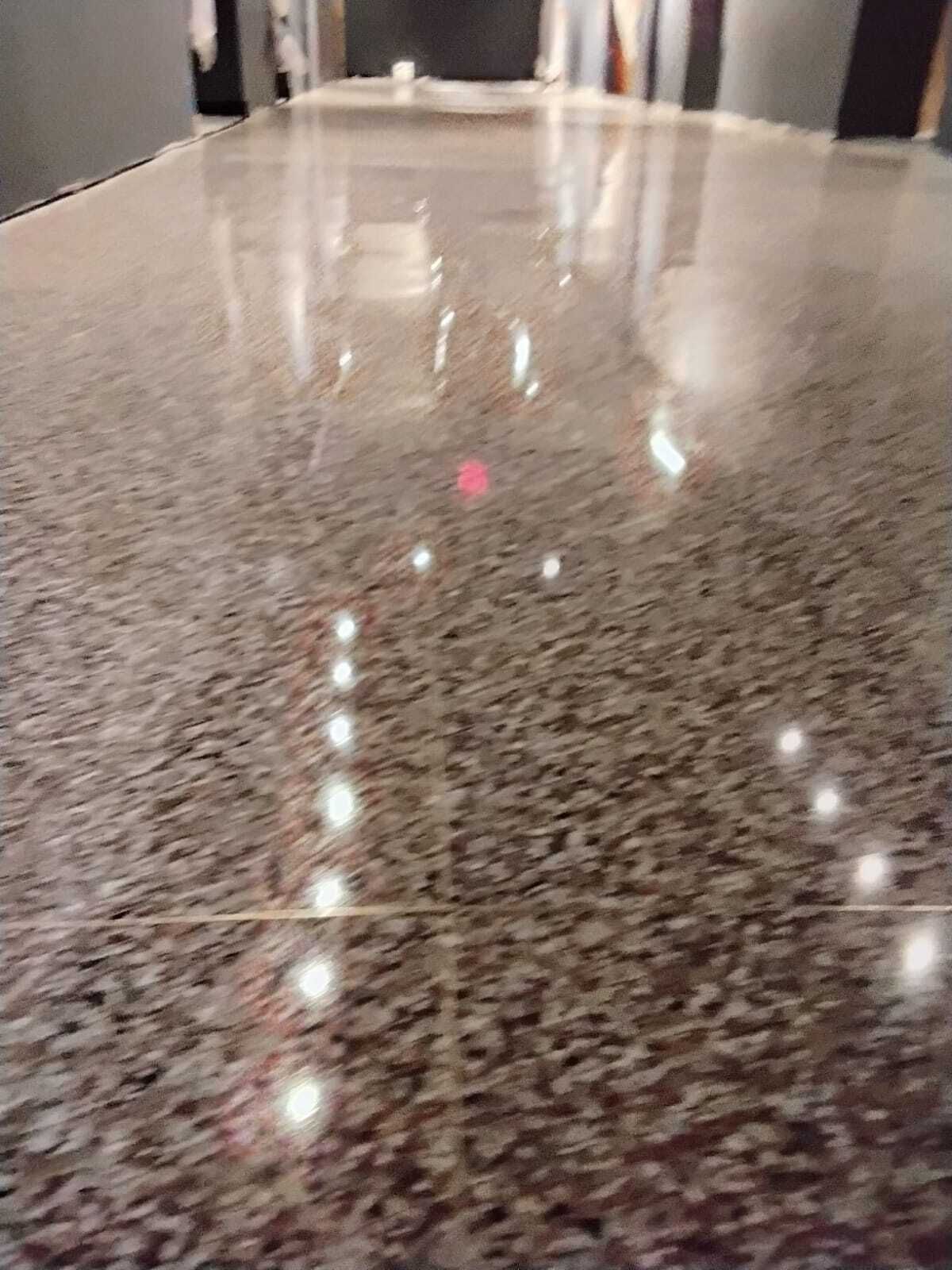
Restoration gives you a floor that looks as good as new, performs as well as it did when it was first installed, and will continue serving your students for decades to come. At a fraction of the replacement cost and with minimal disruption to your educational mission.
Contact Rose Restoration International for a free terrazzo assessment at your school or district facilities.
If your facilities team is weighing terrazzo restoration vs replacement in a Washington DC school or institutional building, restoration almost always wins on both cost and history-preservation grounds.
Looking for something else?
Get a Free Assessment from Rose Restoration
Tell us about your marble, stone, terrazzo, or concrete and our senior technicians will recommend the right restoration approach. Family-run and trusted across Washington DC, Maryland, and Virginia since 1978.
Call (703) 327-7676 · Email info@roserestoration.com · schedule a time · or send us photos.
Restore. Don't replace.
48 years of polishing marble, terrazzo, concrete, and tile across Washington DC, Northern Virginia, and Maryland. IMF, Four Seasons, Smithsonian, and the Virginia State Capitol trust us — you can too.