
 By Tom Kuhn, CEO, Rose Restoration
Rose Restoration has restored marble, terrazzo, concrete, and natural stone across DC, MD, and VA since 1978.
From Worn to Wow: The Art of Restoring Commercial Surfaces
Commercial buildings in Washington DC, Maryland, and Northern Virginia face surface deterioration pressures that residential properties simply do not. Thousands of people moving through a hotel lobby daily, industrial cleaning equipment running across a hospital corridor floor at 3 AM, steel carts crossing a warehouse concrete slab, and decades of buffing with incompatible products over a marble floor — these conditions systematically degrade surfaces in ways that require specialized knowledge to address and reverse.
For facilities managers, property owners, and building operators, the decision between surface restoration and surface replacement is fundamentally a financial decision with long-term consequences. Restoration almost always costs a fraction of replacement. But only if it is done correctly — by contractors who understand commercial materials, commercial scheduling constraints, and the specific failure modes that commercial environments produce. This guide explains what drives commercial surface deterioration, what restoration looks like across the major surface categories, and how to evaluate the investment case for restoration.
Why Commercial Surfaces Deteriorate Faster
The physics of surface deterioration are not complicated. Hard surfaces wear when abrasive materials are dragged across them, when acidic or alkaline chemicals break down their surface chemistry, when impact forces fracture their crystalline structure, or when water and temperature cycling create expansion and contraction stresses that weaken their bonds. Commercial environments intensify all of these mechanisms simultaneously and continuously.
Foot Traffic and Abrasion
A busy hotel lobby or government building entrance may see 2,000 to 5,000 people daily, each bringing grit, sand, and debris from outdoors on the soles of their shoes. This grit acts as an abrasive between the floor surface and the foot, microscopically scratching the stone or concrete with every step. On a polished marble floor, this abrasion gradually dulls the surface. On concrete, it accelerates surface wear and can expose aggregate. On terrazzo, it removes the shine that defines the material’s appearance.
Cleaning Chemical Damage
Many commercial cleaning programs cause more long-term damage to stone and concrete surfaces than the foot traffic they are trying to address. Alkaline floor cleaners applied repeatedly to marble or limestone etch the calcite-based stone surface. Acidic cleaners applied to any natural stone cause immediate surface dissolution. Quaternary ammonium-based disinfectants — widespread in healthcare settings and dramatically expanded in use after 2020 — can attack the sealers and guards applied to stone and concrete surfaces, leaving them unprotected and vulnerable to staining.
Wax-based finishes applied by janitorial crews over natural stone are particularly problematic. The wax builds up over years, yellowing and trapping dirt. When it is finally stripped, it often takes the stone’s original finish with it — because the aggressive stripping chemicals and pads used to remove wax layers attack the stone’s polished surface. Many commercial stone floors that appear irretrievably dull or yellowed are actually in restorable condition once the accumulated wax and chemical residue is removed by an experienced stone restoration professional.
Equipment and Impact Damage
In warehouses, loading docks, and industrial facilities, forklift and pallet jack traffic concentrates significant point loads on concrete surfaces, causing corner spalls and surface fractures at joints and cracks. In commercial kitchens, dropped equipment and rolling racks create impact damage in stone and concrete. In parking structures, the combination of vehicle loads, thermal cycling, and chloride infiltration from de-icing products creates a hostile environment for concrete and the joints that allow it to move.
Environmental and Weathering Effects
Exterior commercial surfaces — building plazas, entryways, parking decks, loading areas — face the full range of DC-area weather: freeze-thaw cycling, summer heat, humidity, and UV radiation. Natural stone used in exterior cladding and horizontal applications loses its factory finish through weathering and may develop biological growth (algae, lichen, moss) that stains and eventually damages the surface. Concrete in exterior applications is subject to carbonation over time, which can weaken the near-surface zone and reduce resistance to chemical attack.
Types of Commercial Surface Restoration
Stone Lobbies and Corridors
Marble, limestone, and travertine lobbies are among the most valuable aesthetic assets a commercial building can have, and they are among the most commonly neglected. A marble lobby that has been maintained with incompatible cleaning products, periodically waxed by janitorial staff, and allowed to develop lippage (height differences between adjacent tiles) from subgrade movement can look dramatically worse than its actual condition suggests.
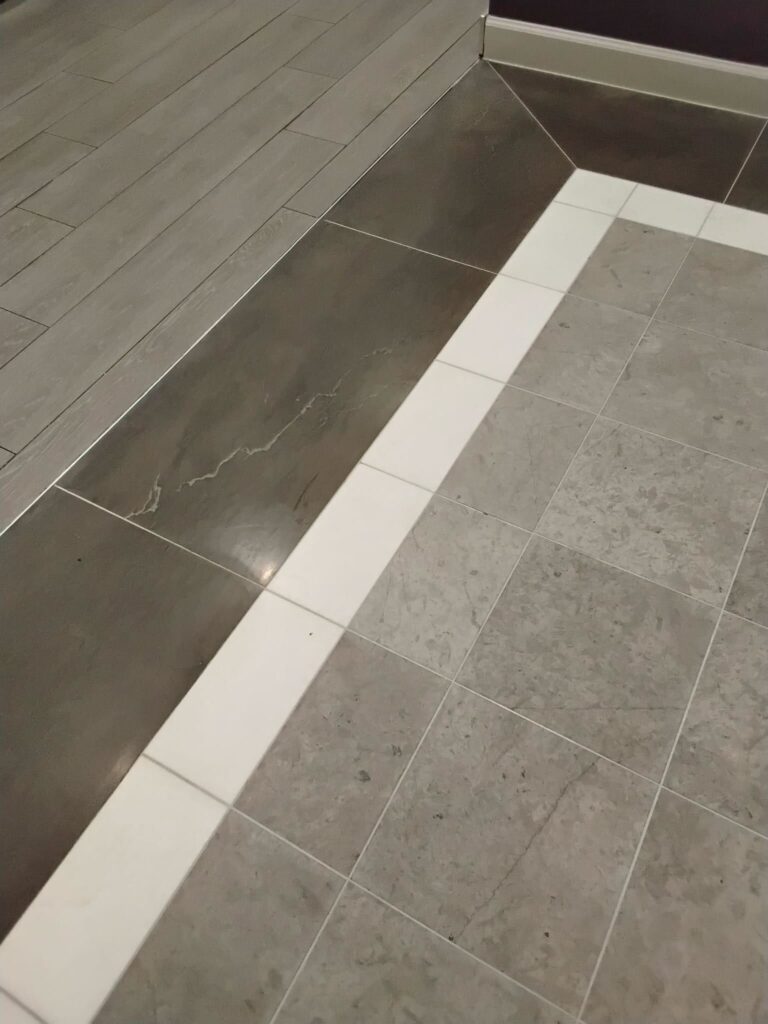
Commercial stone floor restoration begins with a thorough assessment of the existing finish level, contamination type, and any geometric issues (lippage, settled tiles) that need to be addressed. Heavy lippage correction requires diamond grinding — removing stone material from the high tiles to bring the floor back to a uniform plane. Once the floor is flat, a progressive polishing sequence using diamond abrasives through multiple grit levels brings the surface to the target finish: matte, honed, semi-polished, or full mirror polish depending on the design intent and maintenance program.
Specific repair work — filling of spalled tile corners, crack repair with color-matched resin, replacement of damaged tiles where necessary — is incorporated into the restoration sequence. The result is a floor that looks as close to its original specification as the material allows, often dramatically better than any property manager anticipated. Learn more about our marble restoration services.
Concrete Warehouse and Industrial Floors
Industrial and warehouse concrete floors deteriorate through a combination of mechanical wear, joint failure, surface dusting, and coating delamination. Restoration for these applications focuses on functional performance as much as appearance: the floor must support the loads it will carry, the surface must resist continued wear, and the joints must be maintained to prevent edge spalling and water infiltration.
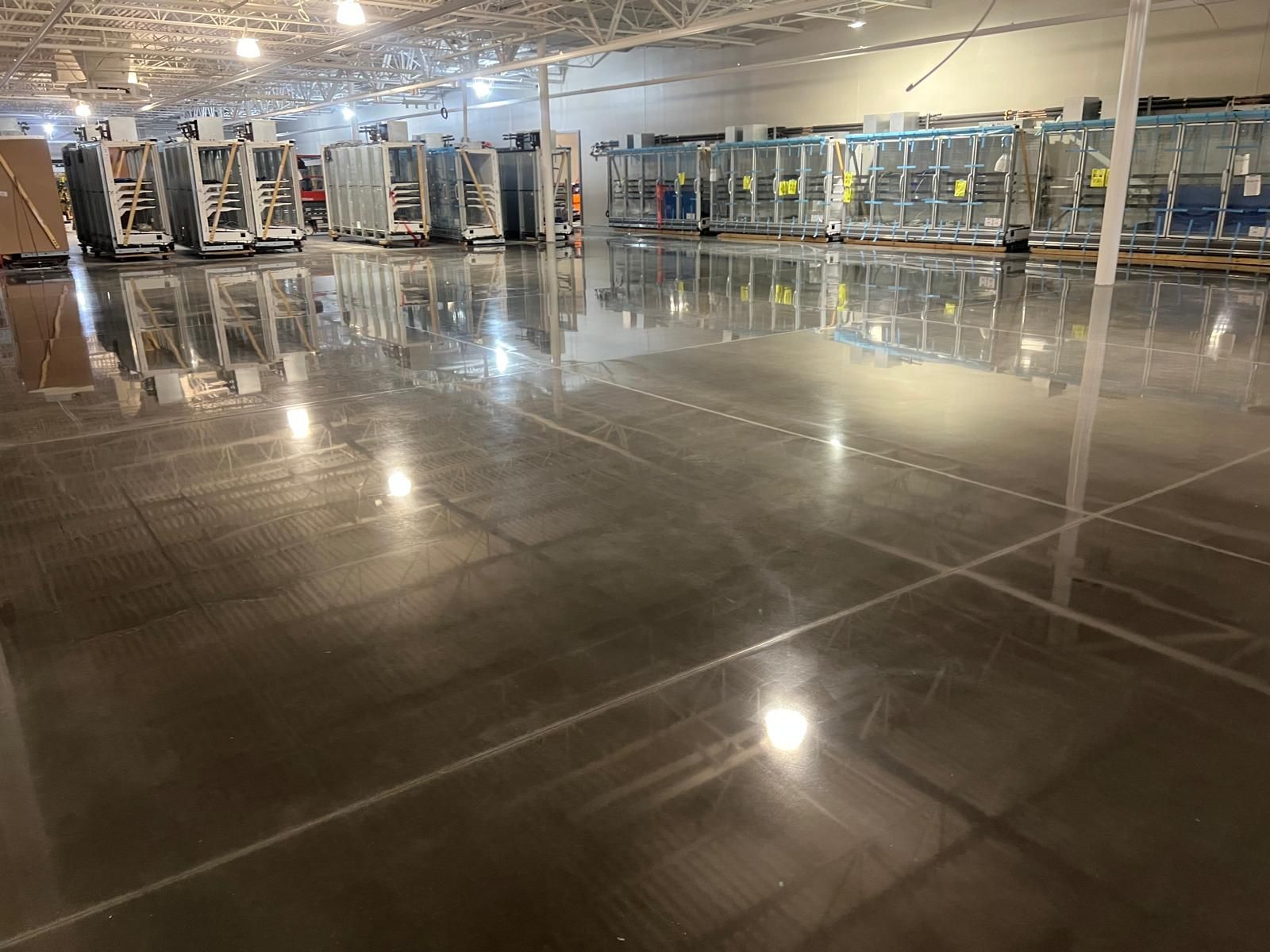
A typical industrial floor restoration begins with diamond grinding to remove the worn surface layer, any existing coatings, and to address surface defects. Joint repair addresses failed control and construction joints. Cracks are filled with semi-rigid polyurea. A densifier is applied to harden the surface and reduce porosity. A guard product or topical sealer is applied for ongoing protection. The result is a floor that resists dust, performs better under traffic, and is significantly easier to clean and maintain. See our concrete polishing services for more detail.
Metal Elevator Panels and Building Surfaces
Stainless steel elevator panels, brass fixtures, bronze building elements, and aluminum storefronts are subject to scratching, oxidation, graffiti, and general wear that accumulates over years. Metal restoration involves mechanical polishing through progressive abrasive grits to remove scratches, oxidation, and surface defects, followed by protective treatments to slow recontamination. In many cases, architectural metal surfaces that appear to require replacement can be restored to a finish indistinguishable from new at a fraction of the replacement cost.
Terrazzo Corridors and Common Areas
Terrazzo — the composite marble aggregate and cement or epoxy binder flooring common in mid-century government, school, and institutional buildings throughout the DC area — is a premium surface that responds exceptionally well to professional restoration. Terrazzo that has been maintained with wax products for decades can appear hopeless: yellowed, dull, scratched, with visible cracks and damaged divider strips. A professional restoration removes the wax, regrines the surface to remove scratches and staining, repairs cracks and chips with color-matched resin, and polishes the floor back to a reflective finish. The transformation is typically dramatic.
Marble and Stone Restrooms
Commercial restrooms with marble partitions, vanity tops, tile floors, and stone walls are subject to particularly aggressive chemical exposure — cleaning disinfectants, acid from toilet bowl cleaners that splash onto floors, constant moisture, and heavy use that accelerates wear. Stone restroom surfaces require restoration by technicians who understand both the stone’s sensitivity to chemical attack and the sanitation requirements of the environment. Proper sealing after restoration is critical to prevent staining and facilitate cleaning without damaging the stone.
The Commercial Restoration Process
Assessment and Scope Development
Every commercial restoration project begins with a thorough on-site assessment. A senior technician or project manager walks the facility, documents current surface conditions with detailed photography, identifies damage types and their likely causes, measures areas and identifies areas of particular concern, and discusses the client’s goals, timeline, and any operational constraints that will affect project scheduling.
From this assessment, we develop a detailed scope of work that specifies materials, processes, and expected outcomes. Clients receive a clear understanding of what restoration can achieve and what its realistic limits are — we do not promise to make a 50-year-old marble floor look like a brand-new installation. What we promise is a floor that performs and appears significantly better than its current state, protected by appropriate sealers or treatments to extend its next service interval.
Scheduling Around Commercial Operations
Commercial surface restoration must be planned around business operations. In a hotel lobby, work can rarely proceed during check-in hours. In a government building, security requirements restrict access and working hours. In a healthcare facility, infection control considerations require specific containment protocols. In a retail environment, the floor cannot be taken out of service during peak shopping periods.
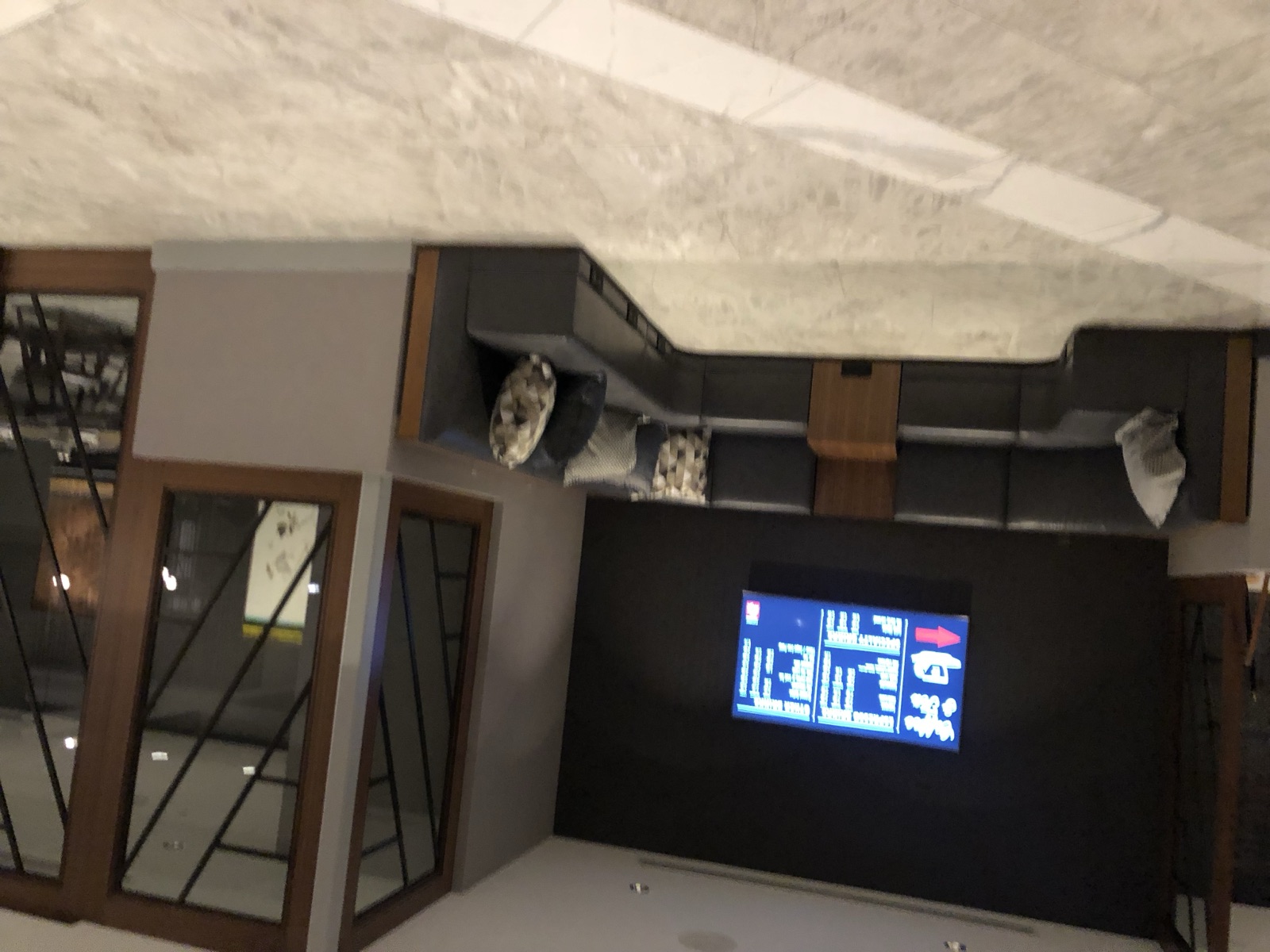
Rose Restoration’s commercial team has extensive experience working in occupied and semi-occupied facilities. We perform overnight work, weekend work, and phased work on a regular basis. A large hotel lobby restoration might be completed in a series of overnight windows — sections of the floor roped off sequentially, the work completed and the area opened for the following day’s traffic before guests begin checking out in the morning. This kind of schedule requires precise planning, experienced crews who can work efficiently under time pressure, and project management that keeps the client informed at every step.
Industries Served
Rose Restoration works with property owners and managers across a wide range of commercial sectors in the DC metropolitan area:
- Hotels and hospitality: Lobbies, corridors, ballrooms, restaurant floors, pool decks, suite bathrooms
- Federal and local government: Office buildings, courthouses, monuments, public facilities, historic preservation projects
- Retail and mixed-use: Shopping centers, flagship retail stores, building common areas and atriums
- Corporate and Class A office: Lobbies, conference areas, executive spaces, elevator banks
- Healthcare: Hospital lobbies, corridor floors, operating suite preparation areas, administrative spaces
- Education: University buildings, K-12 institutions, libraries, gymnasiums
- Industrial and logistics: Warehouses, distribution centers, manufacturing floors, loading areas
- Residential communities: Condominium lobbies, clubhouses, amenity floors
The ROI of Restoration vs. Replacement for Commercial Properties
The financial case for commercial surface restoration is compelling. Consider a hotel lobby with 5,000 square feet of marble floor that has deteriorated over 20 years of use and maintenance with incompatible products. Replacing the marble — demolition, disposal, new stone sourcing, installation, and the disruption to operations during a weeks-long construction project — might cost $150,000 to $300,000 or more, depending on the stone specified and the contractor performing the work. The hotel is partially out of operation for an extended period, creating revenue impacts and guest experience problems.
Professional restoration of the same floor — grinding, polishing, crack repair, resealing — might cost $15,000 to $40,000, performed in a series of overnight shifts with no disruption to hotel operations. The restored floor may not look identical to new stone, but it will look dramatically better than its current condition, it will perform properly for another 10 to 20 years with appropriate maintenance, and the total investment is a fraction of replacement cost.
For property owners managing building portfolios, this math justifies a systematic approach to surface maintenance: regular professional restoration on a defined cycle, rather than deferred maintenance leading to expensive replacements. The buildings that look best and hold their value longest are almost invariably those whose owners treat surface maintenance as a regular operating expense rather than an emergency capital outlay.
To discuss restoration options for your commercial property, visit our commercial services page or call Rose Restoration at 703-327-7676.
Frequently Asked Questions About Commercial Surface Restoration
Can restoration work be performed without shutting down our facility?
Yes. Rose Restoration routinely performs commercial restoration in occupied and operational facilities. We work overnight shifts, weekends, and in phased sections to allow business operations to continue without significant interruption. Specific scheduling strategies are developed based on the facility type, traffic patterns, and the client’s operational requirements. We discuss all of this thoroughly in the project planning phase so there are no surprises during the work.
How long does commercial surface restoration typically take?
Project duration depends on the surface area, the type and extent of restoration required, and the scheduling constraints of the facility. A 2,000-square-foot marble lobby in good condition requiring basic honing and polishing might be completed in two to three overnight shifts. A larger floor with significant lippage correction, crack repair, and a high-reflectance polish specification might require a week or more of phased work. We provide a realistic timeline estimate during the assessment phase.
How do I know when our commercial surfaces need professional restoration rather than just better maintenance cleaning?
Signs that maintenance cleaning alone cannot address the problem include persistent dullness or haze on stone or terrazzo that does not respond to cleaning, visible scratching or abrasion patterns, lippage (height differences between tiles), cracks or chips that have not been repaired, surfaces that show uneven sheen (some areas polished, others dull), and concrete that is dusty, scaling, or showing aggregate exposure. When routine cleaning no longer produces a satisfactory result, professional restoration is needed to reset the surface to a condition where proper maintenance can be resumed.
What is the difference between restoration and maintenance cleaning?
Maintenance cleaning removes surface soil and contamination from a surface that is in good condition. Restoration corrects mechanical damage to the surface itself — removing the layer of stone that has been scratched and dulled, re-establishing the crystalline polish, repairing cracks and chips, and applying appropriate protection. These are fundamentally different operations requiring different equipment, materials, and expertise. Cleaning crews can maintain a properly restored surface, but they cannot restore a surface that has been mechanically damaged.
Does surface restoration disrupt adjacent finishes or areas of the building?
Properly executed restoration work is contained to the target surface. We use dust extraction systems that capture grinding and polishing dust at the source, eliminating the spread of fine particles into adjacent areas. For chemical applications, we use appropriate masking and containment. For overnight work in hotel or office settings, we remove all equipment and debris before the end of the shift so the space is clean and accessible for the following day.
Looking for something else?
Get a Free Assessment from Rose Restoration
Tell us about your marble, stone, terrazzo, or concrete and our senior technicians will recommend the right restoration approach. Family-run and trusted across Washington DC, Maryland, and Virginia since 1978.
Call (703) 327-7676 · Email info@roserestoration.com · schedule a time · or send us photos.
Restore. Don't replace.
48 years of polishing marble, terrazzo, concrete, and tile across Washington DC, Northern Virginia, and Maryland. IMF, Four Seasons, Smithsonian, and the Virginia State Capitol trust us — you can too.

One Response
Will definitely be using you guys in future for my conference room tables.