
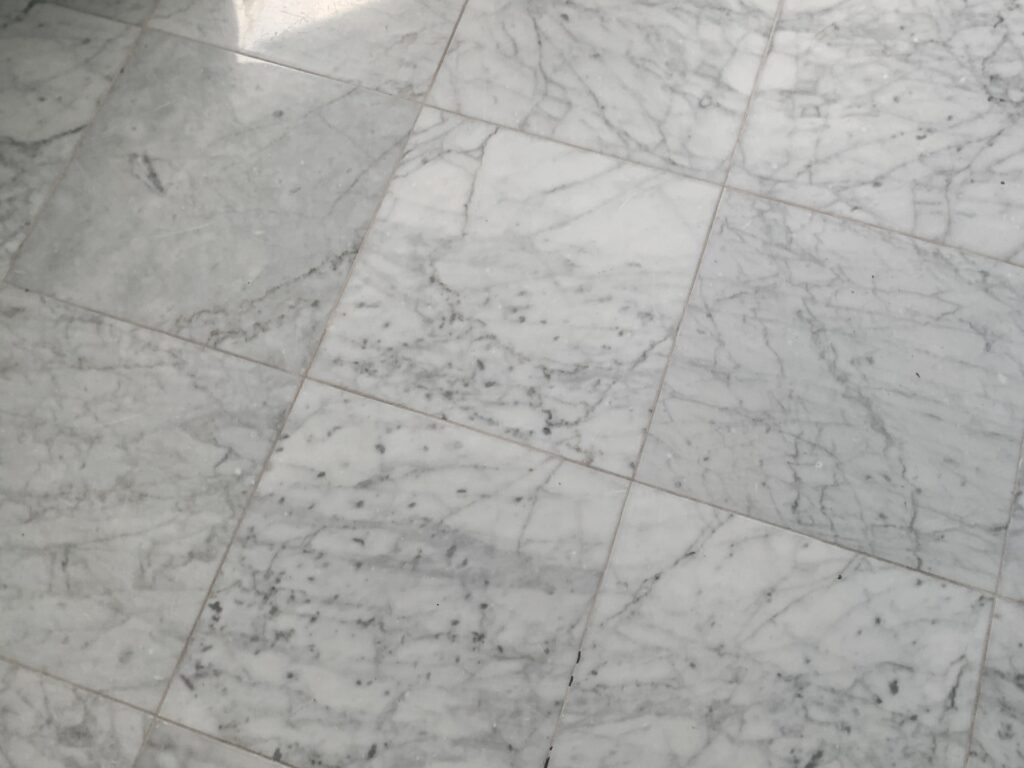

Marble requires regular maintenance because it is a calcium-based stone that is naturally vulnerable to etching from acids, staining from oils and liquids, and surface wear from daily use. Without proper care, marble countertops and floors lose their polish, develop dull spots, and accumulate damage that becomes progressively more expensive to repair.
Many homeowners choose marble for its elegance — the veining, the depth, the way it holds and reflects light. But marble is not a low-maintenance material. It is a living surface in the sense that it reacts to its environment: to the foods and beverages it encounters, the cleaning products applied to it, the grit tracked across it, and the weight of daily life.
The good news is that with a consistent maintenance routine and periodic professional care, marble can last a lifetime and look exceptional the entire time. This guide explains exactly why marble maintenance matters, what happens when it’s neglected, and what a proper care schedule looks like for both countertops and floors.
Rose Restoration International has been maintaining and restoring marble surfaces for homeowners and businesses across Virginia, Maryland, and Washington, DC for over 40 years. This is what we know about why marble maintenance is not optional — it’s essential.
What Happens to Marble Without Maintenance
Neglecting marble maintenance doesn’t mean nothing happens — it means damage accumulates silently until it reaches a point where only major intervention can reverse it. Here’s how unmaintained marble deteriorates over time:
Etching accumulates. Every acidic contact — a lemon squeezed on a countertop, a glass of wine left on a floor tile, a vinegar-based cleaner — leaves a microscopic etch mark. One etch is barely visible. A hundred etches dull the entire surface. Over years without maintenance, once-polished marble develops a pervasive haze that can’t be cleaned away.
Stains set deeper. A sealer provides a buffer between liquids and the stone’s pores. As sealers wear away without being replaced, marble becomes progressively more absorbent. Stains that might have wiped away on sealed stone now penetrate and require intensive professional treatment to remove.
Scratches compound. Fine scratches from grit, furniture, and daily use pile up into visible surface roughness. The more scratched a surface is, the more quickly new scratches accumulate — rough surfaces trap grit more readily than smooth ones.
Restoration becomes harder and more expensive. The longer damage is allowed to compound, the more material must be removed in restoration — and the higher the cost. A marble surface maintained every few years requires a fraction of the restoration work of one neglected for a decade.
The Most Common Types of Marble Damage
Understanding the specific ways marble sustains damage helps homeowners recognize problems early and take the right steps to address them.
Etching
Etching is chemical damage caused by acids reacting with marble’s calcium carbonate composition. It appears as dull, matte spots or rings — often in the shape of a glass or splash pattern. Common causes include lemon juice, vinegar, wine, coffee, tomato-based foods, and acidic cleaners. Etching is not a stain; it is actual surface erosion. It cannot be cleaned away and requires polishing or honing to correct.
Staining
Stains occur when pigmented or oil-based substances penetrate the stone’s pores. Organic stains (coffee, wine, berries) leave brownish or pinkish discoloration. Oil-based stains (cooking oil, lotion, grease) darken the stone. Rust stains come from metal objects left on wet marble. Most stains can be treated with a poultice if caught early; deeply embedded stains may require professional intervention.

Scratching and surface wear
Abrasion from foot traffic, sand and grit, dragged furniture, and abrasive cleaning tools introduces fine scratches that collectively dull marble’s polished surface. Heavy scratching in traffic paths eventually becomes visible as worn lanes across a floor.
Water damage
Excess moisture — particularly standing water, steam, or repeatedly wet grout joints — can degrade sealers, cause efflorescence (white mineral deposits on the surface), loosen tiles, and introduce mold to grout.
Heat damage
Marble can crack or discolor from thermal shock caused by placing very hot items directly on the surface. This is particularly relevant for marble kitchen countertops — always use trivets for hot pots and pans.
How Often Should Marble Be Professionally Maintained
There is no single universal answer — maintenance frequency depends on the type of marble, its location, the level of use, and how well daily care is performed. Here are general guidelines based on Rose Restoration’s four decades of experience:
Marble countertops (kitchens and bathrooms):
- Sealer inspection annually. Test by placing a few drops of water on the surface — if it absorbs within a few minutes rather than beading up, reseal.
- Professional honing and polishing every 3 to 7 years for kitchen countertops, depending on how heavily they are used and how many etches have accumulated.
- Bathroom vanity marble typically lasts longer between professional treatments — 5 to 10 years is common with good daily care.
Marble floors:
- Commercial marble floors (lobbies, office buildings, retail spaces) with heavy foot traffic typically require professional maintenance every 1 to 3 years.
- Residential marble floors in moderate-use areas (hallways, foyers, living rooms) generally benefit from professional attention every 3 to 5 years.
- Low-traffic residential marble (formal dining rooms, guest bathrooms) may go 5 to 10 years between professional treatments with careful daily maintenance.
These intervals assume consistent proper daily care — pH-neutral cleaning, immediate spill response, and periodic resealing. Marble that is cleaned with the wrong products or neglected daily will need professional attention more frequently.
Daily Marble Care Tips for Homeowners
The most powerful thing a homeowner can do for their marble is establish simple daily habits that prevent damage before it starts. These habits take very little time and dramatically extend the life of your marble surfaces.
- Clean with pH-neutral stone cleaner only. Use a cleaner specifically formulated for natural stone. Apply with a soft cloth, damp sponge, or microfiber mop. Rinse and dry thoroughly.
- Wipe spills immediately. Don’t let liquids sit on marble — especially anything acidic (juice, wine, coffee, soda, condiments). Blot with a soft cloth; don’t rub, which spreads the spill.
- Use coasters under all glasses and bottles. Even water glasses can leave rings on polished marble if condensation sits on the surface long enough.
- Use cutting boards. Never cut food directly on marble countertops. Citrus fruit, tomatoes, and other acidic foods will etch on contact, and knives will scratch the surface.
- Place felt pads under all furniture legs. Tables, chairs, decorative objects — anything that might be shifted or dragged on marble floors should have fresh, clean felt pads on its base.
- Never use vinegar, bleach, ammonia, or general-purpose cleaners on marble. Read the label of every product before it touches your stone. If it doesn’t specifically say it’s safe for natural stone or marble, don’t use it.
Professional Marble Maintenance vs. DIY Care
Homeowners and professional stone restoration specialists each have a role to play in marble care. Understanding what falls within each category prevents homeowners from either overdoing it with DIY methods or under-investing in professional care when it’s needed.
What homeowners should handle:
- Daily and weekly cleaning with pH-neutral stone cleaners
- Immediate spill response
- Application of consumer-grade penetrating stone sealers (following annual testing)
- Placement of protective mats, coasters, cutting boards, and felt pads
What requires a professional stone restoration specialist:
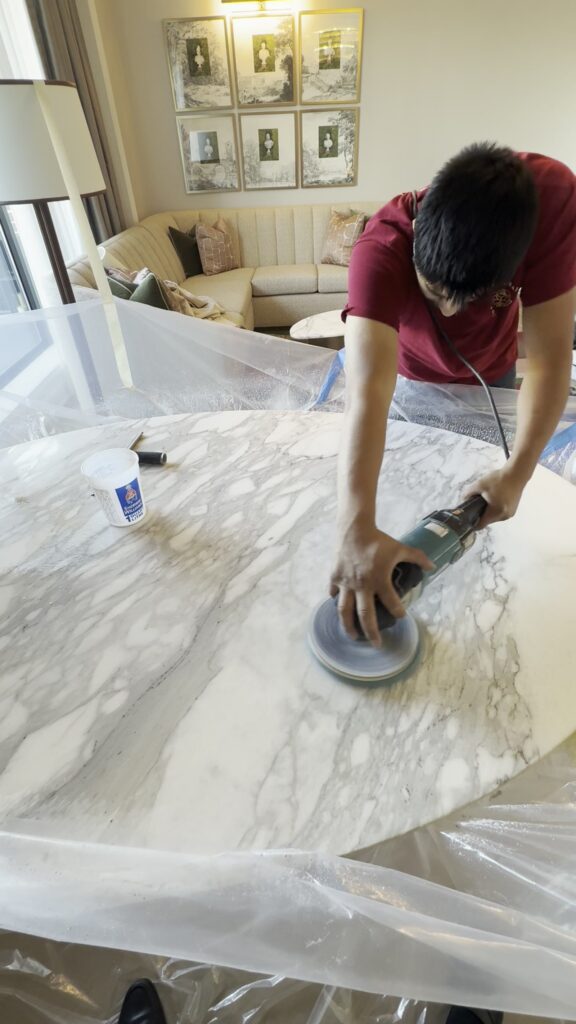
- Polishing — Restoring mirror-like gloss to etched or worn marble requires diamond-impregnated pads and professional polishing compounds. DIY polishing powders produce minimal results on significantly dulled surfaces.
- Honing — Honing removes a thin layer of stone to eliminate deep scratches, etching, and surface irregularities. It requires professional grinding equipment and trained technique.
- Chip and crack repair — Filling and color-matching chips and cracks invisibly requires professional-grade adhesives, stone dust, and expertise.
- Lippage correction — Grinding down raised tile edges requires floor grinding equipment not available to homeowners.
- Deep stain removal — Professional poultice formulations and application techniques address stains that DIY methods cannot reach.
Learn more about Rose Restoration’s residential marble maintenance and restoration services for homeowners throughout VA, MD, and DC.
The Cost of Neglecting Marble Maintenance
One of the most compelling reasons to maintain marble regularly is simple economics. The cost of professional marble maintenance is a fraction of the cost of major restoration — and major restoration is a fraction of the cost of replacement. Neglect is consistently the most expensive option.
Periodic maintenance (every 3-7 years): Professional honing, polishing, and sealing for a well-maintained marble surface typically ranges from $500 to $1,500 for a standard countertop or small floor area. This keeps the surface in excellent condition and prevents damage from deepening.
Moderate restoration (years of accumulated damage): A marble floor or countertop with significant etching, staining, and scratching — but no cracks or structural issues — may require full honing and restoration costing $1,500 to $5,000 or more depending on size and severity. This is still recoverable; the marble can be brought back to near-original condition.
Major restoration (severe or long-term neglect): Deeply worn commercial floors, severely etched countertops, or marble with lippage and structural issues can require restoration projects costing $5,000 to $10,000 or more for larger installations.
Replacement: Replacing marble floors or countertops — material plus fabrication and installation — commonly runs $8,000 to $20,000 or more for a typical residential installation. And replacement means losing the original stone entirely, often stone that could have been saved with proper maintenance.
The math is clear: investing in regular maintenance costs far less than waiting until restoration or replacement becomes necessary.
How often should marble be sealed?
Most marble surfaces should be tested annually and resealed when the test indicates the sealer has degraded. In practice, this means sealing residential marble countertops every 1 to 3 years and floors every 1 to 5 years depending on traffic and use. To test: put a few drops of water on the marble surface. If the water beads up and doesn’t absorb within a few minutes, the sealer is still effective. If the water darkens the stone quickly, it’s time to reseal.
Can marble be restored after years of neglect?
In most cases, yes — marble is remarkably restorable. Even marble that has been heavily etched, stained, scratched, or worn can typically be brought back to excellent condition through professional honing, grinding, polishing, and sealing. The exception is marble with deep cracks, breakage, or missing material, which requires additional repair work. Rose Restoration has successfully restored marble that homeowners believed was beyond saving. The earlier you act, the less intensive and expensive the restoration will be.
Is marble high maintenance compared to granite?
Yes, marble requires more active maintenance than granite. Granite is harder, less porous, and far less reactive to acids than marble. Granite can withstand occasional contact with acidic foods and liquids without etching, and it holds a sealer longer. Marble etches readily and requires more frequent sealing. That said, many homeowners and designers consider marble’s beauty worth the additional care requirements — especially with a consistent maintenance routine in place.
What should I never use on marble?
Never use vinegar, lemon juice, or any acidic cleaner on marble. Avoid bleach, ammonia, and alcohol-based products (including many glass cleaners). Do not use abrasive scrub pads, steel wool, or hard-bristle brushes. Never use general all-purpose bathroom or kitchen sprays unless the label specifically states they are safe for natural stone. Steam mops are also not recommended for marble floors. When in doubt, use only a pH-neutral stone cleaner and a soft cloth.
Does Rose Restoration offer marble maintenance services near me?
Yes. Rose Restoration International provides professional marble maintenance, honing, polishing, sealing, and restoration services throughout Northern Virginia, Maryland, and Washington, DC. We have been serving homeowners, businesses, and property managers in the VA/MD/DC metro area for over 40 years from our base in Fairfax, VA. Call 703-327-7676 or contact us online for a free estimate.
Marble is an investment worth protecting. Whether your marble surfaces are in perfect condition and you want to keep them that way, or they’ve suffered years of neglect and need professional restoration, Rose Restoration International is ready to help.
With over 40 years of experience serving homeowners and businesses across Virginia, Maryland, and Washington, DC, we have the expertise and equipment to handle any marble maintenance or restoration challenge. Call us at 703-327-7676 or use the button below to get started.