
How to Fix Etched, Dull, or Stained Marble (Before You Replace It)

How to Fix Etched, Dull, or Stained Marble (Before You Replace It)

If your marble countertop has dull spots from lemon juice, your marble table shows water rings from a wine glass, or your marble floor has lost its shine in high-traffic areas, you are dealing with one of the most common — and most fixable — problems in natural stone care. Marble etching, staining, and dullness affect thousands of homeowners every year, and the good news is that professional restoration can almost always correct the damage completely.

Before you consider replacing your marble — which can cost $5,000 to $15,000 or more for a kitchen countertop — read this guide. Rose Restoration has been fixing etched, dull, and stained marble throughout Washington DC, Maryland, and Northern Virginia for over 40 years, and we can tell you that replacement is almost never necessary.

What Causes Marble Etching?

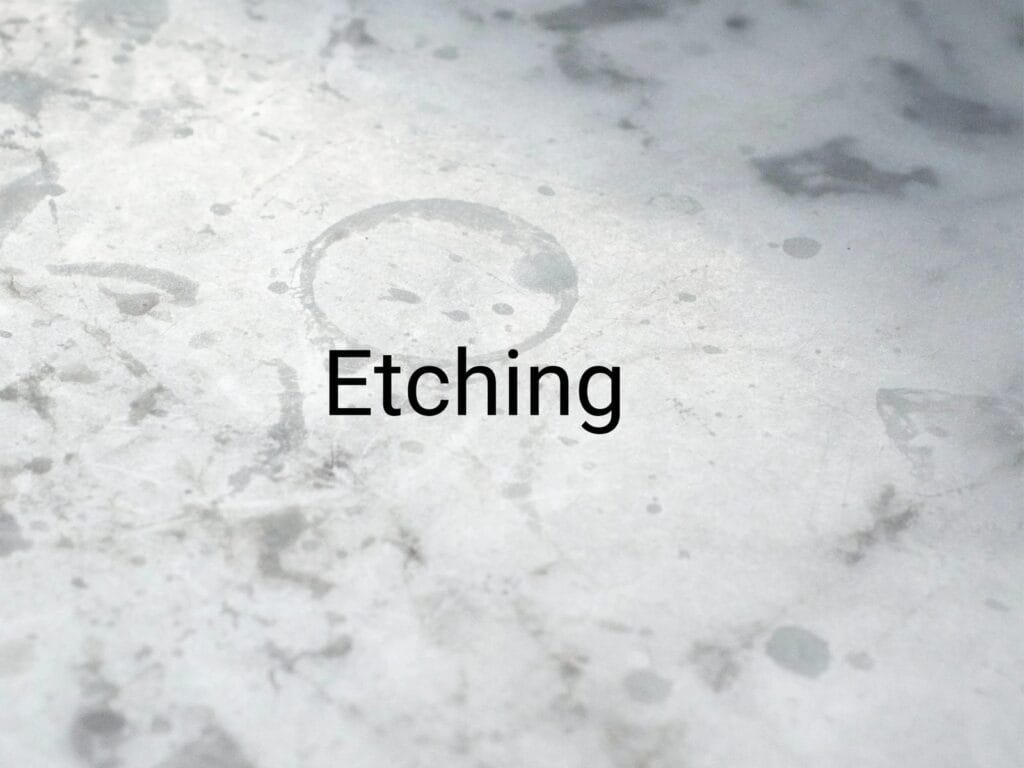
Marble is a metamorphic rock composed primarily of calcium carbonate. This mineral composition is what gives marble its beautiful veining and warm tone — but it also makes marble chemically reactive to acids. When an acidic substance contacts marble, it dissolves a thin layer of the calcium carbonate on the surface, leaving a dull, rough spot called an etch mark.

Common household substances that cause marble etching include:

  • Lemon juice and citrus fruits
  • Vinegar and vinegar-based cleaning products
  • Wine (especially red wine)
  • Tomato sauce and tomato-based foods
  • Soda and carbonated beverages
  • Many commercial bathroom and kitchen cleaners
  • Bleach and ammonia-based products
  • Some cosmetics and perfumes

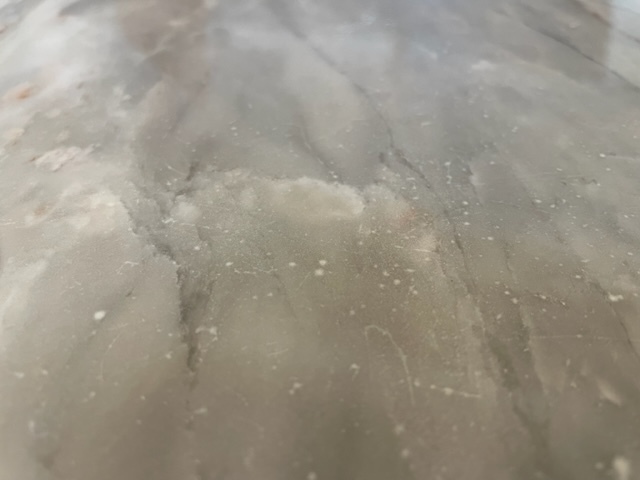
Etch marks are not stains — they are physical changes to the stone’s surface. This is an important distinction because it means etching cannot be removed by cleaning. No amount of scrubbing, poulticing, or chemical treatment will fix an etch mark. The only way to remove etching is to mechanically refinish the stone through honing and polishing.

What Causes Marble Staining?

Unlike etching, staining occurs when a substance penetrates into the pores of the stone and discolors it from within. Marble is porous, and without proper sealing, liquids can absorb into the surface and leave visible marks.

Oil-Based Stains

Cooking oils, body oils, cosmetics, and greasy foods can penetrate marble and leave darkened areas. These stains often respond well to poultice treatments — a paste of absorbent material and solvent that draws the oil out of the stone over 24–48 hours.

Organic Stains

Coffee, tea, wine, fruit juice, and food dyes cause organic stains that typically appear as pinkish-brown discolorations. These stains can often be removed with hydrogen peroxide-based poultice treatments.

Rust Stains

Metal objects left on marble — iron furniture legs, steel wool, nails, or cans — can leave orange-brown rust stains that are among the most difficult to remove. Rust stains require specialized rust-removal poultices and may need professional treatment.

Water Stains and Rings

Water rings on marble are usually etch marks, not stains. The minerals in hard water or the slight acidity of the water itself react with the marble surface and leave dull rings. These are removed through polishing, not through stain-removal techniques.

DIY Marble Repair vs. Professional Restoration

Homeowners searching for how to fix etched marble will find plenty of DIY advice online. Here is an honest assessment of what you can and cannot accomplish on your own:

What Homeowners Can Do

  • Minor stain removal: Small oil or organic stains can sometimes be removed with a poultice made from baking soda and water (for oil stains) or baking soda and hydrogen peroxide (for organic stains). Apply the paste, cover with plastic wrap, and leave for 24–48 hours.
  • Light etch mark buffing: Very light etch marks on polished marble can sometimes be reduced using marble polishing powder (tin oxide) and a soft cloth. This works only for superficial etching — deeper marks require professional equipment.
  • Regular maintenance: Keeping marble clean with pH-neutral stone cleaner and promptly wiping up spills prevents most damage from occurring in the first place.

What Requires Professional Restoration

  • Multiple or deep etch marks: When a countertop or floor has accumulated many etch marks over months or years, the only effective solution is professional honing and polishing that refinishes the entire surface uniformly.
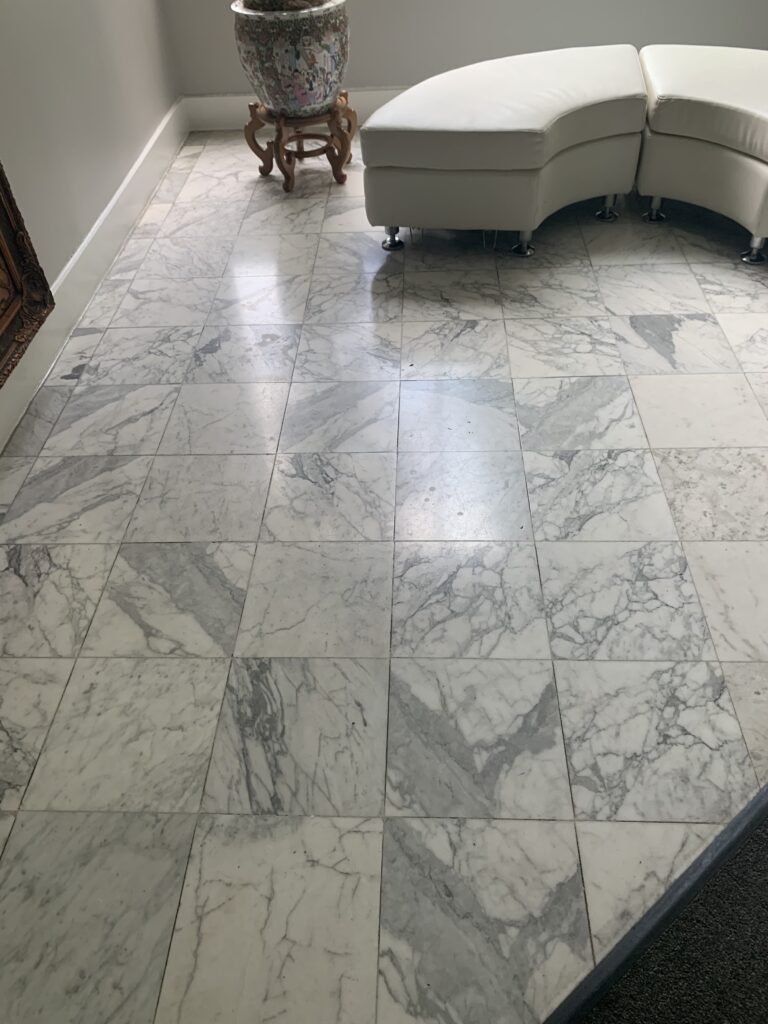
  • Dull or worn floors: Marble floors that have lost their shine from foot traffic require diamond honing across the entire surface — equipment and expertise that are not available to homeowners.
  • Scratches: Scratches in marble are removed the same way as etch marks — through progressive diamond honing. Deep scratches may require starting with coarser grits.
  • Uneven finish: When some areas of a marble surface are shiny and others are dull, the entire surface needs to be honed and polished to achieve uniform appearance.
  • Chip and crack repair: Chips and cracks require color-matched epoxy fills that are ground and polished flush with the surrounding stone.

The Professional Marble Restoration Process

Professional marble restoration follows a systematic process that corrects surface damage and restores the stone to its original finish:

Deep Cleaning

The surface is thoroughly cleaned with pH-neutral stone cleaner to remove oils, soap residue, and surface buildup. This step ensures that the diamond honing process works directly on the stone without interference from surface contaminants.

Honing

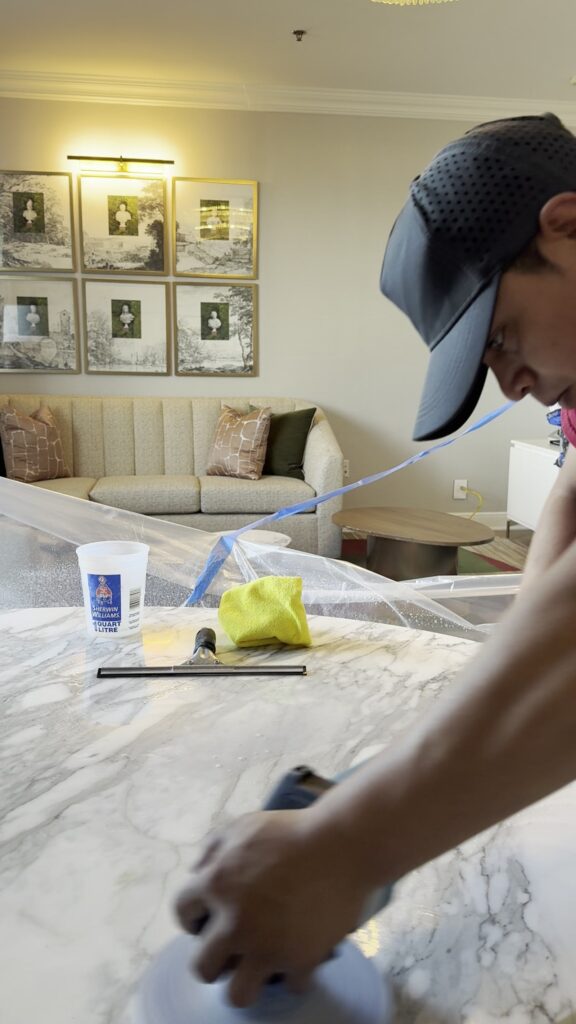
Diamond abrasive pads are used to mechanically remove the damaged surface layer of the marble. Honing removes etch marks, scratches, and wear marks by grinding away the compromised material and exposing fresh, undamaged stone beneath. The grit sequence typically starts at 200–400 grit for damaged surfaces and progresses to finer grits.

Polishing

After honing, progressively finer diamond pads (800–3000+ grit) are used to bring the marble surface to the desired finish level. A honed finish produces a smooth, matte appearance. A polished finish produces the classic high-gloss, reflective surface most people associate with marble.

Sealing

A professional-grade impregnating sealer is applied to fill the pores of the marble and resist future staining. Impregnating sealers work below the surface and do not change the appearance or feel of the stone. They provide a critical barrier against oil, water, and food-based stains.

Marble Countertop Restoration vs. Marble Floor Restoration

While the fundamental process is the same — honing and polishing with diamond abrasives — countertops and floors have different practical considerations:

Countertops

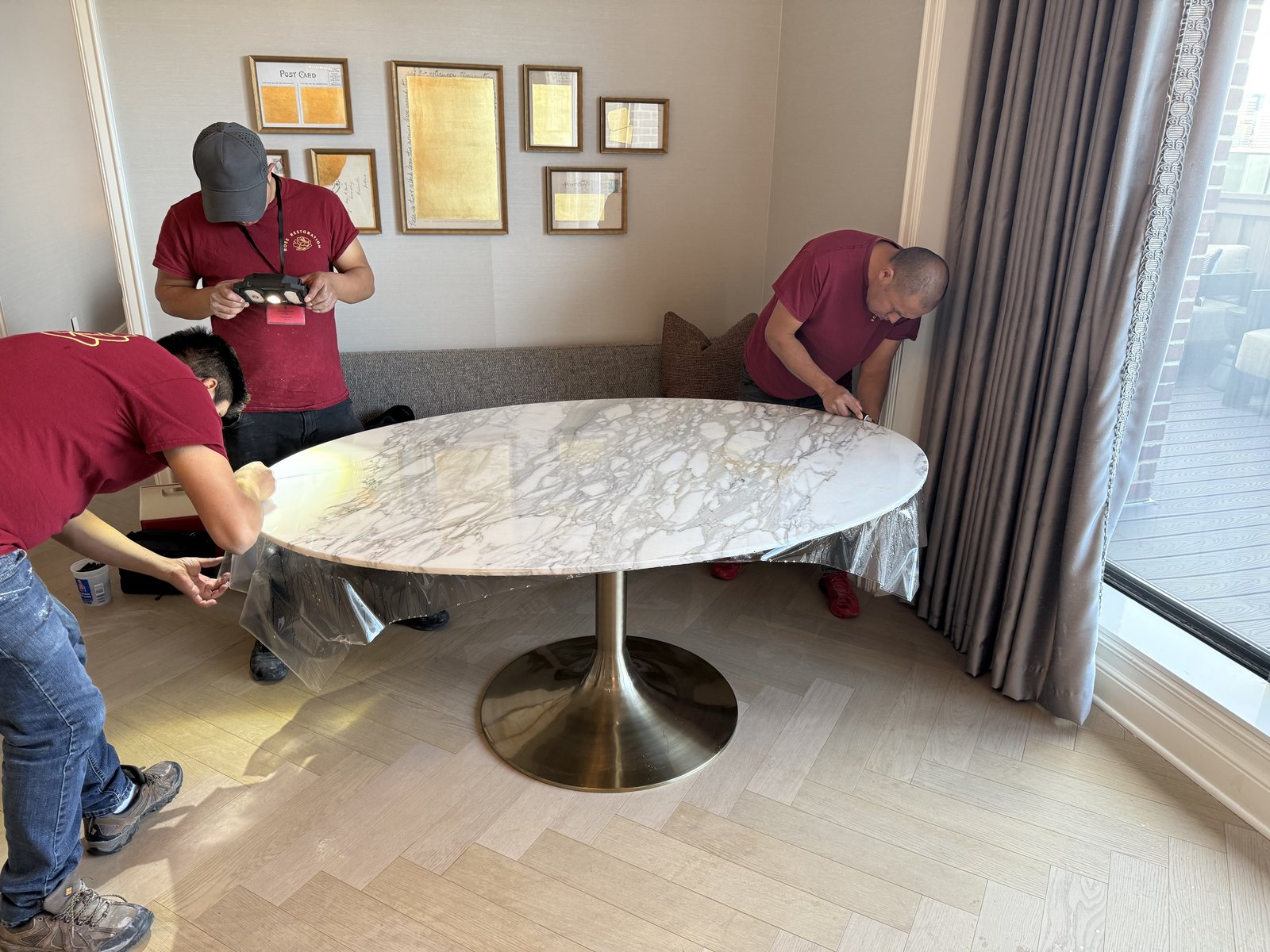
Countertop restoration is performed with hand-held machines and smaller diamond pads that can navigate edges, backsplash transitions, and sink cutouts. Most kitchen countertop restorations are completed in 3–6 hours. The primary damage is usually etching from cooking acids and staining from food and beverages.

Floors

Floor restoration uses larger floor machines that can cover more area efficiently. Floor projects require more time — typically 1–3 days depending on square footage. The primary damage is usually wear patterns from foot traffic, scratching, and accumulated dullness. Floors may also require grout cleaning and repair as part of the restoration.

Marble Armor: Preventing Future Damage on Countertops

After a countertop restoration, many homeowners ask how to prevent the same damage from happening again. This is where Marble Armor provides a solution that traditional sealers cannot.

Standard impregnating sealers protect against staining but do not prevent etching. Acids still react with the marble surface even when it is sealed. Marble Armor is a specialized protective coating that creates an invisible barrier on the surface of the stone, protecting against both staining and etching — the two most common causes of marble countertop damage.

Marble Armor is designed for countertops, vanities, tabletops, bar tops, and backsplashes. It is not designed for floor applications. The coating preserves the natural appearance of the stone and is available in satin or gloss finishes to match your preferred look.

Cost of Marble Restoration vs. Replacement

Marble restoration is dramatically less expensive than replacement:

  • Countertop restoration: Most kitchen countertop restorations cost $500–$1,500 depending on size, number of pieces, and extent of damage.
  • Countertop replacement: New marble countertop fabrication and installation typically costs $5,000–$15,000+ including demolition, material, fabrication, and installation.
  • Floor restoration: Marble floor restoration typically costs $3–$10 per square foot depending on condition and desired finish.
  • Floor replacement: New marble floor installation costs $15–$50+ per square foot including demolition, material, and installation.

Restoration also avoids the disruption of demolition, the risk of not finding a matching stone for replacement, and the waste of discarding perfectly good natural stone material.

Frequently Asked Questions About Marble Restoration

Can you remove etch marks from my marble countertop?

Yes — this is one of the most common things we do. Etch marks from lemon, vinegar, wine, and cleaning products are polished out during the restoration process. The surface is then sealed or protected with Marble Armor to prevent recurrence.

How much does marble restoration cost for a kitchen countertop?

Most kitchen countertop restorations range from $500–$1,500 depending on the size, number of pieces, and extent of damage. Compare that to $5,000–$15,000+ for replacement including demolition, fabrication, and installation. We provide a free assessment with a detailed, no-obligation written estimate.

How long does marble restoration take?

A typical countertop restoration takes 3–6 hours. Floor restoration depends on the area — most are completed in 1–2 days. You can use your surfaces the same day in most cases.

Should I seal my marble after restoration?

Yes. We apply a professional-grade impregnating sealer after every restoration. For countertops exposed to cooking acids, we also recommend Marble Armor for the highest level of protection against both staining and etching.

Will the restoration match the rest of my marble?

Absolutely. We restore the entire surface uniformly, so there are no mismatched areas. For chip and crack repairs, we use color-matched fillers that blend seamlessly with the surrounding stone.

What cleaning products should I use on marble?

Use only pH-neutral stone cleaners. Avoid vinegar, lemon-based cleaners, Windex, bleach, and any product with acid. We provide specific care instructions after every project.

Get a Free Quote
White Carrara marble kitchen countertop restoration
Black Marble Polished Table Before and After (5)
Technician polishing a marble countertop
How Do You Remove A Stain Or Etch On A Marble Countertop?

Leave a Reply

Call Now Get a Quote