
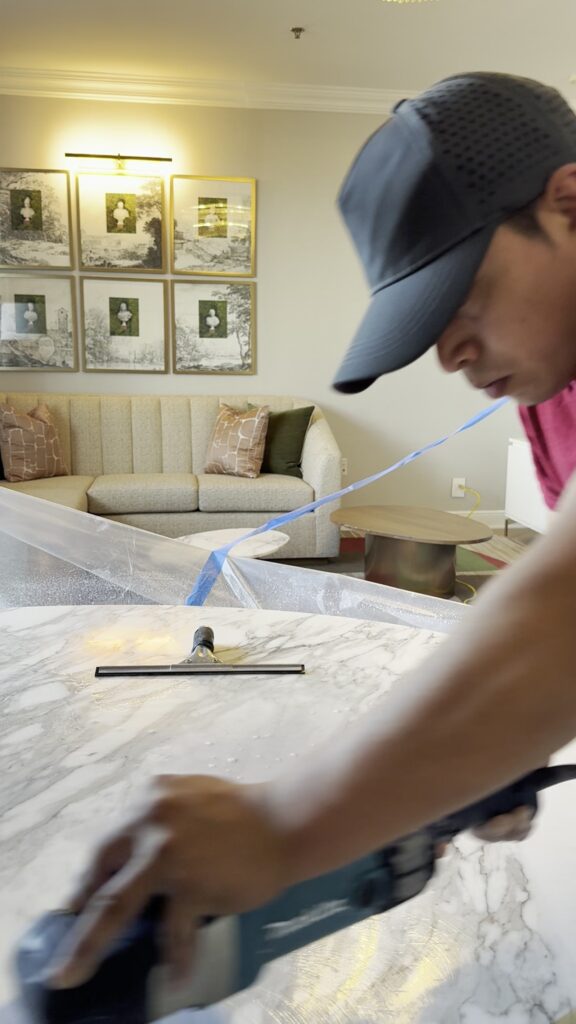
Rose Restoration — a Washington DC specialty restoration subcontractor — provides a guide for general contractors specifying stone restoration scopes on commercial project bids. Proper specification avoids change orders, delivery delays, and substrate-related system failures.
 By Tom Kuhn, CEO, Rose Restoration
Rose Restoration has restored marble, terrazzo, concrete, and natural stone across DC, MD, and VA since 1978.
Stone restoration is one of the most frequently mis-scoped line items in commercial construction and renovation bids. General contractors who get the spec right protect their margins, avoid change orders, and deliver a finished product that satisfies the owner. Those who get it wrong face cost overruns, schedule delays, and finished work that does not meet expectations. After nearly five decades as a stone restoration subcontractor in the DC metro area, here is what we wish every GC knew before writing the scope.
Writing a Tight Restoration Scope
The most common mistake GCs make is writing a vague scope and assuming the sub will figure it out. That approach guarantees change orders. A good stone restoration scope addresses these elements explicitly:
Define the Work by Process, Not Outcome
Saying “restore marble floors to like-new condition” is subjective and unenforceable. Instead, specify the actual processes required:
- Diamond honing with progressive grits (specify starting and finishing grit if known)
- Lippage removal to a specified tolerance (1/32 inch is standard for commercial)
- Crack and chip repair with color-matched epoxy
- Polishing to a specified gloss level (measured with a gloss meter, typically 70-80 units for polished marble)
- Impregnating sealer application (specify product or performance standard)
This specificity allows apples-to-apples comparison between subs and eliminates scope disputes during the project.
Identify Every Surface
Include a detailed area schedule that lists each stone surface by location, stone type, approximate square footage, and current condition. Do not group dissimilar stones together. Marble, terrazzo, granite, and limestone all require different processes, equipment, and pricing.
Specify Access and Scheduling Requirements
Stone restoration generates noise, dust, and water. In an occupied building or a multi-trade job site, access constraints dramatically affect pricing and schedule. Your scope should address:
- Working hours and any off-hours requirements
- Phasing requirements (can the sub work the entire area at once, or must it be done in sections?)
- Coordination with other trades (flooring work should follow all overhead MEP work and painting)
- Dust containment requirements
- Water management and drain access
- Protection of finished work by subsequent trades
Common Spec Mistakes That Cost Money
These are the errors we see most frequently in commercial stone restoration specs. Each one creates risk for the GC.
Confusing Polishing with Coating
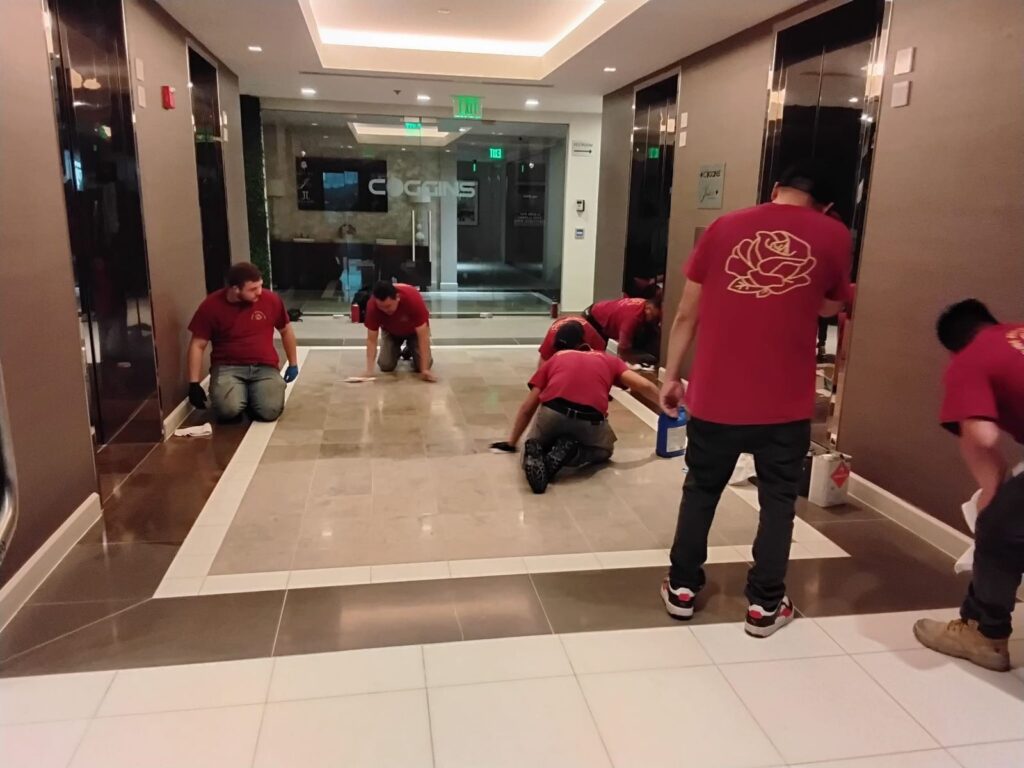
There is a critical difference between mechanically polishing stone (a permanent process that restores the stone’s natural finish) and applying a topical coating or wax (a temporary surface treatment that requires ongoing maintenance and eventually fails). Specify which you want. If the spec says “polish” but the sub applies a coating, the owner will be unhappy in six months when it starts peeling.
Omitting Lippage Removal
If the stone has uneven tile edges (lippage), honing and polishing alone will not fix it. Lippage removal requires grinding with coarse diamonds and adds significant time and cost. If your scope does not address lippage, you will get a change order when the sub discovers it on site. Survey the floor beforehand and include lippage removal where needed.
Not Specifying Finish Level
Honed and polished are not the only options. The range of finishes from matte honed to high-gloss polished is continuous, and different gloss levels have very different costs. A high-gloss polish (80+ gloss units) requires significantly more grinding steps than a satin finish (40-50 gloss units). Specify the target with a measurable number.
Ignoring Grout and Joint Work
Stone restoration often reveals grout and joint issues that were hidden by the stone’s worn appearance. Specify whether grout cleaning, regrouting, or caulk joint replacement is included in the scope. If it is not, add a provisional allowance so the sub can address issues as they are discovered without a separate change order process.
What to Look for in a Stone Restoration Sub
Stone restoration is a specialty trade. Not all subs are equal, and the wrong sub can damage expensive stone irreparably. Here is what separates qualified subs from floor-cleaning companies that dabble in stone work.
In-House Technicians
Your sub should employ its own trained technicians, not subcontract the actual labor to day workers. Ask how many full-time stone technicians are on staff. A company with 30-plus technicians like ours can staff multiple crews for large projects and maintain schedule even if a technician is out.
Equipment Ownership
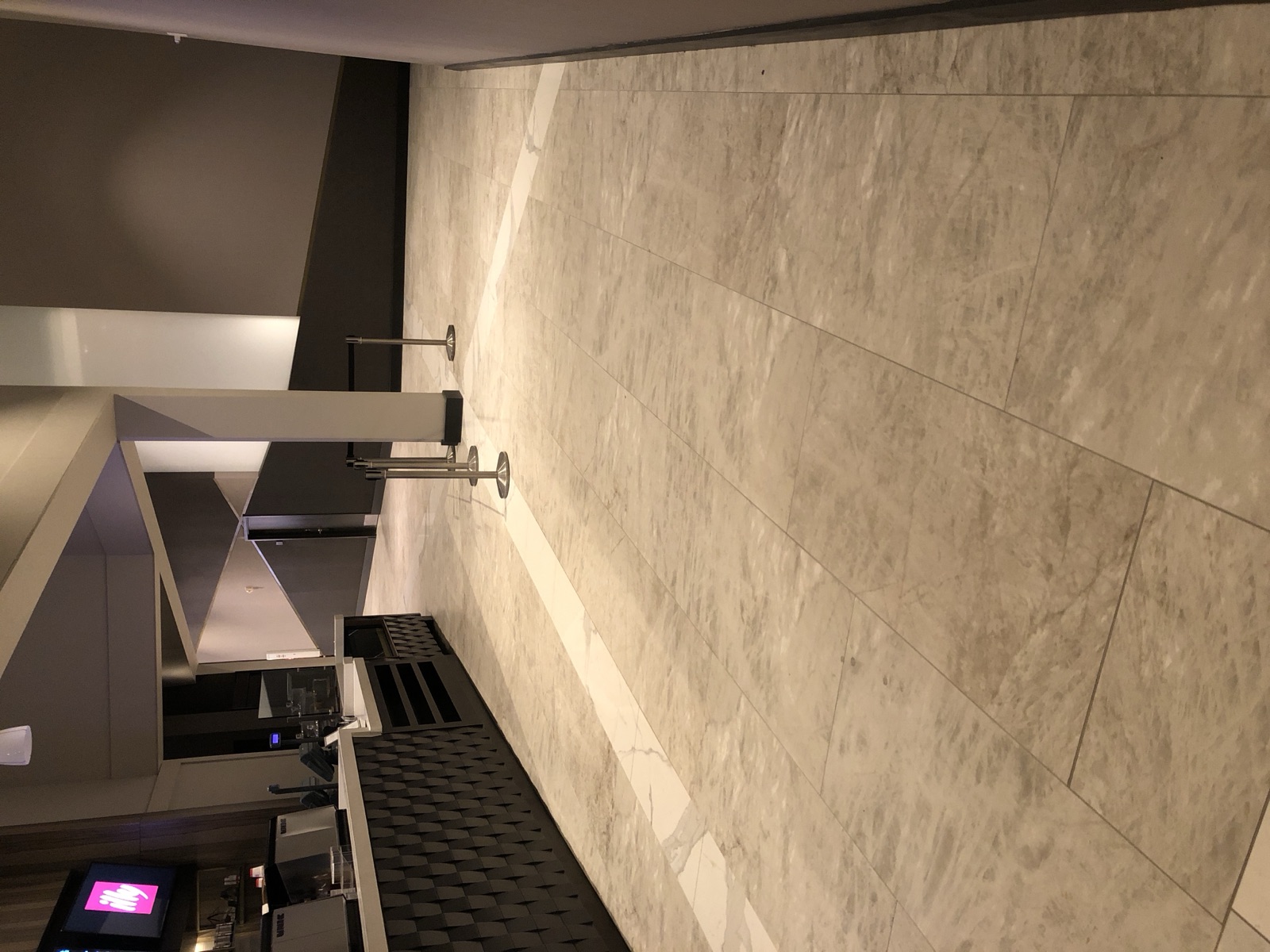
Professional stone restoration requires specialized equipment: planetary grinders, variable-speed polishers, dust extractors, and diamond tooling inventories worth tens of thousands of dollars. If the sub is renting all their equipment, they are not a stone restoration specialist.
Insurance and Bonding
Verify general liability with coverage limits appropriate for the project value, workers’ compensation for all technicians, and bonding capacity if required. Stone restoration involves heavy equipment on expensive surfaces in occupied spaces. The insurance matters.
Portfolio of Comparable Work
Ask for references from projects similar to yours in scope, stone type, and environment. A company that excels at residential marble may not have the systems, equipment, or crew depth for a 20,000-square-foot commercial lobby. Verify references directly.
Documentation Requirements
Build these documentation requirements into your subcontract to protect the project and satisfy the owner’s expectations:
- Pre-work condition documentation: Photos and gloss meter readings of all surfaces before work begins, establishing the baseline.
- Test area approval: Require the sub to complete a test area (typically 25 to 50 square feet) for owner approval before proceeding with full production.
- Daily progress reports: Areas completed, issues encountered, and any conditions that may affect scope or schedule.
- Completion documentation: Photos and gloss meter readings of all surfaces after work is complete, demonstrating compliance with the specified finish level.
- Maintenance instructions: Written care and maintenance guidelines for the owner’s facilities team, specific to the stone types and finishes on the project.
- Warranty documentation: Written warranty specifying what is covered, for how long, and under what conditions.
Sequencing and Coordination
Stone restoration should be one of the last trades on site. Ideally, it follows all overhead work, painting, millwork installation, and any other activities that could damage finished floors. The only work that should follow stone restoration is final cleaning, furniture installation, and punch list.
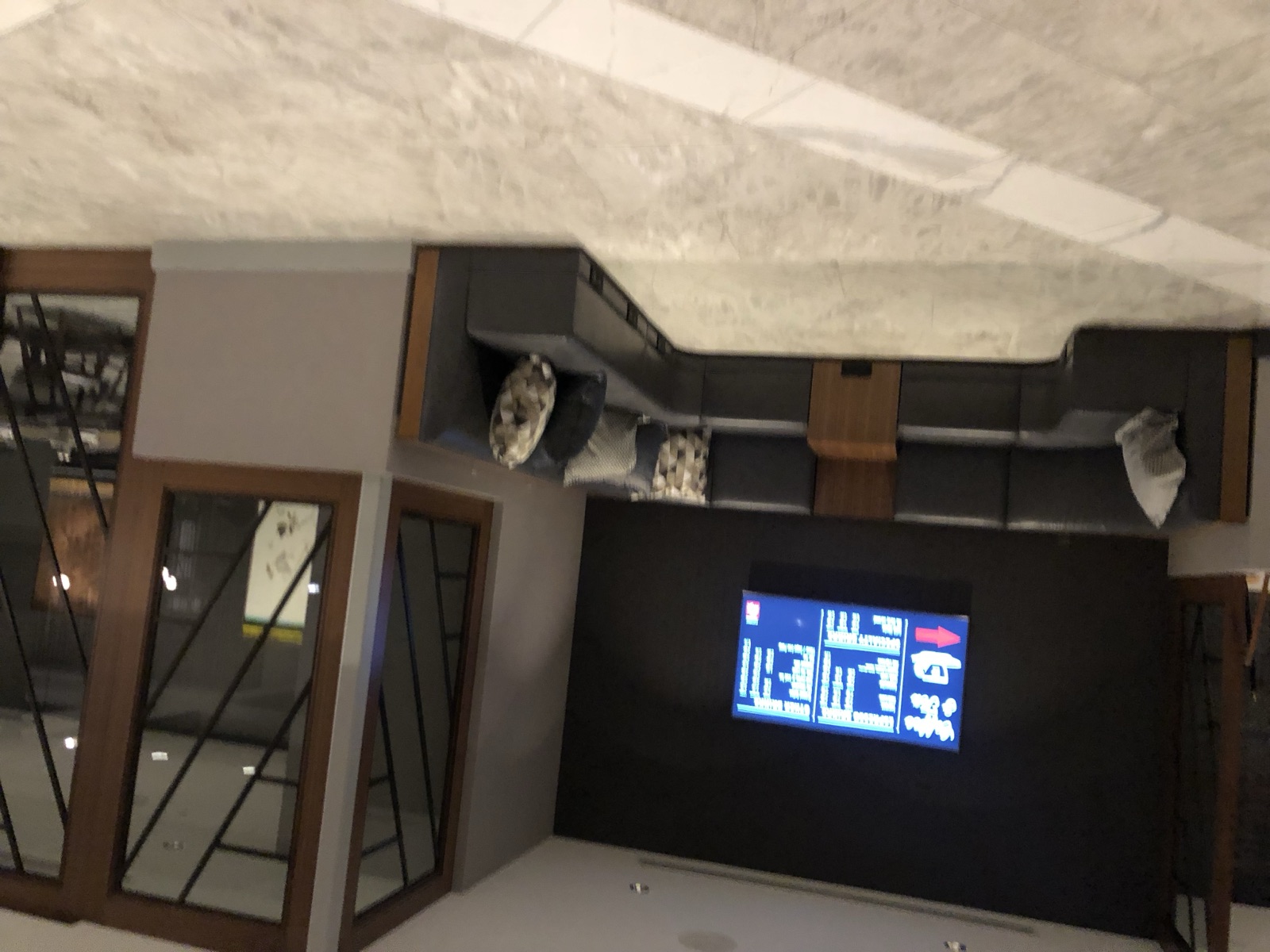
Build adequate floor protection into the schedule after restoration is complete. Require all subsequent trades to use approved floor protection (Ram Board or equivalent) and prohibit rolling heavy equipment directly on restored surfaces.
Partner with a Specialist
Rose Restoration International has partnered with general contractors on commercial stone restoration projects across Virginia, Maryland, and DC since 1978. We provide detailed proposals that align with your bid structure, carry full insurance and bonding, and maintain a crew of 30-plus in-house technicians. Contact us during the bid phase and we will help you get the spec right before it becomes a problem. Call 703-327-7676.
For GCs handling stone restoration scopes in Arlington and the Northern Virginia commercial corridor, the spec language matters as much as the contractor — vague specs are how change orders happen.
Looking for something else?
Get a Free Assessment from Rose Restoration
Tell us about your marble, stone, terrazzo, or concrete and our senior technicians will recommend the right restoration approach. Family-run and trusted across Washington DC, Maryland, and Virginia since 1978.
Call (703) 327-7676 · Email info@roserestoration.com · schedule a time · or send us photos.
Restore. Don't replace.
48 years of polishing marble, terrazzo, concrete, and tile across Washington DC, Northern Virginia, and Maryland. IMF, Four Seasons, Smithsonian, and the Virginia State Capitol trust us — you can too.
Watch the Process
Real Rose Restoration projects on video — no stock footage, no staged demonstrations.