
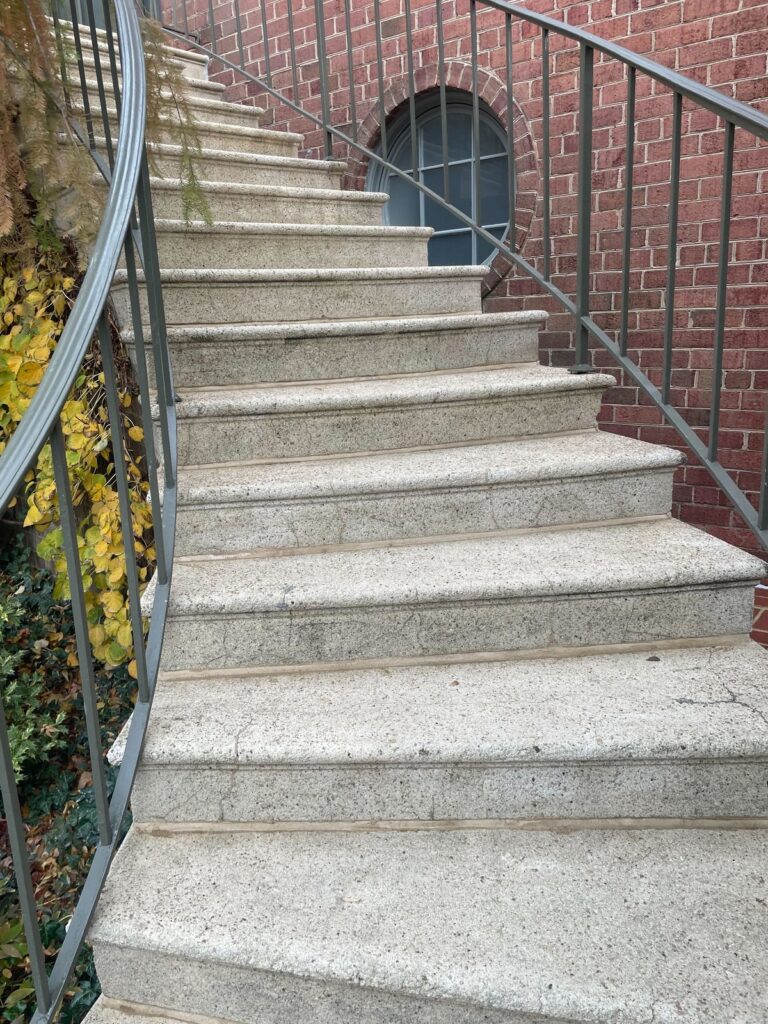
Rose Restoration — a Washington DC granite restoration contractor — explains how often granite countertops need sealing, which sealers to use, and how to test whether re-sealing is due.
 By Tom Kuhn, CEO, Rose Restoration
Rose Restoration has restored marble, terrazzo, concrete, and natural stone across DC, MD, and VA since 1978.
Why Granite Needs Sealing
Granite is one of the hardest natural stones, but it is still porous. Microscopic pores in the surface absorb liquids — water, oil, wine, coffee — which can cause staining if the stone is not sealed. A quality penetrating sealer fills these pores from within, creating an invisible barrier that repels liquids while allowing the stone to breathe.
How Often Should Granite Be Sealed?
The answer depends on the granite color, location, and usage:
Sealing protects granite but it does not correct damage that is already there. Granite restoration, polishing and sealing handles chip and crack repair first, so the surface is sound before it is sealed.
- Kitchen countertops: Every 1-2 years (high exposure to oils and acids)
- Bathroom vanities: Every 2-3 years
- Floors: Every 2-3 years (residential) or annually (commercial high-traffic)
- Outdoor granite: Annually (UV and weather degrade sealers faster)
The Water Drop Test
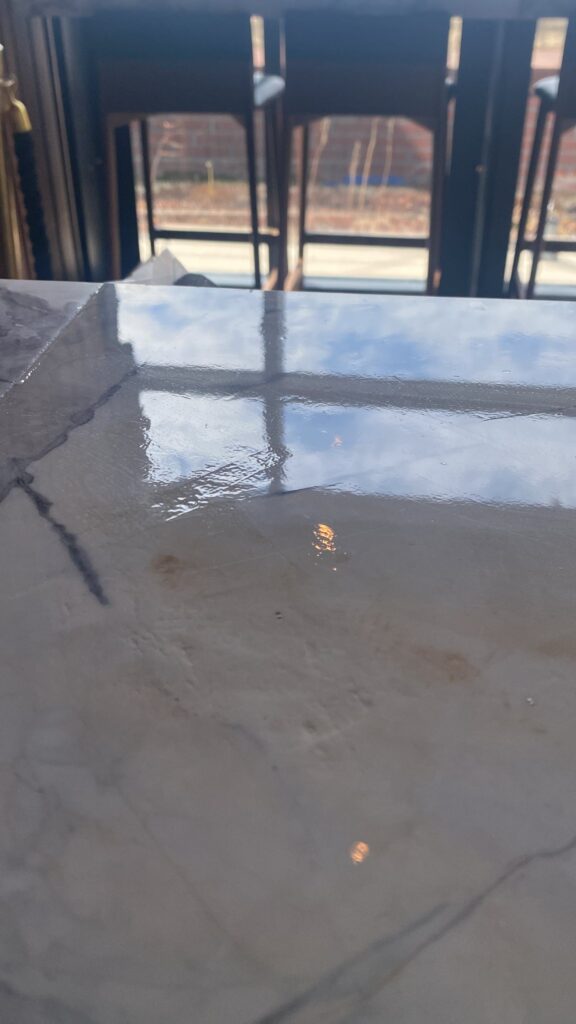
Not sure if your granite needs sealing? Place a few drops of water on the surface and wait 10-15 minutes. If the water beads up and sits on the surface, your sealer is still working. If the water absorbs into the stone and darkens it, it is time to reseal.
Types of Granite Sealers
Penetrating (Impregnating) Sealers — Recommended
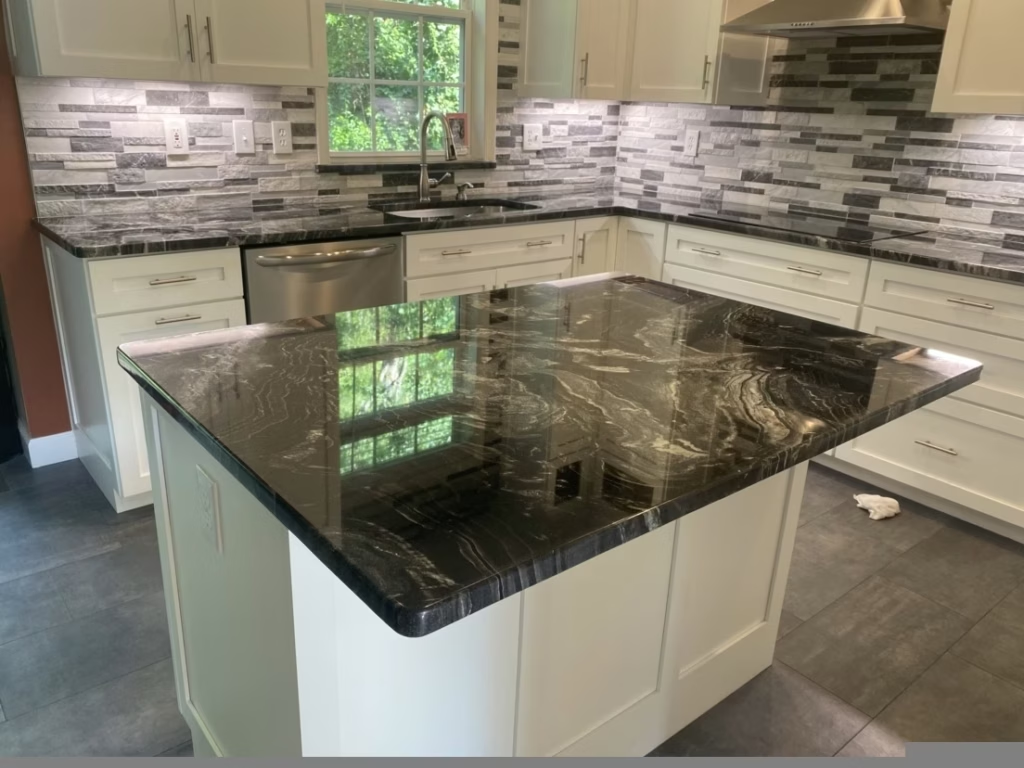
These sealers absorb into the stone’s pores and create a barrier below the surface. They do not change the appearance, feel, or breathability of the granite. This is what professionals use and what we recommend for all granite surfaces.
Topical Sealers — Not Recommended for Granite
Topical sealers sit on the surface like a coating. They can make granite look wet or glossy, but they peel, scratch, and trap moisture underneath — leading to cloudy discoloration over time. Avoid topical sealers on granite countertops.
Enhancing Sealers
These are penetrating sealers that slightly darken the stone and enhance the color and veining. Popular for black, brown, and dark granite where you want a richer, deeper appearance. Also commonly used on slate and bluestone.
How to Seal Granite Countertops (DIY)
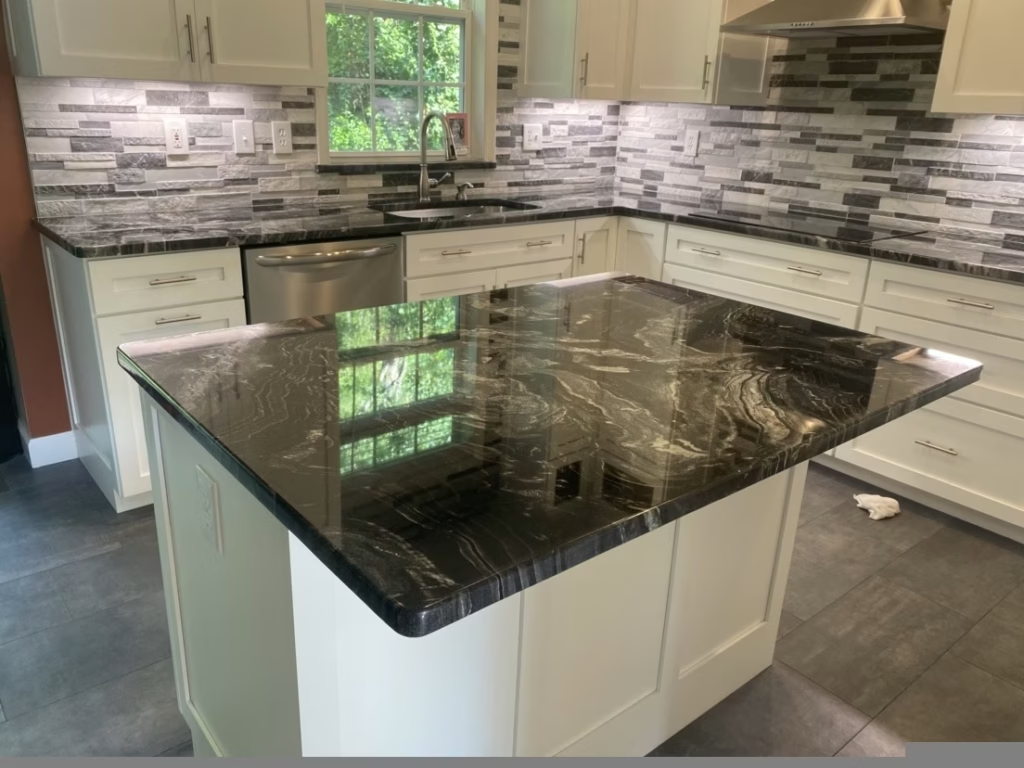
- Clean the surface thoroughly — use a pH-neutral stone cleaner and let it dry completely (2-4 hours)
- Apply the sealer — spray or pour a thin, even coat across the surface
- Let it absorb — wait 5-15 minutes (follow the product instructions)
- Apply a second coat — for kitchen countertops, two coats provide better protection
- Wipe off excess — after the absorption time, buff off any remaining sealer with a clean cloth
- Cure time — avoid getting the surface wet for 24 hours
Professional vs. DIY Sealing
DIY sealing with a quality consumer sealer works well for routine maintenance. Professional sealing is recommended when:
- The granite has never been sealed or hasn’t been sealed in years
- Stains need to be removed before sealing
- The granite needs polishing or repair before sealing
- You have a large area (commercial floors, multiple surfaces)
- You want the longest-lasting protection (professional-grade sealers outperform consumer products)
Granite Colors and Sealing Frequency
Not all granite is equally porous:
- Light granite (white, beige, cream): More porous — seal every 6-12 months for kitchen countertops
- Medium granite (gold, brown, green): Moderate porosity — seal every 1-2 years
- Dark granite (black, dark brown): Least porous — some dark granites barely absorb sealer. Seal every 2-3 years or test regularly.
Common Sealing Mistakes
- Sealing dirty stone — sealer locks in dirt and contaminants. Always clean thoroughly first.
- Not wiping off excess — sealer left on the surface creates a hazy, streaky film
- Sealing wet stone — moisture in the pores prevents the sealer from absorbing properly
- Using the wrong sealer — topical sealers on granite cause more problems than they solve
- Skipping re-application — sealers wear off. Set a calendar reminder.
Professional Granite Sealing in VA, MD, and DC
Rose Restoration provides professional granite sealing and maintenance throughout Virginia, Maryland, and Washington DC. We use commercial-grade penetrating sealers that outperform consumer products and last longer between applications. Contact us at 703-327-7676 or visit roserestoration.com for a free estimate.
Looking for something else?
Get a Free Assessment from Rose Restoration
Tell us about your marble, stone, terrazzo, or concrete and our senior technicians will recommend the right restoration approach. Family-run and trusted across Washington DC, Maryland, and Virginia since 1978.
Call (703) 327-7676 · Email info@roserestoration.com · schedule a time · or send us photos.
Related reading
Restore. Don't replace.
48 years of polishing marble, terrazzo, concrete, and tile across Washington DC, Northern Virginia, and Maryland. IMF, Four Seasons, Smithsonian, and the Virginia State Capitol trust us — you can too.