
Residential Slate & Flagstone Restoration Services
At Rose Restoration, we specialize in cleaning, restoring, and protecting slate and flagstone surfaces, bringing out their natural beauty while preserving their durability. Over time, these natural stones can fade, become uneven, or lose their luster due to everyday wear, sunlight/UV exposure, and worn or failing coatings.
Our expert technicians use professional-grade tools and proven techniques to rejuvenate your stonework, ensuring it remains a timeless and elegant feature in your home.
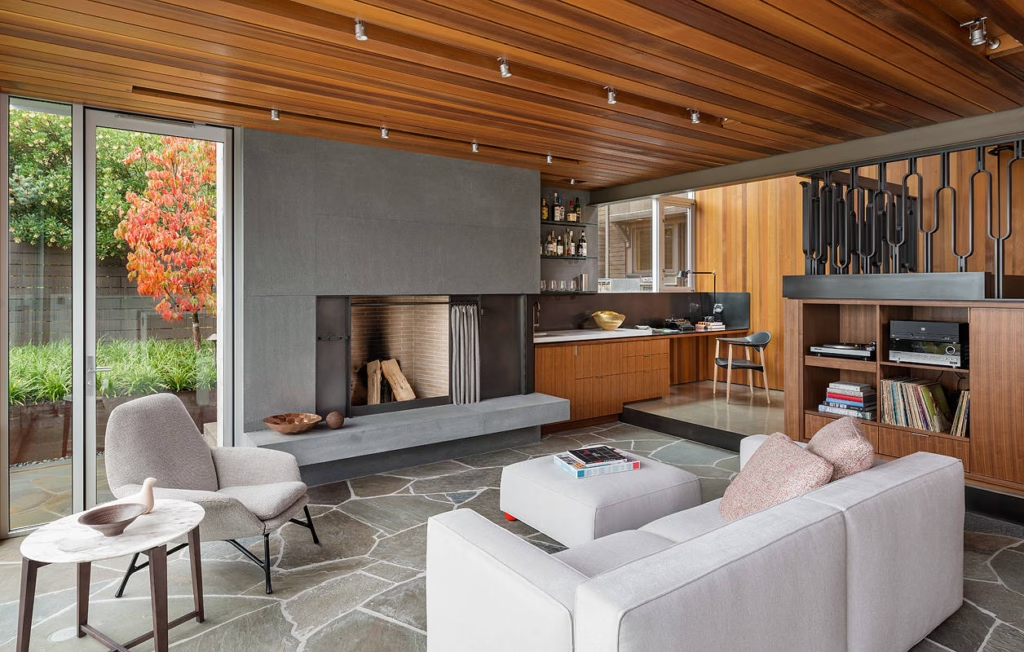
Comprehensive Restoration Process
Our most common restoration scope includes:
Stripping away old sealers or contaminants to fully prep the surface.
Deep cleaning with bristle brushes equipped to our floor machines to safely remove dirt and buildup.
Applying a premium color-enhancing sealer to revive vibrant colors and textures while inhibiting future wear, stains, and fading.
This process not only restores the stone’s natural beauty but also strengthens and protects it for years to come.
In addition to surface restoration, we provide full cosmetic repairs, including:
Replacing or repairing missing grout and mortar.
Fully raking and regrouting joints with durable, long-lasting materials.
Resetting loose or sunken stones to create a level and secure surface.
Repairing cracks or chips to blend seamlessly with surrounding areas.
Whether indoors or outdoors, our services restore both the appearance and strength of your stone surfaces.
Deep Cleaning & Color-Enhancing Sealing
Over time, dirt, UV exposure, and worn coatings can cause slate and flagstone to look dull or uneven.
We begin by stripping away any previous sealers or contaminants, using specialized cleaning solutions and bristle brush machines that are safe for natural stone.
Once thoroughly cleaned, we apply a high-quality color-enhancing sealer designed to:
Highlight the natural variations and depth of color in the stone.
Protect against water, stains, and environmental damage.
The result is a vibrant, long-lasting finish that looks refreshed and is much easier to maintain.
Grout & Mortar Repair
Missing or damaged grout and mortar joints affect more than appearance—they can lead to structural issues and water damage.
Our comprehensive grout and mortar repair services include:
Spot repairs for missing or crumbling areas.
Full raking and regrouting, removing failing materials and replacing them with high-quality, long-lasting joint materials.
Color-matching techniques for seamless integration with your existing stonework.
By restoring the integrity of these joints, we prevent water intrusion, protect underlying structures, and create a uniform, finished look.
Resetting Loose or Sunken Stones
Slate and flagstone can shift or settle over time, leaving pieces loose, uneven, or sunken.
Our skilled team carefully lifts, levels, and resets each stone, addressing the root cause of movement to restore both safety and beauty.
This service is especially beneficial for patios, walkways, and high-traffic areas, where smooth, even surfaces are critical for both appearance and function.
Crack & Chip Repair
Even the most durable natural stones can develop cracks or chips over time. Instead of replacing entire sections, our technicians use advanced repair techniques to restore damaged areas, blending repairs seamlessly with the surrounding stone.
This cost-effective solution extends the life of your slate and flagstone while maintaining its natural, elegant appearance.
Why Choose Rose Restoration
With over 40 years of experience, Rose Restoration is trusted by homeowners for exceptional craftsmanship and customer care.
We deliver results that stand the test of time, offering:
Expert Technicians: Highly trained specialists in natural stone repair and maintenance.
Custom Scopes: Personalized solutions tailored to your home and project size.
Eco-Friendly Cleaning Products: Safe for your home, family, and the environment.
Lasting Results: Services designed to protect your investment and reduce long-term maintenance needs.
Request a Slate & Flagstone Restoration Quote Today
Whether you want to restore a faded entryway, repair a sunken patio, or refresh your indoor stone flooring, Rose Restoration is here to help.
Our comprehensive slate and flagstone restoration services bring back the natural elegance and durability of your stone surfaces, ensuring they remain a beautiful feature of your home for years to come.
Slate and Flagstone Restoration for Residential Properties
Slate and flagstone are among the most beautiful and enduring natural stone surfaces installed in homes, but they are not maintenance-free. Over time, incorrect cleaning products, improper sealers, heavy foot traffic, weather exposure, and simple neglect degrade their appearance and protection. What was once a rich, naturally textured stone surface can become hazy, discolored, flaking, or trapped under layers of failed sealer that obscure the stone’s character.
Rose Restoration International has been restoring slate and flagstone surfaces in homes throughout Virginia, Maryland, and the Washington, DC metro area for more than 40 years. Our technicians understand the geology, chemistry, and craftsmanship required to bring these stones back to their natural beauty — and to protect them properly so they stay that way.
Slate vs. Flagstone: Understanding the Difference
Homeowners often use the terms interchangeably, but slate and flagstone are distinct materials with different characteristics:
Slate
Slate is a fine-grained metamorphic rock formed from compressed clay and volcanic ash. It naturally cleaves into thin, flat sheets, making it ideal for flooring, roofing, and wall cladding. Slate is relatively dense and less porous than many natural stones, with a characteristic layered texture and a color palette that includes black, gray, green, purple, and rust. It is used extensively in foyers, mudrooms, kitchens, bathrooms, and fireplaces in homes throughout the Mid-Atlantic region.
Flagstone
Flagstone is not a single type of rock but a category describing any flat, naturally splitting stone used for paving. Flagstone can be sandstone, limestone, quartzite, bluestone, or even slate. The term generally refers to larger, irregularly shaped pavers used for patios, walkways, pool surrounds, and outdoor living areas. Flagstone is typically more porous than slate, more variable in thickness, and more exposed to weather and ground moisture.
The distinction matters for restoration because the porosity, hardness, and chemical sensitivity of each stone type determines which stripping agents, cleaners, sealers, and techniques can be used safely and effectively.
Common Problems with Slate and Flagstone
Most of the slate and flagstone problems we encounter in residential settings fall into a handful of categories:
Flaking and Delamination
Slate’s layered structure means it can flake or delaminate along its natural cleavage planes, particularly when moisture penetrates between the layers and freezes. Exterior slate installations and interior slate in high-moisture areas (bathrooms, mudrooms) are most susceptible. Flaking can also be accelerated by the use of topical sealers that trap moisture inside the stone.
White Haze from Wrong Sealers
This is one of the most common complaints we address. A homeowner or previous contractor applies a topical acrylic or polyurethane sealer to slate or flagstone, and within weeks or months, the surface develops a milky white haze. This occurs when moisture vapor rises through the stone, gets trapped beneath the non-breathable sealer film, and turns the sealer white — a condition called moisture whitening or blushing. The haze cannot be cleaned off because it is within the sealer itself. The only remedy is full removal of the failed sealer.
Efflorescence
Efflorescence appears as a white, powdery deposit on the stone surface. It occurs when water migrates through the stone or the mortar bed, dissolving soluble salts and depositing them on the surface as it evaporates. Efflorescence is common on newly installed flagstone patios and on interior floors where the concrete slab has elevated moisture levels. While the deposits themselves are not harmful, they indicate ongoing moisture movement that must be understood before sealing.
Grout and Mortar Failure
The grout or mortar joints between slate and flagstone tiles are often the first element to fail. Cracking, crumbling, missing grout, and separating mortar allow water infiltration, cause movement between stones, and create an unkempt appearance. In outdoor installations, failed joints allow weed growth and insect penetration. In wet areas, they allow water to reach the substrate, causing subfloor damage.
Color Fading and Dullness
Exposure to UV light, foot traffic, and harsh cleaning chemicals gradually strips the surface of its natural color depth. Slate that once had rich green or purple tones may appear flat and gray. Flagstone that was warm gold or brown may look washed out. This fading occurs at the surface level and can usually be addressed through cleaning and appropriate sealer selection.
The Stripping and Resealing Process
Restoring slate and flagstone that has been improperly sealed requires a careful, multi-step process. Rushing this process or skipping steps leads to failure of the new sealer, which is worse than no sealer at all:
Step 1: Assessment
We evaluate the stone type, current sealer (if any), sealer condition, grout condition, moisture sources, and the homeowner’s desired appearance. This determines the stripping method, cleaning agents, and sealer system we will recommend.
Step 2: Sealer Removal
Existing sealers are removed using chemical strippers selected for compatibility with the specific stone. Some sealers require solvent-based strippers; others respond to caustic formulations. The stripper is applied, allowed to dwell, and then agitated with appropriate pads or brushes to break the sealer’s bond. Multiple applications are often required, particularly when multiple sealer layers have been applied over the years. All residue is thoroughly extracted.
Step 3: Deep Cleaning
With the sealer removed, the bare stone is deep cleaned to remove embedded dirt, staining, efflorescence, and any remaining stripper residue. Cleaning solutions are pH-appropriate for the specific stone — acidic cleaners that are safe on slate can damage limestone-based flagstone, while alkaline cleaners appropriate for some flagstones may be too aggressive for others.
Step 4: Grout and Mortar Repair
Failed, cracked, or missing grout is removed and replaced. For wide joints in flagstone installations, mortar is matched to the original color and profile. For narrow grout lines in interior slate, sanded or unsanded grout is selected based on joint width. All repairs are fully cured before sealer application.
Step 5: Drying
The stone must be thoroughly dry before any sealer is applied. Sealing a damp stone is the most common cause of sealer failure and white haze. Drying times vary based on stone porosity, ambient conditions, and whether the installation is interior or exterior. We verify dryness before proceeding.
Step 6: Sealer Application
The selected sealer is applied in thin, even coats per manufacturer specifications. Excess sealer is removed from the surface before it begins to tack. Multiple thin coats outperform a single heavy coat in both appearance and performance.
Color Enhancement vs. Natural Finish
Homeowners face a key decision when sealing slate and flagstone: do you want the stone to look wet and richly colored, or do you prefer its natural, dry appearance?
- Color-enhancing sealers deepen the stone’s natural tones, bringing out the full range of color that you see when the stone is wet. This look is popular for slate foyers and flagstone patios where a rich, dramatic appearance is desired.
- Natural-look sealers protect the stone without changing its dry appearance. These are preferred when the homeowner likes the muted, natural color of the stone or when a less formal aesthetic is appropriate.
We apply test areas so you can see both options on your actual stone before committing to a full application. Stone appearance varies significantly by type, color, and porosity, so the only reliable way to choose is to see the sealer on your floor.
Indoor vs. Outdoor Slate Care
The demands on slate differ significantly between interior and exterior installations:
Indoor slate is protected from UV, rain, and freeze-thaw but is subject to foot traffic, spills, and cleaning chemical exposure. Indoor slate typically benefits from a penetrating sealer with or without color enhancement, combined with routine damp mopping using a pH-neutral stone cleaner. Topical sealers can work indoors if the slab beneath is dry, but penetrating sealers are generally more forgiving and longer-lasting.
Outdoor slate faces UV degradation, freeze-thaw cycling, water saturation, and biological growth (moss, algae, lichen). Outdoor slate should always be sealed with a breathable, penetrating sealer that allows moisture vapor to escape. Topical sealers on exterior slate almost always fail, trapping water beneath the film and accelerating flaking and delamination. Regular cleaning to remove organic growth and debris is essential for outdoor slate longevity.
Flagstone Patio Restoration
Flagstone patios are one of the most common outdoor stone surfaces in the region, and they face unique restoration challenges. Mortar joints crack from ground movement and freeze-thaw. Stones shift and become uneven. Sand-set flagstone develops weed growth and insect activity. Sealers fail from moisture and UV exposure.
Our patio restoration process addresses all of these issues: releveling shifted stones, rebuilding failed mortar joints, removing old sealers, deep cleaning the stone, treating biological growth, and applying an appropriate sealer system. The result is a patio that looks and functions like a new installation at a fraction of the replacement cost.
Sealer Types: Topical vs. Penetrating vs. Enhancing
Understanding sealer categories helps homeowners make informed decisions and avoid the mistakes that lead to costly restoration:
- Topical sealers form a film on the stone’s surface. They provide a visible sheen and some stain resistance but can trap moisture, yellow with UV exposure, wear unevenly under traffic, and require periodic stripping and reapplication. They are best suited for dry, interior applications where a glossy look is desired.
- Penetrating sealers absorb into the stone’s pores and create a chemical barrier below the surface. They do not change the stone’s appearance, do not form a film that can peel or haze, and allow the stone to breathe. They are appropriate for both interior and exterior use and are the safest choice for most residential slate and flagstone.
- Enhancing sealers are a subset of penetrating sealers formulated with resins that deepen the stone’s color while still absorbing into the pores. They combine the breathability of a penetrating sealer with the color enrichment that many homeowners prefer.
Maintenance Between Restorations
Proper routine maintenance extends the life of your sealer and delays the need for full restoration:
- Sweep or dust mop regularly to remove grit that abrades the surface and the sealer.
- Damp mop with a pH-neutral stone cleaner. Avoid vinegar, bleach, ammonia, and general-purpose household cleaners that can damage the stone or degrade the sealer.
- Wipe up spills promptly, especially acidic liquids like wine, juice, and coffee.
- Use doormats at entrances to reduce grit tracked onto interior slate.
- For outdoor flagstone, clear leaves and organic debris promptly to prevent staining and biological growth.
- Reapply penetrating sealer every 3 to 5 years for interior surfaces and every 2 to 3 years for exterior, depending on traffic and exposure.
Frequently Asked Questions
Can you remove the white haze on my slate floor?
Yes. White haze caused by moisture-trapped topical sealers is removed through a full chemical stripping process. Once the failed sealer is completely removed and the stone is clean and dry, we apply an appropriate replacement sealer — typically a breathable penetrating product — that will not develop the same problem.
How long does a slate or flagstone restoration take?
Most residential projects take two to five days depending on the area size, number of stripping cycles required, and drying conditions. Exterior projects are weather-dependent. We provide a timeline estimate after assessing your specific surfaces.
Is it better to seal or not seal my flagstone patio?
In most cases, a breathable penetrating sealer is beneficial for outdoor flagstone. It reduces water absorption, resists staining, and slows the growth of moss and algae without trapping moisture. However, some homeowners prefer the fully natural, unsealed look and are comfortable with the maintenance trade-offs. We discuss the pros and cons during our assessment so you can make an informed choice.
Can you match the existing grout color when you make repairs?
We carry a range of grout and mortar colors and can custom-mix to achieve a close match to your existing joints. An exact match with aged grout is not always possible, but in most cases the repaired joints blend well with the surrounding work once they cure and weather slightly.
Do you work on both interior slate floors and outdoor flagstone?
Yes. Our team restores interior slate in foyers, kitchens, bathrooms, and fireplaces as well as exterior flagstone on patios, walkways, pool decks, and porches. The techniques and products differ between interior and exterior work, which is why it is important to use a contractor who understands both environments. Browse our residential services or contact us to schedule an evaluation.
Restore Your Slate and Flagstone
Whether your slate foyer has lost its color under a failed sealer or your flagstone patio needs a complete revival, Rose Restoration International has the expertise to bring your stone surfaces back to life. Call us at 703-327-7676 or request a consultation to get started.