Hotel Exterior Stone and Surface Restoration
Rose Restoration cleans, repairs, and protects hotel exterior surfaces — stone facades, entryway stone, porte-cochère columns, signage surrounds, outdoor dining areas, and parking structure concrete. We handle the materials and conditions that exterior surfaces face: weather, UV, pollution, freeze-thaw, and biological growth.
Hotel Exterior Restoration Services
The exterior of your hotel is the first thing guests see when they arrive and the last thing they see when they leave. Stained facades, crumbling mortar joints, spalling stone, and neglected concrete communicate a level of deferred maintenance that directly undermines guest confidence and your property’s market position. Rose Restoration provides comprehensive exterior restoration services for hotel properties throughout Virginia, Maryland, and Washington, D.C., addressing every surface from the porte-cochere to the parking structure.
With experience since 1978 in commercial stone and concrete restoration, our team of 35+ in-house technicians understands the materials, the methods, and — critically — the operational constraints of working on an occupied hotel property.
Types of Exterior Stone and Concrete Damage
Hotel exteriors are subjected to a relentless combination of environmental forces. Understanding the specific types of damage your property faces is the first step toward an effective restoration plan.
Efflorescence
Efflorescence appears as white, powdery deposits on stone and masonry surfaces. It occurs when water migrates through the stone, dissolving soluble salts and depositing them on the surface as the moisture evaporates. On hotel facades, efflorescence is unsightly and often indicates underlying moisture intrusion issues that need to be addressed along with the surface cleaning.
Spalling and Delamination
Spalling is the flaking, peeling, or chipping of stone or concrete surfaces. It is commonly caused by freeze-thaw cycles, where water penetrates the material, freezes, expands, and breaks away the surface layer. In the Mid-Atlantic climate, this is one of the most common forms of exterior deterioration. Left untreated, spalling accelerates — each cycle exposes more porous material to further moisture penetration.
Biological Growth
Algae, moss, lichen, and mildew colonize exterior stone surfaces, particularly on north-facing walls, shaded areas, and surfaces near landscaping irrigation. Beyond the obvious aesthetic problem, biological growth is actively damaging. Root systems penetrate stone pores, acids produced by biological organisms etch the surface, and retained moisture accelerates weathering.
Pollution and Environmental Staining
Hotels located near busy roads, construction sites, or industrial areas accumulate soot, carbon deposits, and airite particulate on their facades over time. Rust staining from metal components — railings, signage brackets, HVAC equipment — is another common problem. These stains become progressively more difficult to remove as they bond with the stone over months and years of exposure.
Mortar Deterioration
Mortar joints in stone and brick facades have a finite lifespan. As mortar deteriorates, it cracks, recedes, and eventually falls out, allowing water to penetrate the wall system. Failed mortar joints are not merely cosmetic — they compromise the structural integrity of the facade and accelerate deterioration of the surrounding stone or brick units.
Sealant Failure
Exterior joints sealed with caulk or elastomeric sealants require periodic replacement. When sealants fail — due to UV degradation, thermal cycling, or simply reaching the end of their service life — water enters the building envelope. Around windows, doors, expansion joints, and where dissimilar materials meet, failed sealants are a primary source of moisture intrusion.
Exterior Cleaning Methods
Effective exterior cleaning requires selecting the right method for the stone type and the type of soiling present. Incorrect cleaning methods can cause more damage than the contamination itself. Rose Restoration employs multiple approaches, often in combination, to achieve thorough cleaning without harming the substrate.
Chemical Cleaning
Chemical cleaning uses specially formulated solutions to dissolve or loosen specific types of contamination. Different chemicals are required for different stain types — alkaline cleaners for biological growth, acidic solutions for efflorescence and mineral deposits, and solvent-based products for petroleum and carbon staining. Our technicians select and test cleaning chemicals on inconspicuous areas before full application to verify compatibility with your specific stone type.
Steam Cleaning
Steam cleaning uses high-temperature, low-pressure steam to remove biological growth, atmospheric soiling, and light staining without introducing large volumes of water into the wall system. It is particularly well-suited to historic stone facades and softer stone types like limestone and sandstone that could be damaged by higher-pressure methods.
Low-Pressure Washing
Low-pressure washing delivers controlled water volumes at pressures calibrated to remove soiling without eroding the stone surface. This is distinct from commercial pressure washing, which uses pressures high enough to damage stone, remove sound mortar, and drive water deep into the wall system. Our equipment allows precise pressure control for each application.
Poultice Application
For deep or stubborn stains — rust, oil, tannin — a poultice may be applied. A poultice is a paste-like compound that is spread over the stain, covered, and left in place for a period of hours or days. The poultice draws the stain out of the stone through absorption. This method is labor-intensive but is often the only effective approach for stains that have penetrated below the surface.
Repointing and Mortar Matching
Repointing is the process of removing deteriorated mortar from the joints of masonry construction and replacing it with new mortar. For hotel properties, this work serves both structural and aesthetic purposes.
Proper repointing requires careful attention to several factors:
- Mortar composition — replacement mortar must be compatible with the original in terms of strength, flexibility, and permeability. Mortar that is too hard can damage softer stone or brick units.
- Color matching — new mortar should blend with the existing joints to avoid a patchwork appearance. This often requires custom-mixed mortar with specific pigments and aggregate to match the original.
- Joint profile — the tooling profile of the joint (concave, flush, raked, struck) must match the existing work for visual consistency.
- Depth of removal — deteriorated mortar must be removed to a sufficient depth (typically a minimum of twice the joint width) to ensure the new mortar bonds properly and performs long-term.
Rose Restoration’s masons have extensive experience matching mortar in historic and contemporary hotel facades. We prepare sample panels for approval before proceeding with full-scale repointing to ensure the color and profile meet your expectations.
Sealant Replacement and Waterproofing
After cleaning and repointing, exterior stone surfaces benefit from the application of a breathable waterproofing sealant. These products penetrate the stone and reduce water absorption without trapping moisture inside the wall. For hotel properties, properly applied sealants extend the interval between cleaning cycles and slow the rate of weather-related deterioration.
In addition to stone sealants, we replace failed elastomeric sealants at expansion joints, window perimeters, and other critical transitions. Sealant replacement is a relatively low-cost measure that delivers outsized returns in moisture protection.
Exterior Concrete Restoration
Many hotel properties include significant concrete elements — parking structures, retaining walls, loading docks, sidewalks, and decorative features. Concrete deterioration takes several forms:
- Surface scaling — loss of the surface layer due to freeze-thaw or deicing chemical exposure
- Cracking — structural, shrinkage, or settlement cracks that allow water infiltration
- Spalling over rebar — when embedded reinforcing steel corrodes, it expands and breaks away the surrounding concrete
- Joint failure — deteriorated control joints and expansion joints in concrete flatwork and structures
Our concrete restoration services include crack repair, spall patching, joint filling, surface coatings, and waterproofing membrane application. For parking structures, we address both structural concrete repairs and the traffic-bearing membrane systems that protect the deck.
Specific Hotel Exterior Areas
Facade and Elevation Walls
The primary facade is the largest and most visible exterior surface. Facade cleaning and restoration may involve multi-story access via scaffolding, swing stages, or aerial lifts. We coordinate equipment placement and work zones to maintain clear guest access throughout the project.
Entryways and Porte-Cocheres
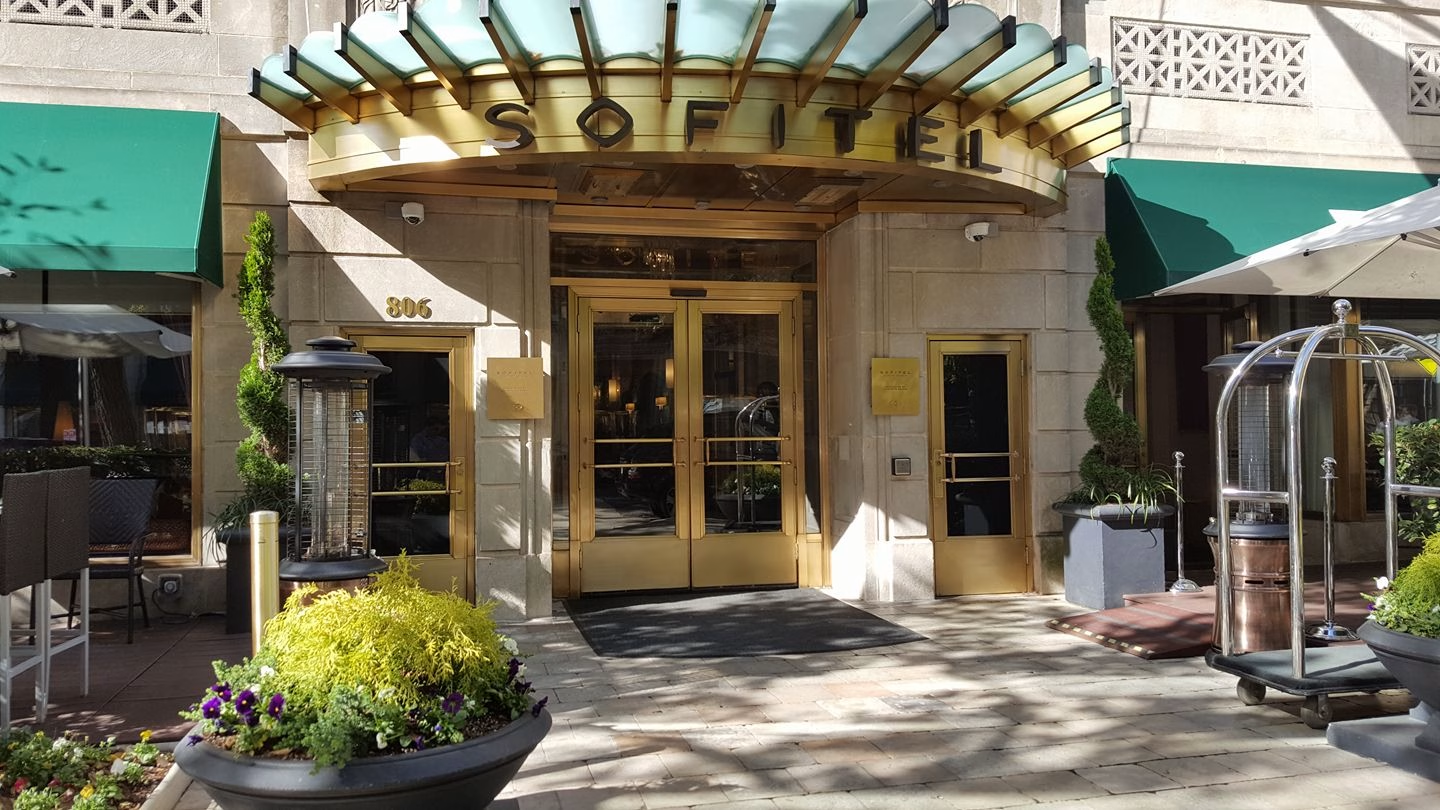
The main entry and porte-cochere see the heaviest traffic concentration and the most scrutiny from arriving guests. Stone columns, steps, thresholds, and decorative elements in these areas receive priority attention. Vehicle exhaust, road salt, and de-icing chemicals create a particularly aggressive environment for entry-area stone.
Signage Surrounds
Stone and masonry immediately surrounding exterior signage often shows staining from metal sign components, adhesive residue from replaced signage, or damage from mounting hardware. Restoring these areas is essential to the property’s curb appeal and brand presentation.
Parking Structures
Hotel parking structures require specialized attention to concrete decks, columns, barriers, stairwells, and elevator surrounds. These structures are subject to vehicle fluid stains, tire marks, de-icing chemical damage, and heavy wear. We restore both the structural concrete and the aesthetic appearance of guest-facing parking areas.
Working Around Hotel Operations
Rose Restoration has extensive experience performing exterior work on occupied hotel properties. We understand that guest experience cannot be compromised during restoration. Our operational planning includes:
- Scheduling high-noise and high-disruption work during off-peak hours
- Phased work plans that maintain guest access to entries, parking, and amenities at all times
- Containment systems to control dust, debris, and chemical overspray
- Daily cleanup to maintain a professional appearance around active work zones
- Coordination with your engineering, housekeeping, and front desk teams to manage guest communications
Seasonal Timing Considerations
In the Mid-Atlantic region, exterior restoration work is best performed during favorable weather conditions. Mortar and sealant application require temperatures above freezing, and most exterior coatings perform best when applied between 50 and 90 degrees Fahrenheit. Chemical cleaning effectiveness also varies with temperature.
We recommend scheduling exterior restoration during spring or fall when weather conditions are most favorable and hotel occupancy may be lower. However, emergency repairs and time-sensitive work can be performed year-round with appropriate material selections and cold-weather techniques.
Frequently Asked Questions
How long does a full hotel exterior restoration take?
The timeline depends on the size of the property and the scope of work. A focused cleaning of a single facade may take a few days, while a comprehensive restoration involving cleaning, repointing, concrete repair, and sealing across an entire property could span several weeks. We provide detailed schedules during the proposal phase and work to minimize the duration of any guest-facing disruption.
Will the cleaning or restoration work stain our landscaping or damage windows?
We take precautions to protect all adjacent surfaces during exterior work. Landscaping is covered with protective sheeting, and windows and other sensitive surfaces are masked before cleaning chemicals are applied. Runoff is managed to prevent staining of walks, drives, and planted areas. Our low-pressure cleaning methods significantly reduce the risk of overspray and collateral contact compared to standard pressure washing.
How do you access upper floors of a multi-story hotel?
We use a combination of scaffolding, swing stages (suspended platforms), and aerial lifts depending on the building configuration, scope of work, and site conditions. Equipment selection is based on safety, efficiency, and minimizing impact on hotel operations. All work at height is performed in full compliance with OSHA regulations by trained technicians.
How often should a hotel exterior be cleaned and maintained?
Most hotel facades benefit from professional cleaning every three to five years, depending on the stone type, environmental exposure, and aesthetic standards. Properties in high-traffic urban locations or near construction may need more frequent attention. We can establish a maintenance schedule that includes periodic inspections and targeted cleaning to address issues before they require full-scale restoration.
Can you match new mortar to our existing facade mortar?
Yes. Mortar matching is a core skill for our masonry team. We analyze the existing mortar for color, texture, aggregate size, and joint profile, then prepare custom-mixed samples for your approval before beginning production work. When properly matched, new repointing should be virtually indistinguishable from the original work once it has cured and weathered slightly.
Restore Your Hotel’s Exterior
A well-maintained exterior signals quality and attention to detail — exactly what your guests expect. Rose Restoration provides the full range of hotel exterior restoration services, from facade cleaning to structural concrete repair, delivered with the operational sensitivity that hospitality properties require.
Call 703-327-7676 or contact us online to schedule an exterior assessment of your hotel property.
Discuss Your Hotel Exterior Project
We work around your operations — overnight, phased, and scheduled to minimize disruption to guests and staff.