
Understanding Stone Finishes
The finish on your natural stone dramatically affects its appearance, texture, slip resistance, and maintenance requirements. Whether you are choosing a finish for a new installation or considering refinishing your existing stone, understanding the differences between polished, honed, leathered, brushed, and other finishes helps you make the right decision.
Polished Finish
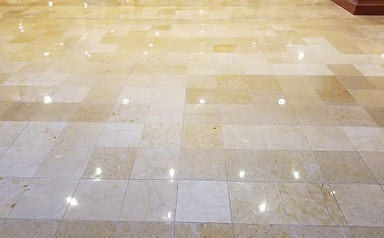
A polished finish is the most common and recognizable stone finish. The surface is ground and buffed with progressively finer diamond abrasives until it achieves a mirror-like, reflective shine.
- Appearance: High-gloss, reflective, brings out the deepest color and veining
- Feel: Smooth, almost glass-like
- Slip resistance: Low — can be slippery when wet
- Maintenance: Shows scratches and etching more readily than matte finishes
- Best for: Countertops, foyer floors, fireplace surrounds, vanities, hotel lobbies
Polished marble and granite are the standard for luxury residential and commercial spaces. The trade-off is that scratches and etch marks are more visible on a polished surface than on a honed one.
Honed Finish
A honed finish is achieved by stopping the polishing process before the final high-gloss stage. The result is a smooth, matte surface with little to no reflection.
- Appearance: Matte to satin, soft and understated
- Feel: Smooth but not reflective
- Slip resistance: Moderate — better than polished for wet areas
- Maintenance: Hides scratches better than polished, but shows stains more readily because the open pores absorb liquids faster
- Best for: Bathroom floors, shower walls, kitchen countertops (for a casual look), commercial spaces with moderate traffic
Honed marble has become increasingly popular in modern kitchens where homeowners want the beauty of marble without the high-maintenance polished look.
Leathered Finish
A leathered (or antiqued) finish adds texture to the stone surface by running diamond brushes across it after honing. The result is a soft, slightly dimpled texture that feels like leather.
- Appearance: Matte with subtle texture, retains natural color depth
- Feel: Slightly textured, tactile
- Slip resistance: Good — the texture provides grip
- Maintenance: Excellent at hiding fingerprints, water marks, and minor scratches
- Best for: Kitchen countertops (especially dark granites and quartzites), outdoor surfaces, bar tops
Leathered finishes have surged in popularity for kitchen islands and bar tops where fingerprints and water marks on polished stone become annoying.
Brushed Finish
A brushed finish is created by running wire or abrasive brushes across the stone surface, creating a worn, aged appearance. Similar to leathered but with a more pronounced texture.
- Appearance: Rustic, aged, textured
- Feel: Rough, tactile
- Slip resistance: Very good
- Maintenance: Low — texture hides wear and imperfections
- Best for: Outdoor paving, rustic interiors, historic renovations, pool decks
Tumbled Finish
Tumbled stone is processed in a drum with sand and water to round the edges and create a naturally weathered appearance. Most commonly seen in travertine tiles.
- Appearance: Rustic, antiqued, rounded edges, soft color
- Feel: Slightly rough, irregular surface
- Slip resistance: Good
- Maintenance: Moderate — porous surface requires sealing
- Best for: Bathroom floors, shower walls, backsplashes, outdoor patios, Mediterranean-style homes
Flamed Finish
A flamed (or thermal) finish is created by applying intense heat to the stone surface, causing the mineral crystals to expand and fracture. The result is a rough, non-slip texture.
- Appearance: Rough, muted color
- Feel: Very rough and textured
- Slip resistance: Excellent — the best non-slip option
- Maintenance: Low
- Best for: Exterior walkways, pool coping, steps, commercial entrances — anywhere slip resistance is critical
Sandblasted Finish
Sandblasting uses high-pressure sand to create a uniformly rough, matte surface. Similar to flamed but with a more consistent texture.
- Best for: Exterior applications, decorative panels, anti-slip surfaces
Can You Change Your Stone’s Finish?
Yes. A professional stone restoration company can change most finishes:
- Honed to polished — diamond polishing restores a high-gloss finish
- Polished to honed — diamond honing removes the gloss for a matte look
- Polished or honed to leathered — possible on some stone types with diamond brushing
The reverse (textured to smooth) requires more intensive grinding and is not possible with all finishes. Consult a professional before making changes.
Choosing the Right Finish
Consider these factors when selecting a stone finish:
- Location — wet areas need slip-resistant finishes (honed, leathered, flamed)
- Traffic — high-traffic floors benefit from honed finishes that hide wear
- Style — polished for formal/luxury, honed for modern/casual, tumbled for rustic
- Maintenance tolerance — polished shows every mark; honed and leathered are more forgiving
Professional Stone Finishing in VA, MD, and DC
Rose Restoration can apply or change any stone finish — from full polish to honed to leathered. With over 40 years of experience, we help homeowners and property managers choose and achieve the perfect finish for their space. Contact us at 703-327-7676 or visit roserestoration.com.