
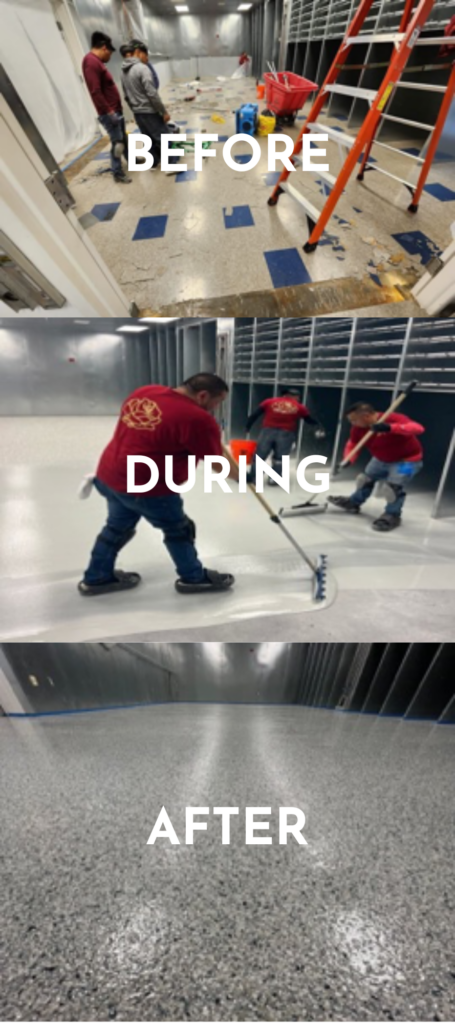
Epoxy flake garage floors are the most popular residential garage upgrade because they combine chemical resistance, durability, and a premium decorative appearance in a coating system that lasts 15–20+ years. Professional installation includes diamond grinding, a high-build epoxy base coat, a decorative vinyl flake broadcast, and a UV-stable polyaspartic topcoat that protects the system from hot tire pickup, UV yellowing, and daily abrasion. The result is a seamless, easy-to-clean surface that looks like a showroom floor — and holds up like one. Rose Restoration International has installed epoxy garage floors throughout Northern Virginia, Maryland, and Washington DC for more than 40 years, and we bring the same craftsmanship to every two-car garage that we bring to large commercial facilities. If you are ready to stop looking at cracked, stained concrete every time you pull in, an epoxy flake system is the most cost-effective upgrade available for a residential garage.
What Is an Epoxy Flake Garage Floor?
An epoxy flake garage floor is a multi-layer coating system applied directly to prepared concrete. It consists of three primary layers:
- Epoxy base coat — A two-part, 100% solids epoxy is mixed and applied to the mechanically prepared concrete surface. This layer bonds chemically to the concrete profile created by diamond grinding, forming an adhesion that paint or acrylic sealers cannot match.
- Vinyl flake broadcast — Decorative vinyl chips (sometimes called color flakes or paint chips) are broadcast into the wet epoxy at full or partial saturation. The chips create color, depth, and a slight texture that adds slip resistance. They also disguise minor surface imperfections in the concrete.
- Polyaspartic or urethane topcoat — A clear, UV-stable topcoat seals the flake layer, provides chemical resistance, and determines the final gloss level (satin, semi-gloss, or high-gloss). Polyaspartic topcoats cure faster and resist hot-tire pickup better than standard urethanes.
Learn more about our specific system on our epoxy flake garage floors service page. The total thickness of a properly installed system is typically 20–30 mils, which is several times thicker than a rolled-on one-part floor paint.
Benefits of Epoxy Garage Floors
Homeowners choose epoxy garage floors over all other options for a long list of practical and aesthetic reasons:
- Chemical resistance — Cured epoxy is impervious to motor oil, gasoline, brake fluid, antifreeze, and most household chemicals. Spills wipe up cleanly without staining.
- Durability — A professionally installed system withstands years of vehicle traffic, dropped tools, rolling floor jacks, and daily foot traffic without chipping or peeling.
- Easy cleaning — The seamless surface eliminates the porous pits in bare concrete that trap dirt, oil, and road salt. A damp mop or hose-down is usually all that is needed.
- Slip resistance — The flake texture gives the floor better traction than smooth concrete, especially when wet. Additional aluminum oxide anti-slip additive can be added to the topcoat for maximum safety.
- Decorative options — Dozens of flake color blends allow you to coordinate with your home’s exterior or interior palette. From neutral grays and tans to bold multicolor mixes, the options are nearly unlimited.
- Hides imperfections — Hairline cracks, bug holes, and minor surface blemishes disappear under the flake layer. Major structural cracks are repaired prior to coating.
- Increases home value — A finished garage with an epoxy floor is a selling point. Real estate agents in the Northern Virginia market consistently note that finished garages attract more buyers and command higher offers.
No other residential garage flooring product delivers this combination of performance and appearance at a comparable price point.
Epoxy vs Other Garage Floor Options
Before choosing epoxy, many homeowners compare it against the alternatives. Here is how epoxy stacks up:
- Epoxy vs bare concrete — Bare concrete is porous, stains permanently from oil and chemicals, turns dusty from surface degradation, and is difficult to clean. Epoxy eliminates all of these problems and looks dramatically better.
- Epoxy vs garage floor paint — One-part latex or alkyd garage paints are inexpensive but fail within 1–3 years. They peel, especially near the garage door where moisture enters, and they cannot withstand hot tire pickup or chemical exposure. Epoxy is a completely different category of product.
- Epoxy vs 100% polyurea/polyaspartic — Full polyurea systems cure in hours and are extremely durable, but they cost more and require highly controlled application conditions. For most residential garages, an epoxy base with a polyaspartic topcoat (our standard system) provides equivalent performance at a lower price.
- Epoxy vs interlocking tiles — Rubber or PVC interlocking tiles are a DIY-friendly option but they trap moisture and debris at the joints, shift under vehicle loads over time, and do not provide the seamless, finished look of epoxy.
- Epoxy vs stained concrete — Acid staining is attractive but does nothing to improve durability or chemical resistance. It must be sealed, and the sealer wears off and requires reapplication. Epoxy is a far more protective system.
For most Northern Virginia homeowners who want a durable, attractive, low-maintenance garage floor, a professionally installed epoxy flake system is the clear winner.
The Epoxy Garage Floor Installation Process
Our installation process follows four critical steps. Skipping or shortcutting any of them is the primary reason DIY and budget epoxy jobs fail prematurely.
- Step 1 — Concrete preparation (diamond grinding)
We use commercial-grade diamond grinders to mechanically profile the concrete surface. This removes laitance, existing sealers, and surface contamination while opening the pores of the concrete for maximum adhesion. Cracks and spalls are filled with polyurea filler and allowed to cure. No acid etching — diamond grinding is the professional standard and creates a consistent surface profile. - Step 2 — Epoxy base coat
A 100% solids or high-solids two-part epoxy is mixed, applied to the prepared surface, and back-rolled to ensure even coverage and penetration into the concrete profile. - Step 3 — Vinyl flake broadcast
While the base coat is still wet, vinyl color flakes are broadcast across the surface. For a full broadcast (the most popular look), flakes are thrown until the base coat is no longer visible. The excess is scraped and vacuumed once the epoxy cures. - Step 4 — Polyaspartic topcoat
A UV-stable polyaspartic clear coat is applied over the cured flake layer. This coat locks in the flakes, provides the final gloss level, and delivers the chemical and abrasion resistance that makes the system last. Most polyaspartic topcoats are ready for light foot traffic within 4–6 hours.
The total project timeline for a standard two-car garage is typically one to two days. Vehicles can usually be returned to the garage within 24–48 hours of topcoat application. We schedule jobs to minimize disruption to your household.
How Much Do Epoxy Garage Floors Cost?
The installed cost of a professional epoxy flake garage floor in Northern Virginia typically ranges from $3,000 to $6,000 for a standard two-car garage (400–600 square feet). The wide range reflects several variables:
- Size — More square footage means more material and labor. Large three-car garages or garages with workshops may run higher.
- Concrete condition — Floors with significant cracking, spalling, oil saturation, or previous failed coatings require more preparation time and materials, which increases cost.
- Flake density — A full broadcast (complete coverage) uses more material than a partial broadcast and costs slightly more.
- Topcoat selection — Polyaspartic topcoats cost more than standard urethanes but provide better UV stability, faster cure times, and longer service life. Most of our residential clients choose polyaspartic.
- Color and design complexity — Custom blends or multi-zone designs with borders or logos add to material and labor costs.
While $3,000–$6,000 may seem significant, consider the alternative: replacing a deteriorated concrete garage floor costs $5,000–$12,000+ in Northern Virginia. A properly installed epoxy system that lasts 15–20+ years is an excellent investment. We provide detailed written estimates at no charge — call us at 703-327-7676 to schedule a visit.
Choosing Colors and Flake Patterns
Selecting the right color blend is one of the most enjoyable parts of the process. We carry dozens of standard flake blends, and custom mixes are available. A few considerations that guide most homeowners:
- Light vs dark blends — Light flake blends (silvers, whites, tans) show dust and debris more easily but make the garage feel brighter and larger. Darker blends (charcoal, slate, espresso) hide dirt better and give a dramatic, upscale appearance.
- Multicolor blends — Most of our clients choose multicolor blends that combine 3–5 chip colors. These blends disguise minor wear over time and offer the most design flexibility.
- Full vs partial broadcast — A full broadcast covers the base coat completely for a rich, layered look. A partial (medium) broadcast leaves some base coat visible and creates a speckled appearance similar to terrazzo.
- Coordinating with your home — Consider the colors of your garage door, walls, trim, and adjacent flooring when selecting a blend. We bring physical samples to every consultation so you can evaluate colors in your actual space and light.
- Gloss level — The polyaspartic topcoat is available in satin, semi-gloss, and high-gloss sheens. High-gloss is the most popular choice for residential garages — it maximizes light reflection and gives the floor a showroom appearance. Satin is a good choice for clients who prefer a more understated finish or who are concerned about showing swirl marks from cleaning.
Popular color families in Northern Virginia include neutral grays and silvers (complement the beige and gray tones common in the region’s newer homes), warm tans and earthy blends (popular in older brick colonials in Fairfax and Arlington), and bold multicolor mixes with flecks of blue, green, or red for clients who want a truly unique garage aesthetic.
Our team has been helping Virginia, Maryland, and DC homeowners choose finishes for over 40 years. We bring physical samples to every consultation and can provide photos of completed jobs in your area. We will not steer you wrong.
Caring for Your Epoxy Garage Floor
One of the biggest advantages of an epoxy flake floor is how little maintenance it requires. Here is what we recommend to keep your floor looking its best for the long term:
- Routine cleaning — Sweep or dust mop weekly to remove grit and debris. Grit tracked in on tires acts as an abrasive on the topcoat over time. A quick sweep prevents unnecessary wear.
- Mopping — Damp mop with a pH-neutral cleaner as needed. Avoid harsh degreasers, bleach, and ammonia-based cleaners — they can dull the topcoat over time. Simple Green diluted in water is a safe and effective choice.
- Oil and chemical spills — Wipe up immediately. Cured epoxy is resistant to most chemicals, but prolonged contact with certain solvents can affect the topcoat gloss. A quick wipe when a spill occurs keeps the surface in perfect condition.
- Avoid sharp-edged tools — Dropping a heavy, sharp-edged tool from height can chip the coating. Place foam mats under work areas where heavy tools are used frequently.
- Topcoat recoating — In high-traffic garages, the topcoat can be refreshed with a new clear coat every 7–10 years without removing the existing system. This extends the life of the floor significantly and costs much less than a full reinstall.
With basic care, a professionally installed epoxy flake floor in a typical residential garage will look excellent for 15–20 years or more. Many of our Northern Virginia clients have floors that are approaching the 20-year mark and still look great with only routine cleaning and a topcoat refresh.
Frequently Asked Questions About Epoxy Garage Floors
How much does an epoxy garage floor cost in Northern Virginia?
Most two-car garages (400–600 sq ft) run $3,000–$6,000 installed, depending on concrete condition, flake density, and topcoat selection. We provide free, detailed written estimates. Call 703-327-7676 to schedule.
How long does an epoxy garage floor last?
A professionally installed epoxy flake system with a polyaspartic topcoat typically lasts 15–20+ years with normal residential use. DIY kits and single-part paints fail in 1–5 years because they lack proper surface preparation and coating thickness.
Will hot tires peel up an epoxy floor?
Hot tire pickup is a failure mode associated with thin, one-part epoxy and latex paints. Our system uses a polyaspartic topcoat that is specifically formulated to resist thermal shock from hot tires. Properly installed systems do not peel from normal vehicle traffic.
Should I hire a professional or use a DIY epoxy kit?
DIY kits can work for light-use areas, but they routinely fail in garages within 1–3 years because homeowners cannot achieve the surface profile required for adhesion with rented equipment, and the coating thickness is a fraction of a professional installation. If you want a 15–20 year floor, hire a professional.
Do you install epoxy garage floors in Fairfax, VA and the surrounding area?
Yes. Rose Restoration International serves residential and commercial clients throughout Northern Virginia, Maryland, and Washington DC. Our headquarters is in Fairfax, VA. Call 703-327-7676 or visit our contact page to request an estimate.
An epoxy flake garage floor is one of the best investments you can make in your home. It protects your concrete from chemical damage and wear, gives your garage a finished, professional appearance, and requires almost no maintenance. Rose Restoration International has been installing and restoring floors in Northern Virginia, Maryland, and DC for more than 40 years. Our crews are experienced, our materials are professional-grade, and our workmanship is backed by a written warranty.
Ready to upgrade your garage? Contact us today for a free, no-obligation estimate. We serve Fairfax, Arlington, Alexandria, McLean, Reston, Herndon, Falls Church, Springfield, and communities throughout the DC metro area. Call 703-327-7676 or use the button below.