
Reference Guide
If you’re evaluating polished concrete vs. another system:
 By Tom Kuhn, CEO, Rose Restoration
Rose Restoration has restored marble, terrazzo, concrete, and natural stone across DC, MD, and VA since 1978.
Why Polished Concrete Is Low-Maintenance (Not No-Maintenance)
Polished concrete has earned a reputation as a low-maintenance flooring option, and that reputation is well-deserved — compared to hardwood, carpet, VCT tile, or epoxy coatings, polished concrete requires significantly less ongoing care. There is no waxing, no stripping, no harsh chemical treatments, and no peeling or bubbling finish to contend with.
But low-maintenance does not mean no maintenance. The densified, hardened surface created during the polishing process resists stains and surface dusting far better than untreated concrete, but it is not impervious to wear, scratching, or staining. Without consistent maintenance, even the finest polished concrete floor will gradually lose its clarity and sheen.
The good news: proper maintenance is straightforward and inexpensive. A polished concrete floor with a good maintenance program will maintain its appearance for decades — 20 to 30 years or more. Neglect, by contrast, leads to visible wear patterns, surface scratching, and loss of sheen that requires professional intervention to correct.
This guide covers everything you need to know to maintain polished concrete floors in both residential and commercial settings.
Daily Maintenance for Polished Concrete
The single most important daily maintenance task for polished concrete is dust mopping with a microfiber pad. Grit — tracked in on shoes, blown in from outside, shed from equipment — is the primary cause of micro-scratches in polished concrete. A microfiber pad picks up this grit before foot traffic or equipment can grind it into the surface.
For residential spaces, a daily or every-other-day dust mop of high-traffic areas is sufficient. For commercial spaces, the entrance, main corridors, and high-traffic zones should be dust mopped at least once per shift.
Damp mopping with a pH-neutral floor cleaner removes the soil that dust mopping misses. Use a clean, well-wrung mop or a flat microfiber mop — standing water on polished concrete can leave mineral deposits and should be avoided. Clean as needed based on traffic and visible soiling.
For commercial applications, an auto-scrubber with a non-abrasive pad and pH-neutral cleaner is the most efficient option for regular damp cleaning. Verify that the pad is non-abrasive and appropriate for polished concrete — some commercial scrubbing pads are too aggressive.
Products to permanently avoid on polished concrete:

- Vinegar, bleach, or ammonia — these degrade the guard/sealer and can etch or dull the concrete surface over time
- Acidic cleaners — concrete is alkaline; acidic products react with the surface and cause damage
- Wax or acrylic floor finishes — these products build up in high-traffic areas, yellow over time, and create an uneven, dull appearance that requires professional stripping to correct
- Oil-based cleaners — can leave residue that attracts soil
Weekly and Monthly Maintenance
Beyond daily dust and damp mopping, polished concrete benefits from a wet mop with a concentrated pH-neutral commercial floor cleaner on a weekly or monthly schedule, depending on traffic volume and soil conditions. This addresses any accumulation that routine daily cleaning does not fully remove.
Stain management is an important part of ongoing maintenance. Polished concrete with a guard/sealer applied resists staining, but the protection is not absolute — particularly for oil-based spills, which can penetrate the guard if left in contact for extended periods. Spot clean stains as soon as they are noticed. The longer a substance sits on the surface, the more likely it is to work through the protective layer.
Check the floor regularly for areas losing sheen, particularly in high-traffic lanes — the paths people walk most consistently. Early loss of sheen is the first sign that burnishing is needed. Addressing it early with burnishing is far simpler and less expensive than waiting until significant dulling has occurred.
Periodic Burnishing
Burnishing is the most important periodic maintenance procedure for polished concrete, and it is one of the most misunderstood. Burnishing does not re-polish the concrete or add any product to the surface. It uses a high-speed burnishing machine fitted with a diamond-impregnated pad to generate friction heat that partially re-melts and realigns the surface, refreshing the sheen.
The result looks like a freshly polished floor without the time, cost, or disruption of full re-polishing. For most commercial polished concrete floors, burnishing once every 6 to 12 months maintains the original sheen indefinitely. Residential floors may only need burnishing every 1 to 3 years, depending on traffic.
The process is relatively quick — most spaces can be burnished in a few hours — and requires no chemicals and no significant drying time. In commercial settings, burnishing is typically performed overnight or on weekends to minimize disruption.
If regular burnishing is part of your maintenance program, your polished concrete floor should never require full re-polishing. Full re-polishing is a significant investment; burnishing keeps that investment from being necessary.
Guard and Sealer Reapplication
During the initial polishing process, a penetrating guard or densifier-guard system is applied to provide stain resistance and enhance the floor’s appearance. This guard is not a coating — it penetrates into the concrete and cures within the surface. Over time and with traffic, the guard in the topmost layer of the concrete gradually depletes.
Commercial polished concrete floors in high-traffic environments typically benefit from guard reapplication every 1 to 2 years. Residential floors may go 3 to 5 years between applications. Entrance areas, corridors, and other high-traffic zones may need more frequent treatment than surrounding spaces.
Signs that guard reapplication is needed: water no longer beads on the surface (instead absorbing into the concrete), stains are becoming more difficult to clean, or the floor is showing increased sensitivity to spills. Guard reapplication is a straightforward process — the appropriate guard is sprayed on, spread evenly with a microfiber applicator, and burnished into the surface. The floor is typically ready for normal traffic within a few hours.
Stain Removal on Polished Concrete
A properly maintained polished concrete floor with a good guard is highly stain-resistant, but accidents happen. How you respond makes a significant difference in the outcome:
Oil and grease: absorb the spill immediately with a clean cloth or paper towels — do not wipe, which spreads the oil. Clean the area with an alkaline degreaser appropriate for polished concrete. If oil has penetrated the surface, a poultice using an absorbent material and degreaser chemistry can draw it out over 24–48 hours.
Rubber tire marks: use a manufacturer-approved rubber mark remover. Avoid aggressive scrubbing, which can scratch the surface. In warehouse or garage settings, regular tire mark removal prevents buildup that becomes progressively harder to address.
Rust stains: professional treatment is recommended. Many rust removers contain oxalic acid or other acids that react with concrete and can cause surface damage. A professional can assess whether rust treatment is appropriate and use methods that minimize collateral damage.
Paint and adhesive: carefully scrape away bulk material with a plastic scraper — metal scrapers can scratch polished concrete. Clean the residue with a solvent appropriate for the specific material. Test in an inconspicuous area first.
The universal rule: act quickly. The faster you address a spill or stain on polished concrete, the easier and less expensive it is to resolve. A fresh oil spill on polished concrete with a good guard is a 5-minute cleanup. The same spill left overnight may require professional poultice treatment.
When to Call a Professional
Polished concrete is designed to be maintained in-house with routine procedures, but certain conditions require professional attention:
- Visible traffic wear patterns — if you can see where people walk because those lanes are noticeably duller than surrounding areas, burnishing alone may not be sufficient and professional re-polishing of the worn zones may be needed
- Surface scratches — from equipment, dropped heavy objects, or aggressive cleaning tools. Surface scratches require professional honing and re-polishing to correct
- Guard depletion — if water is absorbing into the surface rather than beading up, guard reapplication is needed. While this can sometimes be done in-house with the right products, professional application ensures proper product selection and application technique
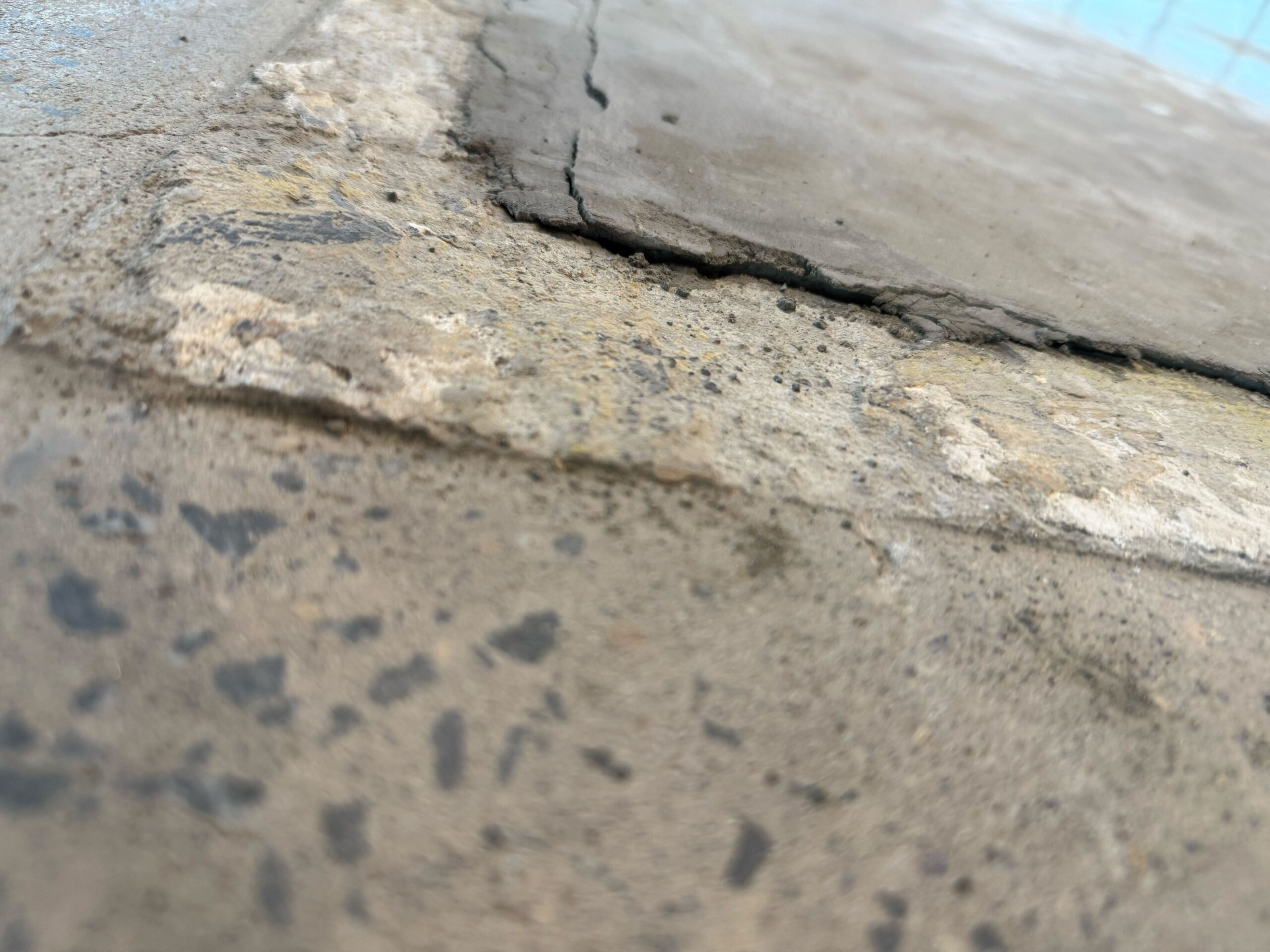
- Deteriorated joint fill — control joints and saw cuts in concrete floors are typically filled during the polishing process. If the filler is cracking, separating, or deteriorating, professional repair prevents further damage to the adjacent concrete
- Extended neglect — if the floor has not been professionally burnished in 2 or more years, the accumulated surface wear may require professional restoration before a regular maintenance program can be re-established
Learn more about our polished concrete services and our maintenance programs for commercial and residential floors.
Frequently Asked Questions: Polished Concrete Maintenance
How often should polished concrete be burnished?
Commercial polished concrete in high-traffic areas benefits from burnishing every 6 to 12 months. Residential polished concrete may only need burnishing every 1 to 3 years. Entrance areas, corridors, and high-traffic zones will need more frequent attention than lightly used areas. Regular burnishing is the most cost-effective way to maintain polished concrete appearance over the long term.
Do I need to seal polished concrete?
Polished concrete is typically treated with a penetrating guard (often called a densifier-guard or impregnating sealer) during the polishing process. This guard provides stain resistance and is essential for the floor’s performance. It is not a surface coating and does not need to be stripped — but it does deplete over time and should be reapplied periodically, typically every 1–3 years depending on traffic.
Can scratches on polished concrete be repaired?
Yes — surface scratches in polished concrete can be repaired through professional honing and re-polishing. The process involves grinding the affected area to remove the scratch depth, then re-polishing through the appropriate grit sequence to restore the original sheen. Deep scratches may require more aggressive honing before re-polishing. In most cases, repairs are blended seamlessly into the surrounding floor.
What’s the best cleaner for polished concrete?
A pH-neutral cleaner specifically formulated for polished concrete is the safest and most effective choice. Many stone and concrete care manufacturers offer appropriate products. Avoid anything acidic (vinegar, citrus), alkaline (ammonia, bleach), or wax-based. When in doubt, ask your polishing contractor what cleaner they recommend for your specific floor system — the guard chemistry can influence the best cleaner choice.
Get Professional Polished Concrete Maintenance
Rose Restoration International provides professional polished concrete maintenance services for commercial and residential clients throughout Virginia, Maryland, and Washington DC. From burnishing programs to guard reapplication and full restoration, we keep polished concrete floors performing and looking their best for decades.
Call us: (703) 327-7676
Explore our concrete services | Request a consultation
Want a complete care guide? Download our free Guide to Natural Stone Care — 13 pages of expert advice on cleaning, stain removal, sealing, and maintenance.
For commercial property managers maintaining polished concrete in Arlington and the Northern Virginia warehouse and retail corridor, daily cleaning practices have more impact than the polish job itself.
Working with a general contractor on a new build or renovation? Read more about how Rose Restoration partners as a polished-concrete subcontractor.
Looking for something else?
Get a Free Assessment from Rose Restoration
Tell us about your marble, stone, terrazzo, or concrete and our senior technicians will recommend the right restoration approach. Family-run and trusted across Washington DC, Maryland, and Virginia since 1978.
Call (703) 327-7676 · Email info@roserestoration.com · schedule a time · or send us photos.
Restore. Don't replace.
48 years of polishing marble, terrazzo, concrete, and tile across Washington DC, Northern Virginia, and Maryland. IMF, Four Seasons, Smithsonian, and the Virginia State Capitol trust us — you can too.
Watch the Process
Real Rose Restoration projects on video — no stock footage, no staged demonstrations.