
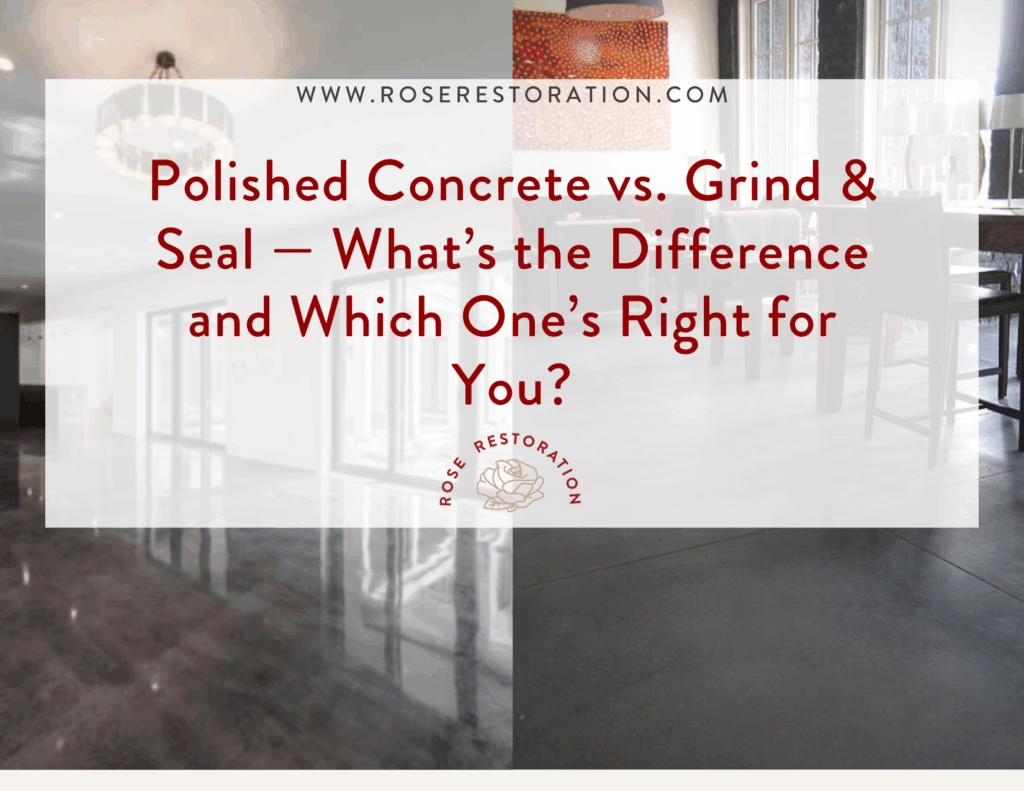
If you’re standing on a drab, worn concrete slab and wondering how to turn it into something worth showing off, you’ve likely come across two options: polished concrete and grind and seal concrete. Both systems can completely transform a raw or deteriorating slab into a clean, durable, attractive surface — but they achieve that result in very different ways, and they perform differently over time.
At Rose Restoration International, we install both polished concrete and grind and seal systems for commercial and residential clients throughout Northern Virginia, Maryland, and Washington DC. We’ve worked on everything from high-traffic retail lobbies in Tysons Corner to residential garages in McLean and warehouse floors in Gaithersburg. After decades in the concrete restoration business, we know how to match the right system to the right application — and we want to help you do the same.
This guide breaks down exactly what each system is, how they compare across every meaningful performance category, and how to decide which one belongs in your space. Whether you’re a homeowner upgrading a basement, a property manager renovating a commercial building, or a general contractor speccing a new project, you’ll find the clarity you need here.
Let’s start with the basics.
What Is Polished Concrete?
Polished concrete is a multi-step mechanical finishing process in which the concrete slab itself is transformed into the final surface. There is no coating applied — instead, the concrete is ground, refined, and chemically hardened until it achieves a dense, reflective finish that looks and performs like natural stone.
The process begins with coarse diamond abrasives that grind the surface down to expose fresh concrete and remove any existing coatings, adhesives, or surface contamination. From there, progressively finer diamond tooling — typically advancing from 30 or 50 grit all the way up to 800, 1500, or even 3000 grit — hones the surface to the desired level of smoothness and reflectivity.
A critical step in the process is the application of a chemical densifier (typically a lithium silicate hardener), which reacts with the calcium hydroxide in the concrete to form additional calcium silicate hydrate. This fills the pores of the concrete from within, making the surface harder, denser, and more resistant to abrasion and moisture intrusion.
The result is a floor that is part of the slab, not sitting on top of it. You can achieve different levels of aggregate exposure depending on how aggressively the surface is ground:
- Cream polish — Only the top paste layer is refined; minimal aggregate visible. Smooth, uniform look.
- Salt-and-pepper polish — Fine aggregate and small pores become visible. The most popular residential and commercial look.
- Full aggregate exposure — Deep grinding reveals larger stones within the mix. Dramatic, terrazzo-like appearance.
Polished concrete is the preferred system for high-end commercial interiors, showrooms, museums, restaurants, offices, and any space where a sophisticated, low-maintenance surface is the goal. Because the finish is the concrete itself, there’s nothing to peel, crack, or delaminate.
Learn more about our process on our concrete polishing service page.
What Is Grind and Seal Concrete?
Grind and seal concrete is a two-phase system: the slab is mechanically ground to achieve the desired profile and smoothness, and then a topical sealer is applied to protect and finish the surface. Unlike polished concrete, the sealer — not the concrete — becomes the finished surface you see and walk on.
The grinding phase uses diamond tooling to open the concrete’s pores, remove surface contamination, and achieve the desired texture and flatness. This step is essential for adhesion; a properly ground surface gives the sealer something to bond to mechanically and chemically.
The sealing phase involves applying one of several topical coating options, depending on performance requirements and aesthetic goals:
- Acrylic sealers — Economical, fast-curing, good for light-duty residential and exterior applications.
- Epoxy coatings — Thick, durable, excellent chemical resistance. Common in garages, warehouses, and industrial spaces.
- Polyurethane (PU) — More flexible than epoxy, excellent UV stability, good for areas with temperature variation.
- Polyaspartic coatings — Fast-cure hybrid with outstanding durability and UV resistance; increasingly popular for garages and commercial floors.
One significant advantage of grind and seal is design flexibility. Stains, dyes, and decorative aggregates (such as vinyl flake) can be incorporated before or under the sealer to create custom colors and patterns. This makes it especially popular for residential garage floors, where homeowners want both performance and aesthetics.
Grind and seal systems are also typically faster to install than a full polished concrete system, which matters on projects with tight timelines or limited access windows.
Explore our grind and seal service in detail on our grind and seal concrete floor page.
Polished Concrete vs. Grind and Seal: Key Differences
Now that you understand how each system works, let’s compare them across the dimensions that matter most to property owners and facility managers.
Durability and Lifespan
Polished concrete, when properly executed, is essentially permanent. The hardened concrete surface can withstand decades of heavy foot traffic and forklift loads without peeling or delaminating because there’s no coating to fail. Grind and seal floors are highly durable too, but the topical coating will eventually wear — especially in high-traffic commercial environments. Heavy commercial grind and seal floors may need recoating every one to two years in the highest-traffic zones; residential applications can go five to ten years between reseals.
Maintenance Requirements
Polished concrete requires only routine dust mopping and occasional wet mopping with a pH-neutral cleaner. There are no special strippers, waxes, or recoat schedules. Grind and seal floors are easy to clean day-to-day but require periodic inspection for wear and timely resealing to maintain protection. If the sealer is allowed to wear through completely, the exposed concrete can absorb stains and moisture — creating a more expensive remediation job down the road.
Appearance and Finish Quality
Polished concrete produces a refined, stone-like reflective surface with depth and character. The look is elegant and has become synonymous with upscale commercial interiors. Grind and seal can produce a wide variety of appearances — from a natural matte to a high-gloss wet look — and offers far more color and decorative options through the use of dyes, stains, and flake systems. Neither system is inherently more attractive; the right choice depends on the aesthetic you’re targeting.
Upfront Cost vs. Lifecycle Cost
Grind and seal generally costs less upfront per square foot than a full multi-step polish. However, because polished concrete requires no recoating, its lifecycle cost over 10 to 20 years is often lower. We explore this in more detail in the long-term cost section below.
Installation Time
A grind and seal floor can often be completed and reopened to traffic more quickly than a full polish, particularly with fast-cure polyaspartic topcoats that can be walked on within hours. Full polished concrete typically requires more machine passes and dwell time for densifiers, though modern systems have accelerated this considerably.
Moisture Tolerance
Both systems require a dry, sound slab. However, polished concrete — because it has no topical film — is generally more forgiving of mild moisture vapor transmission over time. Topical sealers can blister or delaminate if applied over a slab with excessive moisture vapor emission. Proper moisture testing before any installation is essential, and Rose Restoration always tests before we spec a system.
Slip Resistance
Polished concrete can be slippery when wet if polished to a very high grit without a slip-resistant additive. Grind and seal systems can have anti-slip aggregate incorporated directly into the topcoat. Both systems can meet safety standards with the right specification; the key is designing for the actual use case.
Chemical Resistance
Epoxy and polyaspartic grind and seal systems offer excellent resistance to oils, chemicals, and acids — making them a natural choice for automotive, manufacturing, and food service environments. Polished concrete with proper densification is resistant to many chemicals but can be etched by strong acids over time. For environments with aggressive chemical exposure, a sealed system is often preferred.
Which Concrete Finish Is Right for Your Space?
There’s no universal answer to which concrete finish is “better” — the right choice depends on how the space is used, what the budget constraints look like, and what aesthetic outcome you want. Here’s a practical framework we use with our clients:
High-Traffic Commercial Spaces (Lobbies, Retail, Restaurants)
For spaces where appearance, durability, and low maintenance are paramount, polished concrete is almost always the right answer. It handles heavy foot traffic without degrading, it’s easy to maintain, and the refined finish elevates the space. We’ve polished countless floors in office buildings, hotel lobbies, and restaurant dining rooms across the DC metro area.
Warehouses, Distribution Centers, and Industrial Floors
Either system can work here. For light to moderate industrial use without heavy chemical exposure, polished concrete offers durability and easy maintenance. For environments with forklift traffic, chemical spills, or specific slip-resistance requirements, a grind and seal system with an epoxy or polyaspartic topcoat is often the better specification.
Residential Garages
Grind and seal with epoxy flake or solid color is the dominant choice for residential garages, and for good reason. It’s cost-effective, highly customizable, hides imperfections, handles vehicle traffic well, and resists the oil and chemical exposure that comes with everyday garage use. Homeowners in McLean, Reston, and Bethesda consistently choose this system for its combination of performance and curb appeal.
Basements and Interior Residential Spaces
Both systems are well-suited to basements and interior living areas. If the homeowner wants a sleek, modern look with minimal maintenance, polished concrete is beautiful. If they want more color, warmth, or want to match existing decor, grind and seal with a tinted sealer or stain system gives more design options.
Showrooms, Museums, and Offices
Polished concrete is the standard specification for these environments. The finish communicates quality and professionalism, it photographs well, and it simply doesn’t degrade the way topical coatings do under years of foot traffic.
Outdoor and Moisture-Prone Areas
For patios, pool decks, covered walkways, or any surface with significant moisture exposure or UV light, a grind and seal system using a UV-stable polyurethane or polyaspartic sealer is the appropriate choice. Polished concrete is not designed for exterior applications.
Not sure which system is right for your project? Browse our full range of concrete contractor services or contact us for a no-obligation assessment.
The Role of Surface Preparation
One of the most important things to understand about both systems is that they are only as good as the surface preparation beneath them. No sealer, no matter how high-quality, will perform well over a poorly prepared slab. And no amount of fine diamond polishing will produce a flawless finish if the grinding stage was rushed or improperly specified.
Diamond grinding accomplishes several critical things before any finish is applied:
- Removes old coatings, adhesives, paint, and surface contamination
- Opens the pores of the concrete to improve sealer penetration and mechanical bonding
- Levels high spots and addresses minor surface irregularities
- Reveals the true condition of the concrete, including cracks, pits, and weak zones that need repair before finishing
At Rose Restoration, we use industrial-grade planetary grinders — multi-head machines that apply even pressure across the entire cutting surface and produce a flatter, more consistent profile than single-head equipment. This matters enormously for both polished concrete (where waviness shows up in the reflection) and grind and seal (where an uneven profile creates thin spots in the coating).
Proper prep is also where we assess moisture vapor emission, test for contaminants, and make any necessary slab repairs before the finishing work begins. Skipping or shortcutting this stage is the number one cause of coating failures and poor polish quality. We never do it.
Read more about our approach in our blog post on concrete floor grinding and surface preparation.
Long-Term Cost Comparison
When clients ask us about cost, we always encourage them to think in terms of total lifecycle cost, not just the initial installation price. The two systems have meaningfully different cost profiles over time.
Polished Concrete: The upfront cost per square foot is typically higher than grind and seal, particularly for multi-step fine polishes with high aggregate exposure. However, once the floor is polished and densified, ongoing maintenance costs are minimal — routine cleaning, occasional re-application of a guard product, and nothing else. There’s no recoat schedule. A well-executed polished floor in a commercial building can look excellent for 15 to 20 years without significant remediation.
Grind and Seal: Lower upfront cost in most cases, especially for simpler sealer systems. However, topical coatings wear and must be maintained. In residential settings, expect to reseal every 3 to 5 years. In heavy commercial settings — high foot traffic, cart traffic, or vehicle access — the topcoat in high-wear zones may need attention annually. Each recoating cycle involves prep work, material cost, and labor.
The 10-Year Picture: On a typical commercial floor, polished concrete often results in lower total expenditure over a 10-year period once you account for recoating costs, labor, and any disruption to operations. Grind and seal remains competitive when the upfront cost savings are significant or when the application truly benefits from a sealed system. We run these numbers for clients during our assessment process so you can make an informed decision, not just react to the initial price tag.
Why Property Managers and GCs in the DC Metro Area Choose Rose Restoration
Rose Restoration International has been restoring and finishing concrete floors for over 40 years, serving commercial and residential clients throughout Northern Virginia, Maryland, and the Washington DC metro area. We’ve built our reputation on doing the work right — from surface preparation through final finish — and standing behind the results.
Here’s what makes us different when it comes to concrete floor finishing:
- Both systems, in-house. We don’t subcontract polished concrete to one crew and grind and seal to another. Our technicians are trained and equipped to install both systems, which means we give you an unbiased recommendation based on your needs, not on what we happen to sell.
- Industrial-grade equipment. We use planetary grinders, professional polishing machines, and commercial-grade coatings — not the box-store rental equipment that leads to inconsistent results and coating failures.
- Free on-site assessments. Before we recommend anything, we want to see the slab, understand the use case, and test conditions. Our assessments are thorough, honest, and free of charge.
- Commercial and residential expertise. Whether it’s a 50,000 sq ft warehouse in Sterling or a 400 sq ft garage in Alexandria, we bring the same level of craft and accountability to every project.
Property managers, general contractors, and homeowners across Fairfax, Arlington, Loudoun, Montgomery County, and Prince George’s County trust Rose Restoration because we know this work inside and out — and we treat every floor like it has our name on it.
Ready to talk about your project? Contact us online or call us at (703) 327-7676. We’d love to walk your space and help you find the right solution.
Related: Learn more about our concrete polishing services for residential and commercial clients in Washington DC, Maryland, and Northern Virginia.
Frequently Asked Questions
Here are answers to the questions we hear most often from clients comparing polished concrete and grind and seal systems.
Is polished concrete more expensive than grind and seal?
Generally, yes — polished concrete has a higher upfront cost per square foot because the process requires more machine passes, more tooling, and more time to achieve a refined finish. However, polished concrete typically requires no recoating over its lifespan, while grind and seal floors need periodic resealing. Over a 10- to 15-year period, polished concrete often has a lower total lifecycle cost, especially in commercial applications. For budget-sensitive projects or residential garages, grind and seal is often the more practical upfront choice.
How long does polished concrete last?
Polished concrete is essentially permanent when properly installed and maintained. Because the finish is the concrete itself — chemically hardened and mechanically refined — there’s no coating to wear off, peel, or delaminate. Commercial polished concrete floors in high-traffic environments routinely perform well for 20 years or more with only routine cleaning. Periodic re-application of a concrete guard or sealer (every several years, depending on traffic) can extend the life of the sheen and protect against staining.
Can you polish an existing concrete floor?
Yes, in most cases. Polishing is frequently performed on existing slabs — including floors that previously had tile, carpet, VCT, or epoxy coatings. The key is that the slab must be sound, relatively flat, and free of major structural defects. Our team at Rose Restoration assesses the existing slab condition before recommending a system. Some slabs with severe pitting, deep contamination, or low-quality concrete may be better candidates for grind and seal, where the topical coating can mask surface imperfections more effectively. Call us at (703) 327-7676 to discuss your specific slab.
Is grind and seal the same as epoxy flooring?
Not exactly. Grind and seal is a broader category that includes multiple topical sealer options — acrylic, polyurethane, epoxy, and polyaspartic coatings can all be used as the finish coat in a grind and seal system. Epoxy flooring is one specific type of grind and seal application in which the topcoat is an epoxy resin. Epoxy is popular for garages and industrial floors because of its hardness, chemical resistance, and ability to incorporate decorative flake chips. When clients say they want “epoxy,” they usually want a grind and seal system with an epoxy or polyaspartic topcoat.
Which concrete finish is better for a garage?
For most residential garages in the Northern Virginia and Maryland area, we recommend a grind and seal system using an epoxy or polyaspartic topcoat — often with decorative vinyl flake for appearance and texture. Garage floors take a lot of abuse: vehicle traffic, oil and chemical spills, road salt tracked in from winter conditions. A properly applied sealed system handles these challenges well, and the color and flake options give homeowners a finished look they’re proud of. Polished concrete is beautiful but may be less practical in a garage where oil and chemical resistance are daily concerns.
How long does a grind and seal floor last before resealing?
It depends heavily on the sealer type and the level of traffic. In residential garages and light-duty interior spaces, a quality epoxy or polyaspartic grind and seal floor can last 5 to 10 years before requiring significant remediation. In moderate commercial use, expect a reseal or topcoat refresh every 3 to 5 years. In heavy commercial or industrial environments with constant forklift or cart traffic, the highest-wear zones may need attention every 1 to 2 years. Rose Restoration can recommend a maintenance schedule at the time of installation based on your specific use case.
Does Rose Restoration install both polished concrete and grind and seal?
Yes — both systems are part of our core service offering. Our crews are trained and equipped to install polished concrete, grind and seal with multiple coating options, and specialty decorative systems including epoxy flake garage floors. We serve residential and commercial clients throughout Fairfax, Arlington, Alexandria, Loudoun, Prince William, Montgomery County, Prince George’s County, and Washington DC. To schedule a free on-site assessment for your project, call us at (703) 327-7676 or visit our contact page.
Schedule a Free Concrete Floor Assessment
Choosing between polished concrete and grind and seal is a meaningful decision — one that affects how your space looks, how it performs, and what it will cost you over time. Both systems have real strengths, and the right choice comes down to your specific slab, your use case, your budget, and your aesthetic goals.
At Rose Restoration International, we’ve been helping property owners, facility managers, and contractors make that decision for over 40 years. We don’t push one system over the other — we assess the floor, understand the application, and recommend what’s genuinely right for you. Then we install it with the precision and care that only comes from decades of doing this work.
If you’re in Northern Virginia, Maryland, or Washington DC and you’re ready to transform a concrete floor, we’d love to hear from you. Call us at (703) 327-7676 or request a free assessment online. There’s no obligation, and we’ll give you a straight answer about what your floor needs.