
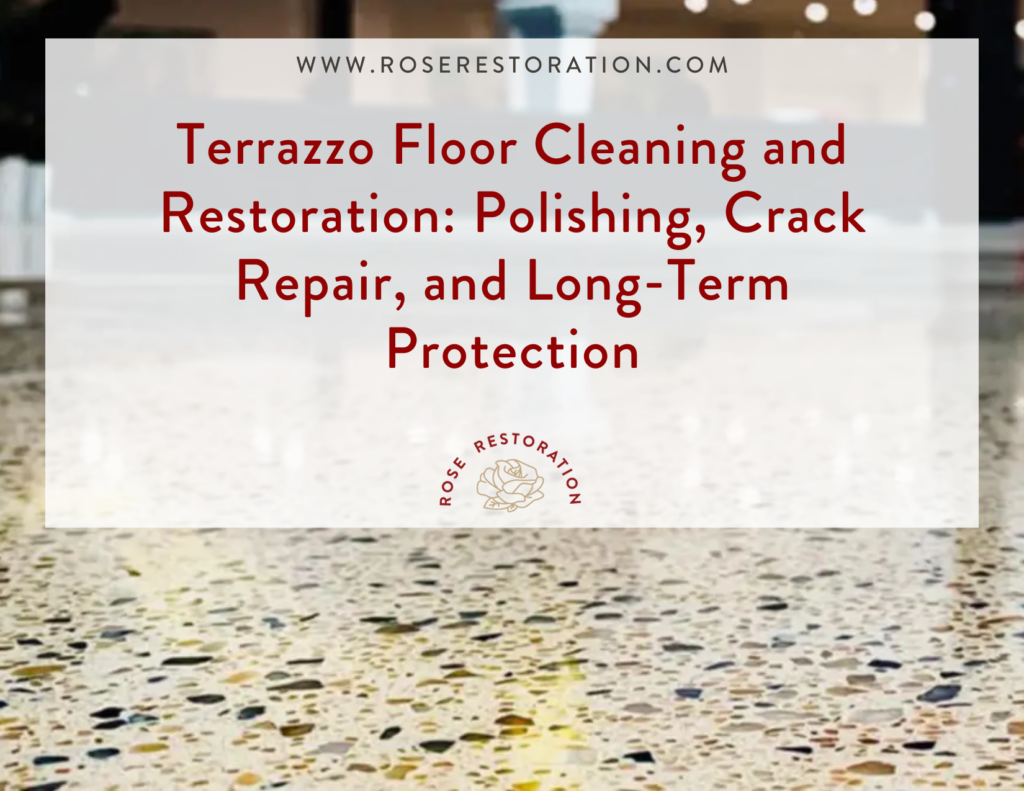
Terrazzo vs. Polished Concrete: Which Floor Is Right for Your Space?
Terrazzo and polished concrete are two of the most durable, design-forward flooring options available for commercial and residential spaces in the Washington DC, Maryland, and Northern Virginia region. Both are hard surface floors that require professional installation, deliver decades of service life with proper maintenance, and have experienced a significant resurgence in high-end institutional and residential design. But they are fundamentally different materials with different strengths, cost profiles, aesthetic possibilities, and maintenance requirements. Understanding those differences is essential before specifying either system in a new construction or renovation project.
This guide provides a comprehensive, side-by-side comparison of terrazzo and polished concrete, covering composition, appearance, durability, cost, maintenance, design flexibility, and the applications where each material performs best.
Composition and How Each Floor Is Made
What Is Terrazzo?
Terrazzo is a composite flooring material composed of marble, granite, glass, quartz, or other aggregate chips embedded in a cementitious or epoxy binder and ground to a flat, polished surface. The material has been used continuously since at least the 15th century, when Venetian workers discovered that marble chips mixed with goat milk produced a durable and polished floor surface. Modern terrazzo is a highly engineered system available in two primary forms: cementitious (sand-set) terrazzo and thin-set epoxy terrazzo.
Cementitious terrazzo is poured over a mortar bed to a total thickness of two and a half to three inches. It is the traditional system, appropriate for new construction where the structure can accommodate the additional dead load. Thin-set epoxy terrazzo is installed at approximately three-eighths of an inch thickness and bonds directly to a prepared concrete substrate. Epoxy terrazzo has greater tensile strength than cementitious systems, making it particularly well-suited to renovation projects, aircraft hangars, laboratories, and environments that require seamless waterproof surfaces.
What Is Polished Concrete?
Polished concrete begins as an existing concrete slab — either a new pour or an existing floor — that is mechanically refined through a sequence of diamond grinding and polishing passes. Unlike terrazzo, there is no separate topping material applied; the polished surface is the structural slab itself. The process removes surface laitance, opens the pore structure, and progressively refines the aggregate exposure and surface finish to the specified level.
Aggregate exposure in polished concrete is described by level: a cream finish exposes only the cement paste at the surface, a salt-and-pepper finish brings fine aggregate to the surface, and a full aggregate exposure reveals the larger stones in the mix. The degree of sheen ranges from a matte honed finish to a high-gloss reflective polish. Densifiers — lithium or sodium silicate compounds — are applied during the polishing sequence to chemically harden the surface and reduce porosity.
Appearance and Aesthetic Possibilities
Terrazzo Design Flexibility
Terrazzo offers extraordinary design flexibility. The aggregate composition, chip size, color, and matrix color are all fully specifiable, producing an essentially unlimited palette of floor designs. Custom terrazzo installations in Washington DC’s major institutional buildings — museums, government buildings, transit stations — frequently incorporate logos, decorative borders, geometric patterns, and multi-color field designs that are integral to the floor rather than applied on top of it. Because the design is embedded in the material itself and ground to a uniform surface, it does not fade, peel, or wear off.
Divider strips — typically brass, aluminum, or zinc — are used to create pattern boundaries and to control cracking in cementitious terrazzo. In skilled hands, divider strip patterns become a design element in themselves, defining geometric compositions, mimicking tile patterns, or creating freeform organic designs.
Polished Concrete Aesthetic
Polished concrete has a more restrained but genuinely distinctive aesthetic — the appearance of the finished floor is largely determined by what is in the existing slab. Aggregate type, color, and size were determined at pour; the polishing process reveals what is there. While dyes and stains can be applied during polishing to modify or intensify the floor color, the base material sets the visual character.
The appeal of polished concrete lies in its industrial honesty, its monolithic continuity, and the visual depth created by the polished surface and exposed aggregate. It reads as intentional and refined rather than utilitarian when properly executed. In contemporary commercial and residential interiors, polished concrete floors are a design statement in themselves.
Durability Comparison
Both terrazzo and polished concrete are among the most durable flooring systems available. The key differences lie in hardness, impact resistance, and sensitivity to specific forms of damage.
Terrazzo, particularly epoxy terrazzo, has high impact resistance and excellent resistance to abrasion. The aggregate chips in a well-specified terrazzo mix are harder than most materials that will contact them in normal use. Cementitious terrazzo is somewhat more susceptible to cracking from point loads and substrate movement than epoxy systems. Both are susceptible to acid etching — marble aggregate terrazzo, like marble itself, will etch when contacted by acidic substances.
Polished concrete is extremely hard and resistant to abrasion, with surface hardness that increases further with densifier application. It is relatively brittle and susceptible to cracking from substrate movement and point loads. The polished surface can be scratched by abrasive materials and will etch if contacted by strong acids, though concrete is somewhat less reactive to mild acids than marble-aggregate terrazzo.
Cost Comparison: Terrazzo vs. Polished Concrete
Cost is one of the most significant practical differences between these two flooring systems. Terrazzo is a premium material with premium installation costs; polished concrete is substantially more accessible.
| Cost Category | Terrazzo | Polished Concrete |
|---|---|---|
| New installation cost per sq ft | $25 – $60 (cementitious); $35 – $80 (epoxy) | $4 – $24 (polishing existing slab) |
| Complexity premium | Significant — custom patterns, divider strips, and multi-color designs add cost | Moderate — aggregate exposure level and sheen level affect cost |
| Restoration cost per sq ft | $4 – $12 | $3 – $8 |
| Expected service life | 50 – 100+ years | 20 – 50+ years with maintenance |
| Annual maintenance cost | Low to moderate | Low |
The cost premium for terrazzo reflects the material cost of the aggregate and matrix, the specialized skill required for installation and grinding, and the time-intensive nature of custom design work. Polished concrete’s lower cost reflects the fact that the substrate material — the concrete slab — already exists in most applications, and the polishing process is labor-efficient on large, open floor plates.
On a lifecycle cost basis, terrazzo’s durability advantage partially offsets its higher installation cost. A terrazzo floor installed in 1950 that is still in service today in a DC federal building is an extreme but genuine example of this principle. For more detail on terrazzo restoration costs and polished concrete costs, see our guides at terrazzo restoration cost and concrete polishing cost.
Maintenance Requirements
Terrazzo Maintenance
Terrazzo is a low-maintenance floor when properly sealed and cared for correctly. Daily maintenance consists of dust mopping and damp mopping with a pH-neutral cleaner. Terrazzo should never be cleaned with acidic cleaners, alkaline strippers, or products containing citrus, vinegar, or ammonia. It should also never be waxed — a common mistake on older terrazzo installations that creates maintenance problems and obscures the floor’s natural beauty under yellowing wax layers.
Professional terrazzo restoration is typically needed every 10 to 20 years in commercial settings and every 20 to 30 years in residential settings where maintenance has been consistent. Restoration involves diamond honing to remove surface scratches and stains, followed by polishing and sealing. Learn more about our terrazzo restoration services.
Polished Concrete Maintenance
Polished concrete is arguably the lowest-maintenance flooring system available. Routine care involves dust mopping, occasional damp mopping with a pH-neutral cleaner, and periodic reapplication of a concrete guard or densifier-sealer product. Properly maintained polished concrete does not require stripping, waxing, or coating systems that need periodic removal and reapplication.
The principal maintenance vulnerability of polished concrete is staining from oils and acidic liquids that penetrate the surface before cleanup. A guard product applied to the polished surface creates a sacrificial barrier that significantly reduces this risk. In high-traffic commercial environments, burnishing with a high-speed floor machine maintains the polish level between professional restoration visits. Learn more about our concrete polishing and restoration services.
Environmental Considerations
Both terrazzo and polished concrete have meaningful environmental advantages over alternative flooring systems such as carpet, vinyl, and laminate.
Polished concrete, when applied to an existing structural slab, uses no new raw materials and produces no flooring waste. There are no adhesives, underlayments, or off-gassing materials. The densifiers and guard products used in professional polished concrete systems are water-based and low-VOC. For LEED certification purposes, polished concrete on an existing slab is an optimal choice.
Terrazzo has a mixed environmental profile. The grinding and polishing process generates slurry waste that must be managed responsibly. However, terrazzo’s extreme longevity — 50 to 100 years or more — means that the environmental cost of installation is amortized over an exceptionally long service life. Recycled glass aggregate terrazzo, which incorporates post-consumer glass in place of virgin marble or granite chips, has gained significant market share in sustainable design applications. Epoxy terrazzo systems also incorporate aggregate efficiently, with minimal waste in the aggregate mixing process.
Best Applications for Each Floor
When to Choose Terrazzo
- Institutional and civic spaces where design identity and longevity are primary requirements: museums, libraries, government buildings, airports, transit facilities
- Healthcare environments where seamless, impervious flooring is required for infection control (epoxy terrazzo)
- Renovations of existing terrazzo buildings where matching or complementing original floors is desired
- High-end residential or hospitality projects where bespoke floor design is a differentiating feature
- Spaces with aggressive use conditions where impact resistance and acid resistance are both required
When to Choose Polished Concrete
- Commercial spaces where a contemporary, industrial aesthetic is appropriate: retail, restaurant, office, brewery, distillery
- Residential renovations where the existing slab is in good condition and the budget does not support terrazzo
- Warehouse, distribution, and light industrial environments where floor flatness, durability, and forklift compatibility are priorities
- LEED-targeted projects seeking maximum environmental credit from flooring
- Large open floor plates where the economics of polishing per square foot are most favorable
Head-to-Head Summary
| Factor | Terrazzo | Polished Concrete |
|---|---|---|
| Installation cost | Higher ($25–$80/SF) | Lower ($4–$24/SF) |
| Design flexibility | Very high — unlimited color and pattern options | Moderate — determined largely by existing slab |
| Durability | Excellent — 50-100+ year service life | Very good — 20-50+ year service life |
| Impact resistance | High (especially epoxy) | Moderate — brittle to point loads |
| Acid resistance | Moderate — marble aggregate etches | Moderate — surface can etch with strong acids |
| Maintenance complexity | Low with correct products | Very low |
| Environmental impact | Good — long life; recycled aggregate options | Excellent when polishing existing slab |
Frequently Asked Questions
Is terrazzo more expensive than polished concrete?
Yes, significantly so for new installation. Terrazzo typically costs $25 to $60 per square foot for cementitious systems and $35 to $80 per square foot for epoxy systems in the DC metro area. Polishing an existing concrete slab costs $4 to $24 per square foot depending on the aggregate exposure level, sheen level, and condition of the existing slab. On a lifecycle cost basis, terrazzo’s much longer service life narrows this gap substantially, but the initial capital outlay is much higher for terrazzo.
Can terrazzo be installed over existing concrete?
Yes, with important qualifications. Thin-set epoxy terrazzo at three-eighths inch thickness can be installed over a properly prepared concrete substrate, making it viable for renovation projects. The concrete substrate must be structurally sound, free of significant cracking, and adequately flat. A moisture vapor test is required before epoxy terrazzo installation, as moisture transmission through the slab can cause epoxy delamination. Cementitious terrazzo requires a two-and-a-half to three-inch mortar bed and is generally not practical as a renovation overlay except in specific structural conditions.
Which floor is better for a restaurant or commercial kitchen?
For a commercial kitchen, epoxy terrazzo is generally the superior choice when budget permits. It is seamless, impervious to water and grease infiltration, slip-resistant with appropriate aggregate, and durable under the demanding conditions of a professional kitchen. Polished concrete is a viable and popular choice for front-of-house restaurant areas, bar areas, and service corridors where a guard product and regular maintenance can manage the staining risk. For areas with significant grease exposure, the maintenance regimen for polished concrete is more demanding.
How do I restore old terrazzo that has been covered with carpet or vinyl?
Terrazzo under carpet or vinyl adhesive is recoverable in the vast majority of cases. The process involves mechanical removal of the adhesive layer — which can be labor-intensive depending on the adhesive type and age — followed by honing and polishing through a diamond tooling sequence to remove the damaged surface layer and reveal the original terrazzo below. The condition of the terrazzo beneath depends on the installation history, but original terrazzo from the mid-20th century is typically in excellent structural condition even after decades under cover.
Does polished concrete work for a basement floor?
Polished concrete is an excellent choice for basement floors that meet certain conditions. The slab must be structurally sound, and moisture vapor transmission must be within acceptable limits for a polished surface. High moisture vapor emission through a slab can cause surface delamination, shadowing, and condensation issues. A vapor emission test should be performed before specifying polished concrete for any below-grade application. Where moisture is present, a penetrating densifier and guard product system is preferable to any surface coating system, as it does not trap moisture against the slab face.
Who can restore or maintain terrazzo or polished concrete in the DC area?
Rose Restoration performs professional terrazzo restoration and concrete polishing throughout Washington DC, Maryland, and Northern Virginia. Our technicians are trained in both systems and use professional-grade diamond tooling, densifier systems, and stone-care products appropriate to each material. We service residential, commercial, institutional, and historic properties. Call us at 703-327-7676 to schedule an assessment of your terrazzo or polished concrete floor.