
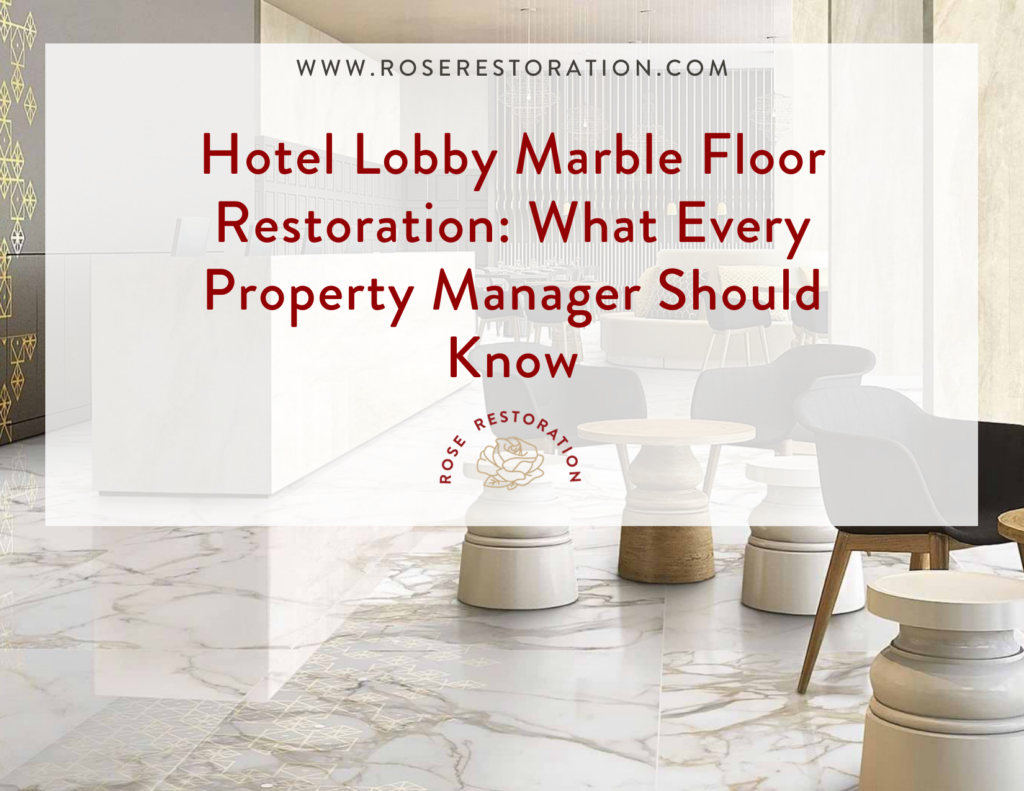
Your hotel lobby makes its first impression in seconds. Before guests reach the front desk, before they hear a greeting from your staff, they look down. And what they see — a gleaming, well-maintained marble floor or a dull, scratched surface — immediately communicates your standard of care.
Marble has been the material of choice for luxury hotel lobbies for decades. Its natural veining, depth, and polished finish create a level of elegance that manufactured materials cannot replicate. However, marble is still a natural stone — and in high-traffic environments, it requires professional maintenance and restoration.
If you manage a hotel in Washington DC, Maryland, or Northern Virginia, understanding marble floor restoration is essential to maintaining both your property value and guest experience.
Why Marble Deteriorates in Hotel Lobbies
Marble is a calcium-based stone, making it softer than materials like granite or quartzite. In a hotel environment, this becomes a major factor in long-term wear.
Abrasive Foot Traffic
Guests bring in dirt, sand, and debris that act like sandpaper on marble surfaces. Over time, this creates visible wear paths — especially between entrances, front desks, elevators, and high-traffic corridors.
Luggage Carts and Rolling Equipment
Heavy carts concentrate pressure into small contact points. This leads to:
• scratching
• micro-fracturing
• accelerated wear along traffic paths
Water and Moisture Exposure
Entrances are constantly exposed to:
• rain and snow
• de-icing salts
• mineral-heavy water
This leads to etching, staining, and surface dullness — especially near doorways.
Improper Cleaning Products
One of the most common causes of damage.
Acidic cleaners:
• break down marble surface structure
• create dull etch marks
• cause long-term deterioration
Even some “stone cleaners” are not truly pH-neutral.
Spills and Chemical Exposure
Common lobby spills include:
• coffee
• wine
• food oils
• cleaning chemicals
These can stain or etch marble quickly if not addressed.
Structural Movement and Lippage
Over time, buildings shift slightly. This creates:
• uneven tile edges
• trip hazards
• visible inconsistencies
This requires grinding — not just polishing.
Signs Your Hotel Marble Floors Need Restoration
Marble damage happens gradually, which makes it easy to overlook until it becomes obvious.
Watch for:
• loss of reflection and shine
• dull or hazy appearance
• visible traffic paths
• scratches across the surface
• etch marks (dull spots or rings)
• staining and discoloration
• uneven tiles (lippage)
• deteriorating grout
If multiple issues are present, restoration should be addressed before damage worsens.
The Professional Marble Restoration Process
Marble restoration is not a surface-level fix — it is a mechanical process that refines the stone itself.
Assessment and Testing
A proper evaluation includes:
• identifying marble type
• measuring wear depth
• checking for lippage
• testing results in a sample area
Grinding (If Needed)
Used when floors are uneven.
• removes lippage
• levels tile edges
• creates a flat surface
Honing
Removes:
• scratches
• etching
• wear patterns
Leaves a smooth, matte finish.
Polishing
Restores:
• clarity
• reflection
• depth of color
Finish can range from satin to high-gloss.
Sealing
Penetrating sealers:
• reduce staining
• protect pores
• maintain natural look
Grout Repair and Restoration
Includes:
• regrouting
• color sealing
• stabilizing loose tiles
Clean grout dramatically improves overall appearance.
How to Restore Marble Floors Without Disrupting Operations
Hotels cannot shut down for restoration — which is why experienced contractors use phased scheduling.
Typical approach:
• divide lobby into sections
• work overnight when possible
• maintain safe walkways
• minimize guest disruption
Key planning considerations:
• traffic patterns
• work hours
• signage and barriers
• project timeline
This allows restoration to be completed while the hotel remains fully operational.
Choosing the Right Marble Restoration Contractor
Not all contractors are equipped for commercial marble restoration.
Look for:
Commercial Experience
Especially in:
• hotels
• hospitality environments
• large-scale lobbies
Proven Portfolio
Ask for:
• before/after photos
• hotel references
• long-term performance feedback
Material Knowledge
Contractors should understand:
• marble types
• finish variations
• proper restoration techniques
Proper Equipment
Includes:
• weighted floor machines
• full diamond system
• dust and water control
Insurance and Compliance
Ensure:
• liability coverage
• workers compensation
• documentation readiness
Ongoing Maintenance Programs
The best companies offer:
• scheduled maintenance
• polishing touch-ups
• long-term care plans
Maintenance Tips to Extend Marble Floor Life
Proper maintenance reduces the frequency of full restorations.
Use Walk-Off Mats
• capture dirt and moisture
• reduce abrasion
• protect entry areas
Daily Dust Mopping
• removes abrasive debris
• prevents surface wear
Use pH-Neutral Cleaners Only
Avoid:
• acidic cleaners
• harsh chemicals
• abrasive products
Clean Spills Immediately
Especially:
• coffee
• wine
• juice
• oils
Control Equipment Traffic
• use soft wheels
• avoid repetitive paths
Schedule Routine Maintenance
Professional maintenance every:
• 3–6 months for high-traffic areas
Why Professional Restoration Outperforms Janitorial Methods
Many properties attempt to maintain marble with coatings or in-house cleaning methods.
These approaches often fail because:
Topical Coatings Wear Off
• waxes and acrylics degrade quickly
• require constant reapplication
• can discolor over time
Improper Equipment Causes Damage
Untrained use of machines can:
• gouge stone
• create uneven finishes
• shorten marble lifespan
Inconsistent Results
Without proper technique:
• patchy finishes occur
• visible lines remain
• shine is uneven
Professional Restoration Lasts Longer
True restoration:
• removes damage
• restores the stone itself
• provides long-term results
Benefits of Marble Restoration for Hotels
Restoring marble floors delivers both visual and operational value.
Key benefits include:
• improved guest first impressions
• restored luxury appearance
• increased floor lifespan
• reduced long-term maintenance costs
• improved safety and uniformity
Well-maintained marble floors directly contribute to brand perception in hospitality environments.
FAQ: Hotel Marble Floor Restoration
How long does marble restoration take?
Most hotel lobbies are completed in phases over 1–2 weeks depending on size and condition.
How much does restoration cost?
Costs vary based on:
• floor condition
• square footage
• scope of work
On-site evaluation is required for accurate pricing.
Will there be noise or disruption?
Some noise is expected, which is why work is often done overnight or during low-traffic hours.
How often should marble floors be restored?
Typically every:
• 3–7 years
depending on traffic and maintenance.
Can scratches and etching be removed?
Yes — in most cases, damage can be fully removed through honing and polishing.
Is restoration better than replacement?
Yes. Restoration is significantly more cost-effective and less disruptive than full replacement.
Restore Your Hotel Lobby the Right Way
If your marble floors are showing signs of wear, dullness, or staining, restoration is the most effective way to bring them back to life.
Rose Restoration has over 40 years of experience providing:
• hotel marble floor restoration
• marble honing and polishing
• grout repair and restoration
• ongoing maintenance programs
Serving Washington DC, Maryland, and Northern Virginia, our team works with hotels, property managers, and commercial facilities to deliver high-quality results with minimal disruption.
Contact Rose Restoration to schedule a walkthrough and restore your marble floors to the standard your property deserves.