
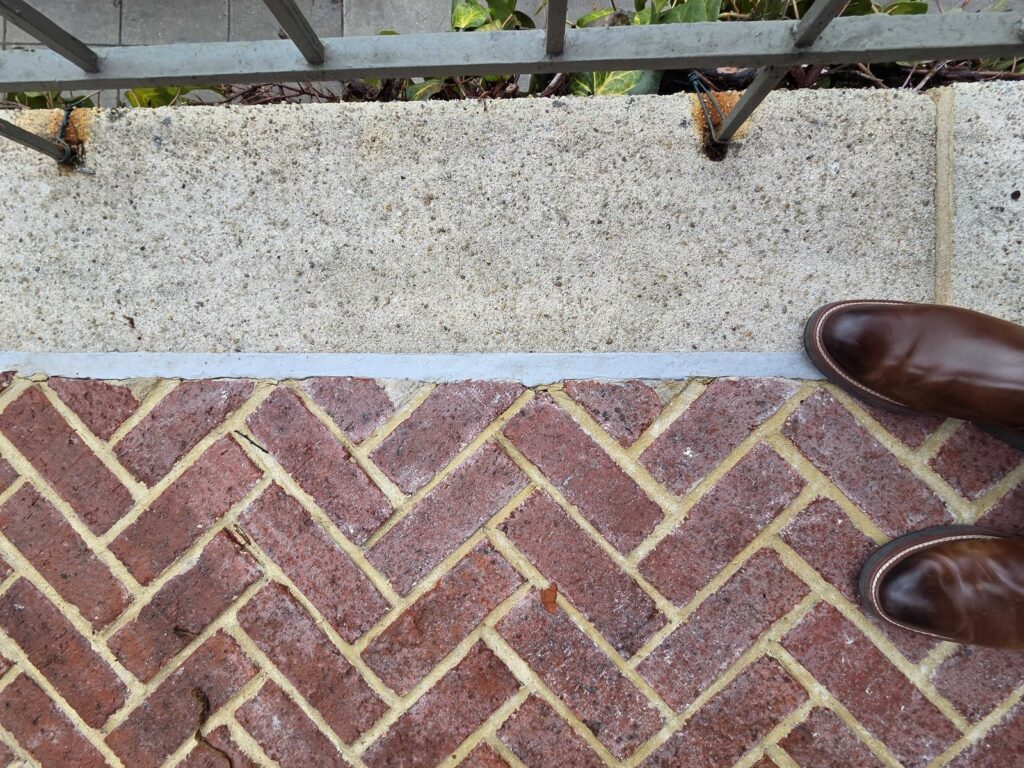
Rose Restoration explains efflorescence on slate, flagstone, bluestone, brick, and masonry — what causes the white crystalline deposit, why it keeps returning, and how Washington DC homeowners can remove it without damaging the substrate.
| Cause of efflorescence | What\'s happening | Fix |
|---|---|---|
| Moisture from substrate | Water migrating up through slab or wall | Add vapor barrier, improve drainage |
| Ground contact | Outdoor stone wicking moisture from soil | Install edge drainage, grade soil away |
| Failed sealer | Water penetrating unsealed or worn stone | Clean + re-seal with breathable impregnating sealer |
| Poor roof/flashing | Water entering through masonry above | Fix roof/flashing first; efflorescence recurs until addressed |
| New construction | Mortar curing releases natural salts | Usually self-resolves within 12–18 months |
| Salt from de-icing | Winter salt tracked onto stone | Rinse regularly in winter; switch to calcium chloride alternative |
 By Tom Kuhn, CEO, Rose Restoration
Rose Restoration has restored marble, terrazzo, concrete, and natural stone across DC, MD, and VA since 1978.
If you’ve ever noticed a white, powdery film forming on your slate, flagstone, or bluestone, you’re not alone. This chalk-like residue is one of the most common issues homeowners experience with natural stone floors, patios, walkways, and pool decks. It can appear suddenly, get worse with time, and return even after cleaning.
That white substance is called efflorescence, and understanding what causes it is the key to removing it successfully—and preventing it from coming back.
Efflorescence keeps coming back until the moisture path behind the stone is dealt with, not just the white residue on top of it. That diagnosis is part of our slate, flagstone and bluestone restoration service, which treats stripping, cleaning and color enhancing as one scope.
At Rose Restoration, we help homeowners and property managers restore the natural beauty of slate, bluestone, flagstone, and other textured stone surfaces. Efflorescence removal is one of the most frequent requests we receive, especially for outdoor installations and ground-level interior floors. Here’s what you need to know.
What Is Efflorescence?
Efflorescence forms when water travels through stone or mortar, dissolving natural salts and minerals inside the material. When that moisture reaches the surface and evaporates, the minerals crystalize and leave behind a white, powdery deposit.
Efflorescence is most common on:
Slate floors
Bluestone patios
Flagstone walkways
Pool decks
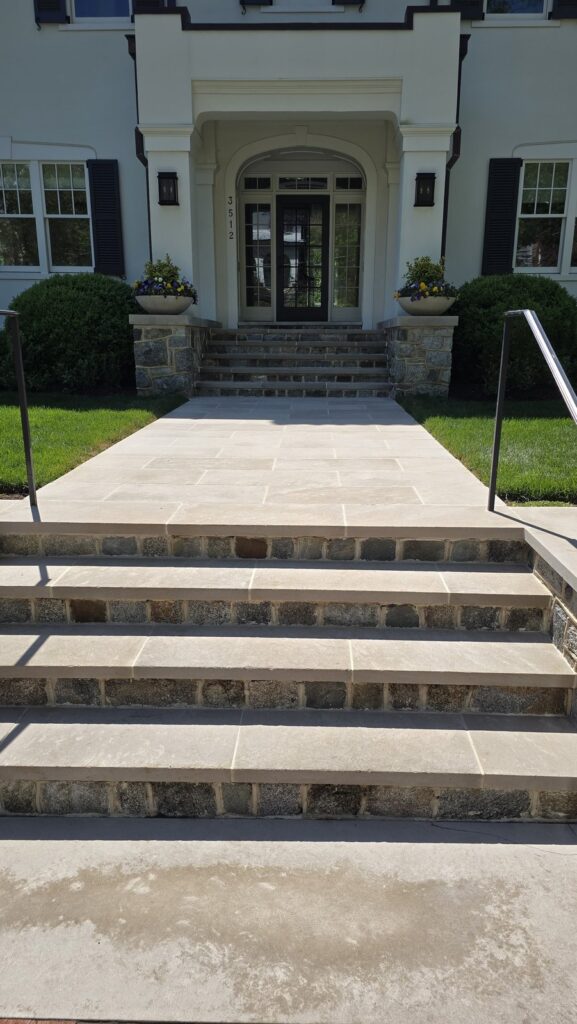
Stone steps and entryways
Basements or ground-level rooms with moisture challenges
While it is most prominent outside, it can develop indoors anywhere moisture is migrating through stone or mortar.
Why Stone Surfaces Develop Efflorescence
Several factors contribute to efflorescence, but the underlying cause is always moisture movement. This makes it different from staining, dirt buildup, or sealer failure.
Typical triggers include:
Moisture rising from soil beneath a patio
Water entering mortar joints during rain
Snow or ice melt seeping into porous stone
Improper drainage around exterior walkways
Unsealed or aging stone surfaces
Pool decks exposed to splashing and chlorinated water
Because slate, bluestone, and flagstone are porous, they naturally absorb moisture. Mortar joints absorb even more. As your transcript notes, efflorescence isn’t related to neglect—it’s simply a reaction between water and minerals.
Why Efflorescence Doesn’t Come Off with Normal Cleaning
Most homeowners try:
Scrubbing
Mopping
Pressure washing
Steam cleaning
Vinegar or DIY solutions
None of these work long-term because they don’t dissolve or neutralize the mineral deposits. In fact, some methods—especially acidic household products—can damage stone.
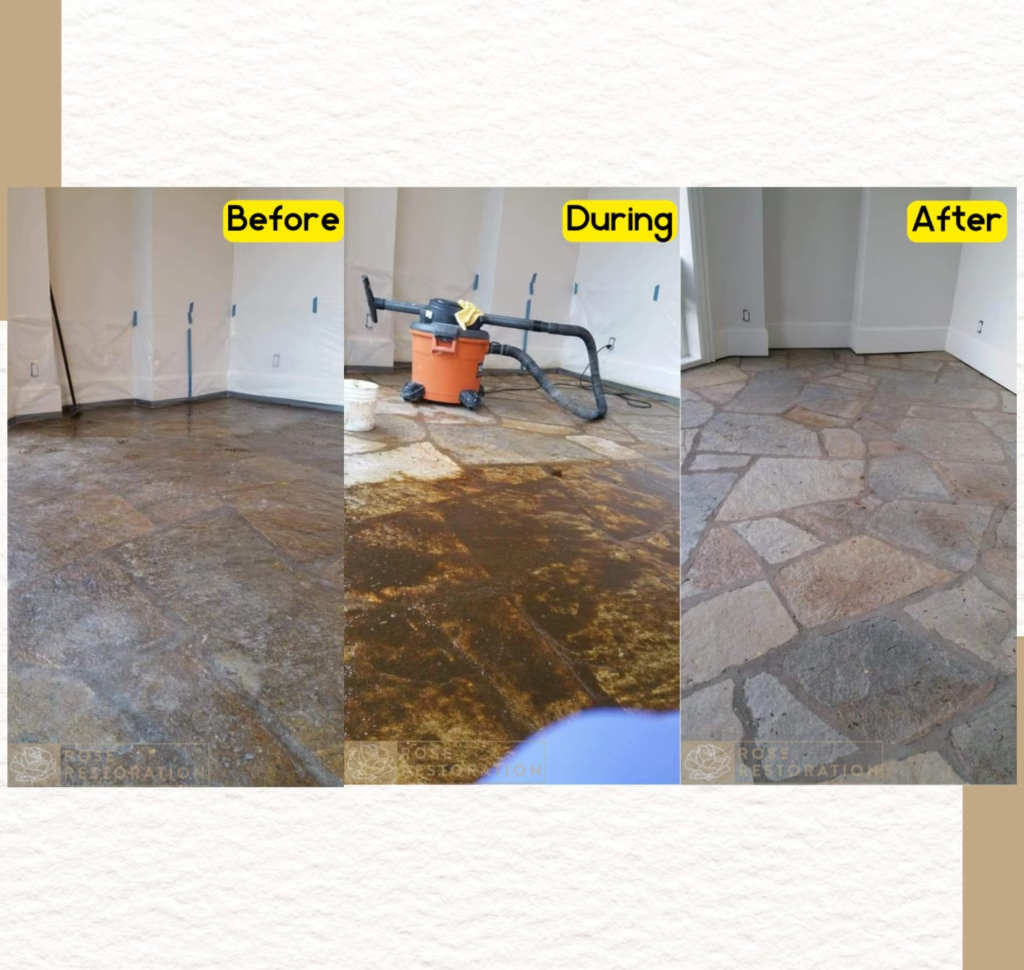
Efflorescence requires professional treatment using chemistry designed specifically for mineral breakdown. Otherwise, it returns within days or weeks.
How Rose Restoration Removes Efflorescence
Efflorescence removal isn’t just washing the stone. It requires a multi-step approach to strip away surface buildup, clean below the surface, and prepare the stone to resist future moisture.
Step 1: Evaluation
We determine:
Whether the buildup is true efflorescence or sealer failure
Stone type (slate, flagstone, bluestone)
Mortar joint condition
Any existing topical coatings that need removal
Many outdoor stones have layers of old sealer or topical products that must be stripped before treating efflorescence.
Step 2: Stripping (If Coatings Are Present)
As covered in your transcript, stripping slate and bluestone is labor-intensive and often takes twice as long as a clean-and-seal. It resets the stone by removing:
Old topical sealers
Yellowing coatings
Embedded dirt
Organic buildup
This step ensures the efflorescence treatment penetrates properly.
Step 3: Professional Efflorescence Removal
We apply an efflorescence remover formulated to dissolve mineral deposits without damaging stone. This is not acidic tile cleaner and not vinegar—these can etch or lighten stone.
The correct chemistry lifts mineral crystals from:
Stone pores
Mortar joints
Low points and textured clefts
Pool-deck surfaces
This may require more than one application on heavily affected areas.
Step 4: Deep Cleaning and Full Extraction
Once efflorescence is dissolved, we use mechanical brushes and extraction to remove residue and flush the stone clean.
This step prevents re-crystallization.
Step 5: Dry Time and Moisture Evaluation
Stone must fully dry before sealing. Rushing this step traps moisture and causes efflorescence to return quickly. We evaluate ambient humidity, substrate conditions, and whether shade or sun will affect cure time.

Step 6: Sealing (Interior and Exterior)
Porous stone needs sealing to slow moisture absorption. For outdoor applications, sealing also protects against:
Pool chemicals
Irrigation overspray
Rainwater runoff
Freeze-thaw cycles
Depending on the client’s goals, we may use:
Penetrating sealers for a natural look
Color enhancers for richer tones
Enhanced sealers for light satin appearance
Enhancers are especially beneficial for slate or bluestone that looks washed out after years of sun exposure. They deepen natural color without creating gloss.
Can Efflorescence Be Prevented?
It can be reduced, but not always completely prevented. Outdoor stone installed directly over soil or concrete slab will always interact with moisture.
However, sealing, proper drainage, and annual maintenance significantly minimize buildup.
Preventive measures include:
Sealing annually or biannually
Keeping gutters and drainage paths clear
Reducing overspray from sprinklers
Repairing cracked mortar that funnels water under stone
Avoiding topical coatings that trap moisture
When the underlying moisture issue is structural, we provide realistic expectations rather than overpromising.
When Efflorescence Is Not Efflorescence
Sometimes clients think they have efflorescence when they actually have:
Sealer residue
Concrete dust
Calcium deposits from hard water
Salt residue from de-icers
Deteriorating mortar or grout
Your transcript noted this is a common misdiagnosis. Our evaluation process distinguishes these issues so the correct treatment is applied.
Why Homeowners Choose Professional Instead of DIY
Slate, bluestone, and flagstone restoration is highly chemistry-dependent. DIY cleaning often:
Efflorescence in the DC Metro Area
Efflorescence is especially common in the Washington DC region due to our freeze-thaw climate, high humidity, and the age of our building stock. We see efflorescence regularly on Capitol Hill rowhouse brick, Georgetown brownstone facades, Arlington garden walls, and Bethesda retaining walls. Our team removes efflorescence and addresses the underlying moisture source to prevent recurrence. Learn about our masonry services →
Lightens stone unevenly
Leaves streaking or blotches
Does not remove mineral deposits
Damages mortar joints
Causes efflorescence to return faster
Professional restoration ensures predictable results and protects the stone’s structural integrity.
Real-World Example
A homeowner in Northern Virginia had a bluestone patio showing heavy white patches within six months of installation. They tried pressure washing weekly, but the residue kept returning.
After our evaluation, we identified:
Efflorescence from moisture migrating up through the mortar
A topical sealer applied incorrectly by the installer
No drainage pitch, causing water to sit under the stone
We stripped the sealer, removed efflorescence, deep-cleaned the stone, applied a penetrating enhancer sealer, and educated the client on drainage improvements.
The patio has remained clear since.
Final Thoughts
Efflorescence is one of the most misunderstood issues with slate, flagstone, and bluestone. It isn’t dirt, it isn’t neglect, and it isn’t permanent—but it does require professional treatment to remove correctly.
By stripping when needed, using specialty mineral removers, deep-cleaning mortar joints, and sealing the stone with the right products, Rose Restoration restores natural beauty and prevents recurring buildup.
Looking for something else?
Get a Free Assessment from Rose Restoration
Tell us about your marble, stone, terrazzo, or concrete and our senior technicians will recommend the right restoration approach. Family-run and trusted across Washington DC, Maryland, and Virginia since 1978.
Call (703) 327-7676 · Email info@roserestoration.com · schedule a time · or send us photos.
Restore. Don't replace.
48 years of polishing marble, terrazzo, concrete, and tile across Washington DC, Northern Virginia, and Maryland. IMF, Four Seasons, Smithsonian, and the Virginia State Capitol trust us — you can too.