
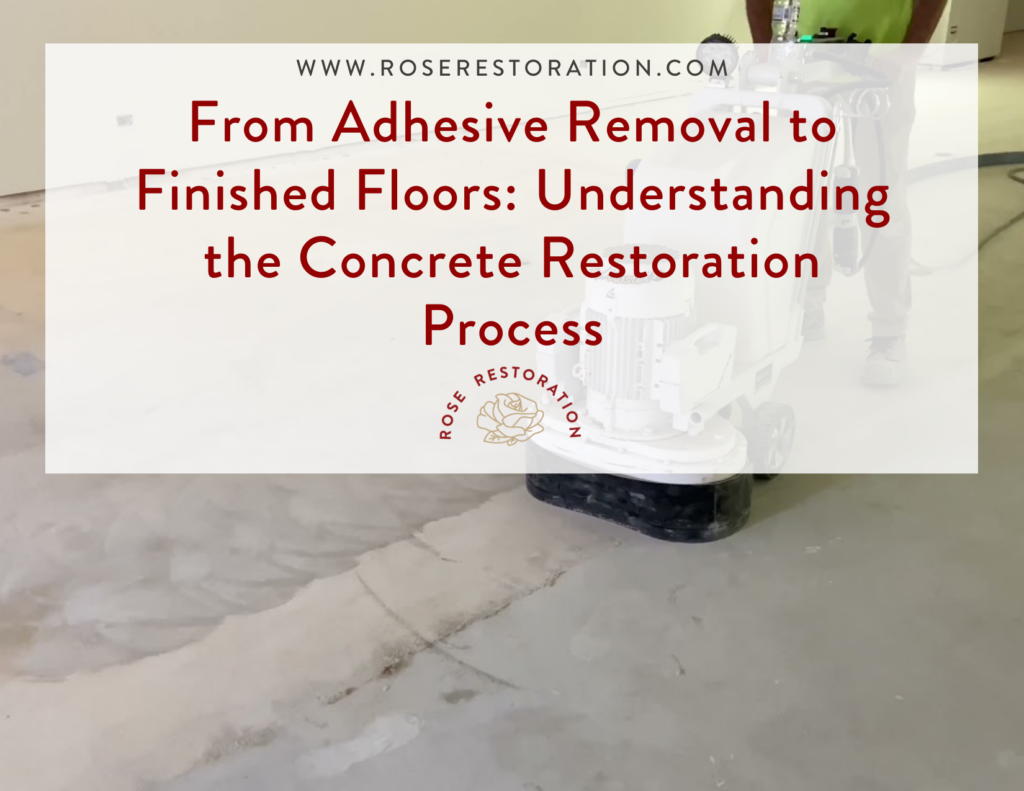
Many property owners assume concrete restoration begins with polishing or sealing. In reality, successful concrete restoration starts long before any finishing step is applied.
The condition of the existing slab determines the approach, and addressing underlying issues early prevents costly problems later.
Assessing the Existing Concrete
Every concrete restoration project begins with an evaluation of the slab’s condition. This includes identifying:
• residual adhesives from previous flooring
• surface wear or discoloration
• cracks, spalling, or joint deterioration
• moisture-related concerns
This assessment guides the preparation and finishing strategy.
Removing Old Adhesives and Surface Contaminants
One of the most common challenges in concrete restoration is adhesive removal. Old carpet glue, tile mastics, or coatings can prevent new finishes from bonding properly.
Professional surface preparation removes these materials completely rather than covering them up. This step is critical for polished concrete, grind-and-seal systems, and decorative finishes.
Correcting Surface Irregularities
Concrete slabs are rarely perfectly flat. Surface preparation allows technicians to address:
• uneven areas that affect appearance
• trip hazards or drainage issues
• inconsistencies that impact reflectivity
This step ensures a uniform surface before moving into finishing stages.
Transitioning to the Final Finish
Once preparation is complete, the slab is ready for its final treatment, which may include:
• polished concrete for durability and reflectivity
• sealed concrete for protection and ease of maintenance
• specialty finishes for aesthetic or functional needs
Each finish performs best when applied to a properly prepared surface.
Why Skipping Preparation Causes Problems
Rushing into polishing or sealing without proper preparation can lead to:
• visible imperfections in the finished floor
• premature coating failure
• higher long-term maintenance costs
Concrete restoration is most successful when preparation and finishing are treated as a single, coordinated process.