
 By Tom Kuhn, CEO, Rose Restoration
Rose Restoration has restored marble, terrazzo, concrete, and natural stone across DC, MD, and VA since 1978.
Solid-color epoxy is one of the most recognizable resinous flooring systems. Smooth, seamless, and highly durable, it’s used everywhere from residential garages to commercial kitchens, warehouses, retail spaces, mechanical rooms, and industrial facilities. But while the finished look appears simple, the process behind a high-performing epoxy floor is anything but.
At Rose Restoration, we work with homeowners, general contractors, designers, and facility managers to install solid-color epoxy systems designed for long-term performance. This guide explains how these floors are installed, what affects pricing, and when epoxy is the right choice for your project.
What Is a Solid-Color Epoxy Floor?
A solid-color epoxy floor is a resinous coating system applied directly to a prepared concrete slab. Unlike decorative flake or metallic epoxy systems, this finish is uniform in color, ultra-clean in appearance, and available in a wide range of professional color options.
These systems are commonly used in:
• Residential garages and basements
• Commercial kitchens and food prep areas
• Retail spaces and showrooms
• Warehouses and distribution centers
• Mechanical rooms
• Industrial workspaces
• Utility rooms, storage areas, and workshops
Because they create a seamless, non-porous surface, solid-color epoxy floors are easy to clean, resistant to chemicals, and capable of handling heavy traffic.
How Solid-Color Epoxy Floors Are Installed
The installation process is more detailed than homeowners or even some builders realize. Performance depends heavily on proper concrete preparation and the quality of the resin system.
-
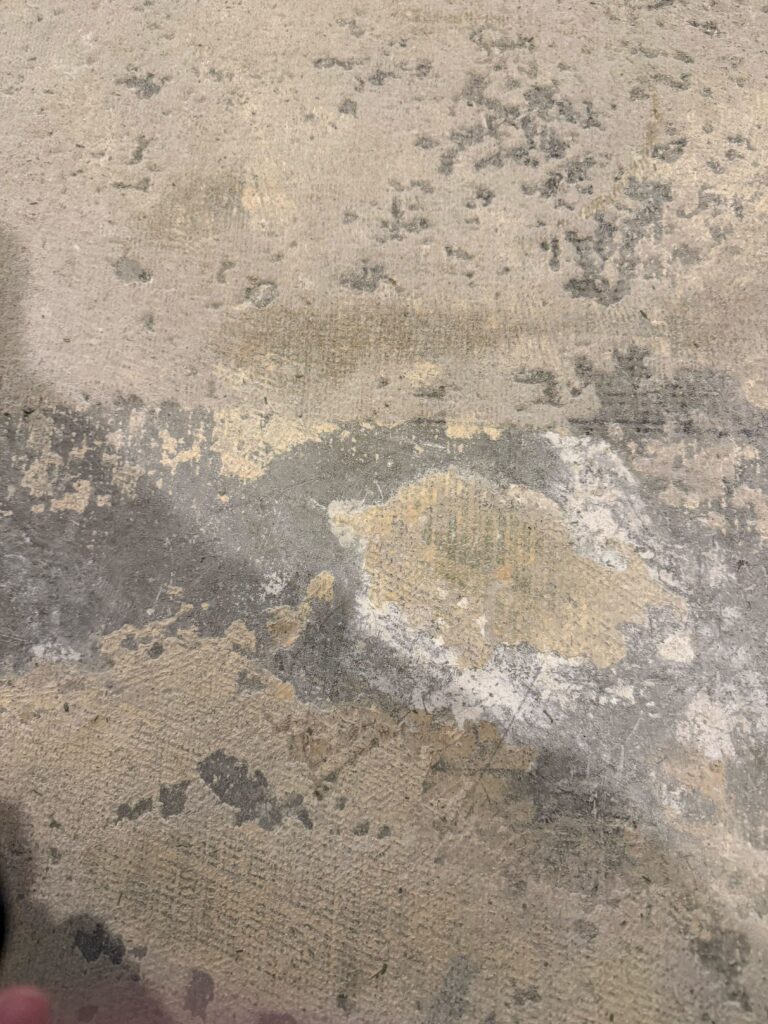
Concrete Surface Preparation
The slab must be mechanically profiled using grinders and industrial vacuums. Surface prep is the foundation of a successful epoxy installation. A concrete surface profile (CSP) of 2–3 is common for standard epoxy systems, while urethane cement or industrial floors may require heavier prep. -
Crack, Spall, and Patch Repair
Cracks, divots, spalls, and joints must be repaired using epoxy patch material or urethane mortar. This step ensures a smooth, durable finish and prevents failures underneath the coating. -
Moisture Testing
Moisture vapor transmission testing is essential. High moisture levels can cause epoxy blistering or delamination. If needed, our team installs moisture-mitigating primers or epoxy vapor barriers. -
Primer Application
A primer coat helps the epoxy bond tightly to the slab and reduces outgassing.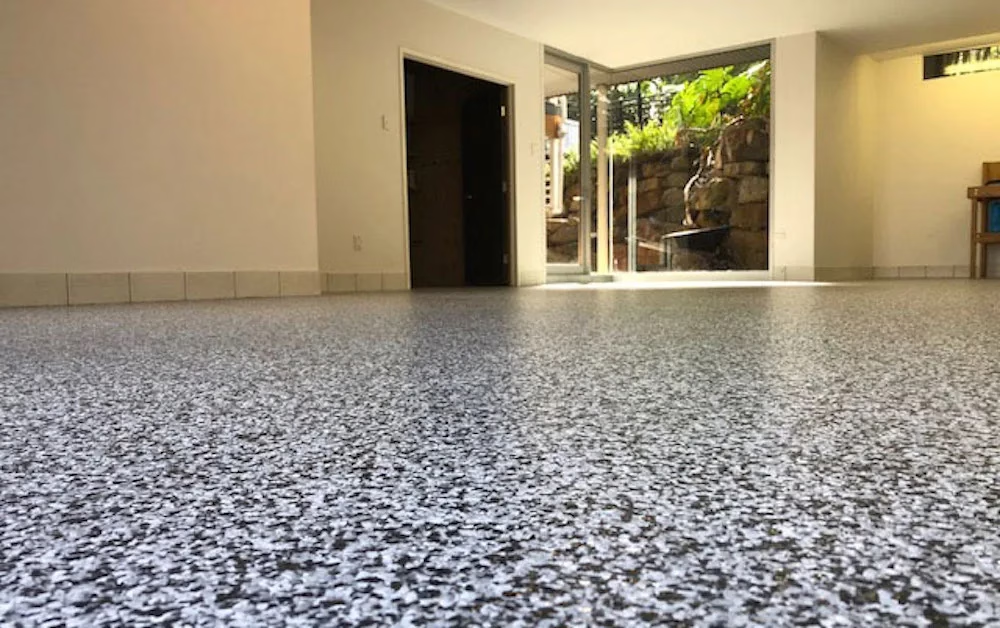
Salt-and-pepper polished concrete garage floor with exposed aggregate finish -
Body Coat Application
The main epoxy body coat provides the floor’s color and durability. Thickness varies depending on whether the system is thin-mil, high-build, or industrial-grade. -
Topcoat Application
A final urethane or polyaspartic topcoat increases chemical resistance, UV resistance, stain resistance, and overall longevity.
Why Epoxy Pricing Varies
Many factors influence the cost of a solid-color epoxy system. Understanding these helps contractors estimate correctly and allows homeowners to compare quotes more accurately.
-
Concrete Condition
Floors with heavy cracking, patching needs, or previous coatings require more prep work. This changes labor time significantly. -
Moisture Levels
High moisture slabs often require moisture-mitigating primers or epoxy vapor barriers. -
System Thickness
Thin-mil systems cost less but are less durable. High-build systems and urethane cement systems are more expensive but offer superior performance. -
Color Choice
Certain colors, especially bright whites, yellows, and safety reds, require multiple coats for coverage. -
Cove Base Requirements
If the project includes a resinous cove base, overall cost increases due to the hand-trowel labor involved. -
Size and Layout
Projects with dozens of rooms, tight hallways, or irregular walls add prep and coating time. -
Coating Type
Epoxy, polyaspartic, polyurea, and urethane cement each have different performance levels and costs.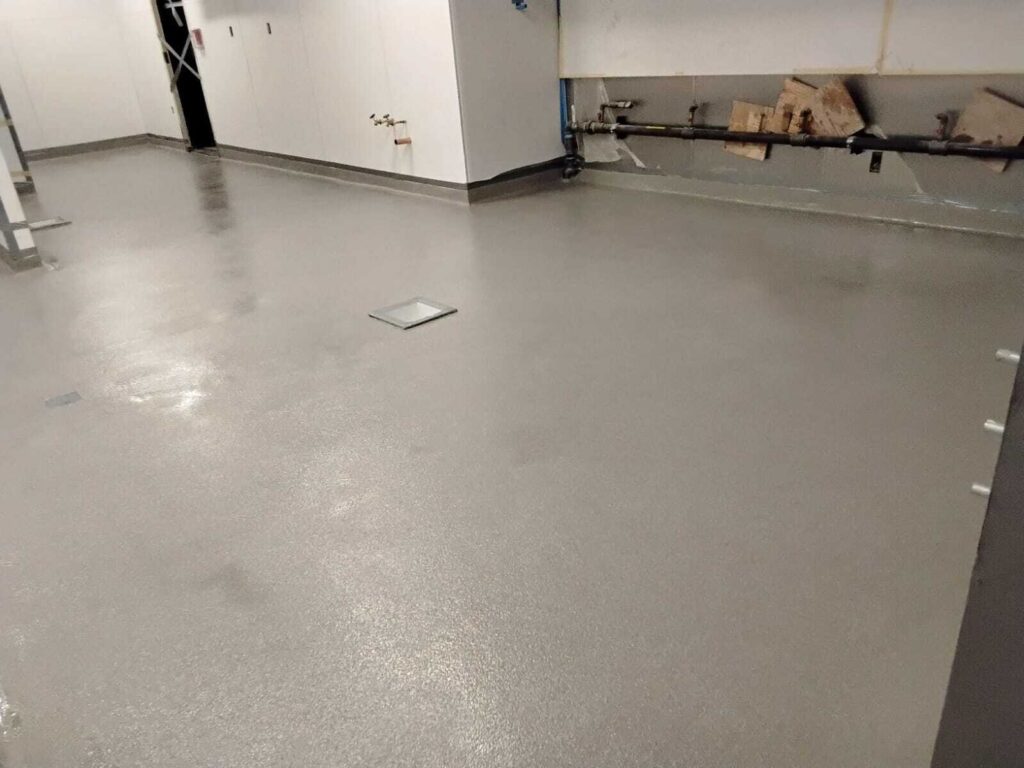
Gray epoxy floor coating in commercial kitchen with floor drain showing smooth seamless finish by Rose Restoration
When Epoxy Is the Right Choice
Solid-color epoxy is ideal for spaces that need a seamless, durable, chemical-resistant surface. It’s especially effective when:
• Floors need to be waterproof or easy to sanitize
• Forklifts, carts, or wheeled equipment are used
• Staining or chemical exposure is expected
• Slip resistance or safety markings are required
• A uniform, professional appearance is important
For residential clients, epoxy works well in garages, basements, workshops, and laundry rooms. For commercial clients, epoxy remains a top choice for kitchens, restrooms, warehouses, and cleanable environments.
When Epoxy May Not Be the Best Option
Although epoxy is versatile, there are scenarios where another flooring system makes more sense.
• High UV exposure areas
• Spaces requiring fast return-to-service (polyaspartic may be better)
• Environments with extremely high moisture in the slab
• Outdoor surfaces where weather and temperature swings are extreme
• Retail spaces that prefer the look of polished concrete or terrazzo
In these cases, our team helps clients select alternatives such as urethane cement, polished concrete, microtoppings, or decorative chip systems.
Residential vs. Commercial Considerations
Homeowners often focus on appearance, stain resistance, and ease of cleaning. They want a floor that looks clean and modern without constant maintenance.
Commercial clients usually prioritize:
• Slip resistance
• Sanitation requirements
• Durability under heavy equipment
• Heat or chemical resistance
• Compliance with project specifications
We tailor each installation to the space’s needs, whether it’s a residential garage or a 40,000-square-foot warehouse.
What to Expect After Installation
Once the floor is complete, clients can expect:
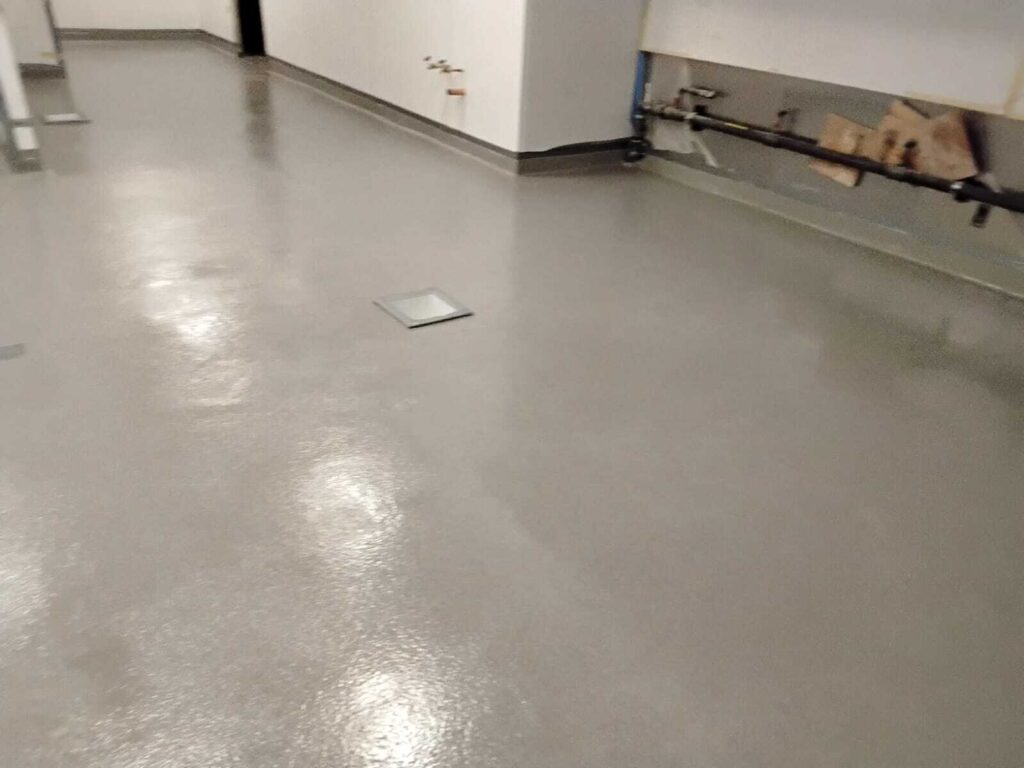
• A uniform color with a seamless finish
• Easy cleaning with a mop, broom, or auto scrubber
• Resistance to chemicals, spills, and abrasion
• Long service life with proper maintenance
Topcoats typically reach full cure within 72 hours, depending on the system used.
Final Thoughts
Solid-color epoxy flooring is a strong choice for both residential and commercial environments thanks to its durability, clean appearance, and cost-effectiveness. But achieving a long-lasting finish requires proper prep, correction of slab imperfections, moisture testing, and the right resin system for the space.
If you’re planning a flooring project, Rose Restoration can help evaluate your concrete, choose the ideal system, and provide a seamless installation built to last.
Related: Learn more about our epoxy garage floor coatings for residential and commercial clients in Washington DC, Maryland, and Northern Virginia.
Looking for something else?
Get a Free Assessment from Rose Restoration
Tell us about your marble, stone, terrazzo, or concrete and our senior technicians will recommend the right restoration approach. Family-run and trusted across Washington DC, Maryland, and Virginia since 1978.
Call (703) 327-7676 · Email info@roserestoration.com · schedule a time · or send us photos.
Restore. Don't replace.
48 years of polishing marble, terrazzo, concrete, and tile across Washington DC, Northern Virginia, and Maryland. IMF, Four Seasons, Smithsonian, and the Virginia State Capitol trust us — you can too.